How to Write a Eulogy for Granddad
A Heartfelt Guide
There is something special about the relationship between a grandchild and a grandfather.
For many of us, Grandpa seems to have always been there. He may have been sitting in the same favorite chair every time you visited, telling stories you heard so many times you could eventually finish them yourself. Perhaps he was the person who taught you how to fish, fix something, plant a garden, drive a car, play cards, or understand that some of life's best lessons aren't taught with words at all.
Maybe he was quiet and steady.
Maybe he was hilarious.
Perhaps he could spend an entire afternoon telling stories about things that happened fifty years before you were born, or maybe you had to ask him ten questions before you got more than three words out of him.
There is no single kind of grandfather.
And that's why writing his eulogy can feel so difficult.
You're not trying to write about a grandfather.
You're trying to write about your grandfather.
The man whose life existed long before yours began, yet whose presence somehow became part of your own story.
You may know him as Grandpa, Granddad, Papa, Gramps, Pop, Grandfather, or a name that belonged only to your family. Whatever you called him, the task in front of you is the same: finding a way to put years of memories, lessons, laughter, and love into a few minutes.
That can feel impossible.
The good news is that you don't have to tell his whole story.
You only need to help everyone remember the man behind it.
His personality.
His values.
His favorite stories.
His quirks.
The way he loved his family.
The things he taught you without ever realizing he was teaching them.
And perhaps most importantly, the ways his influence will continue long after the funeral is over.
That is enough for a beautiful eulogy.
Why Writing a Eulogy for Your Grandfather Feels So Difficult
Grandfathers often connect us to a part of our family history we never personally experienced.
Your grandfather may have remembered a world very different from your own. He may have lived through wars, economic changes, new technologies, moves across the country, careers that lasted decades, and family chapters that occurred long before you arrived.
As a child, some of those stories may simply have sounded like old stories.
As an adult, you may realize they were history.
Your history.
He may have told you about your mother or father when they were children. He may have known family members whose names now exist only in photographs. He may have carried traditions, expressions, values, jokes, and stories from one generation into the next.
When a grandfather dies, it can feel as though part of that history has gone with him.
But there's another reason writing the eulogy feels difficult.
You didn't know him only as a piece of family history.
You knew him as Grandpa.
You knew the way he laughed.
The stories he told repeatedly.
The hobbies that occupied hours of his time.
The things he always kept in his pockets.
The chair nobody else was supposed to sit in.
The opinions everyone in the family knew better than to argue with.
Perhaps you remember sitting beside him while he worked in the garage, walked through the woods, watched a ballgame, tended a garden, or stood quietly at the edge of a lake.
Those memories may seem ordinary.
They aren't.
Those are often the memories that reveal a person most clearly.
Your grandfather's obituary can preserve the facts of his life. It can record where he was born, where he worked, whom he married, and how many children and grandchildren he had.
Your eulogy has another purpose.
It can tell everyone what it felt like to know him.
Six Simple Steps to Writing a Heartfelt Eulogy for Your Grandfather
If the blank page feels intimidating, don't begin by trying to write a polished speech.
Begin with your grandfather.
Think of this first stage as gathering pieces of his life before deciding how they fit together.
Step 1: Start by Collecting Memories
Instead of writing paragraphs, write down memories.
Look through old photographs. Think about family gatherings. Remember vacations, holidays, Sunday afternoons, fishing trips, ballgames, projects, conversations, or whatever the two of you did together.
Don't dismiss memories because they seem too ordinary.
Sometimes the smallest detail unlocks an entire story.
Perhaps seeing an old fishing pole reminds you of the morning Grandpa woke you before sunrise and patiently taught you to cast.
Maybe an old tool reminds you that he kept repairing the same lawn mower long after anyone else would have replaced it.
Perhaps a photograph makes you remember exactly how he laughed.
Write those things down.
At this stage, nothing has to be organized.
You're simply remembering.
Step 2: Ask Yourself What Made Him Grandpa
Try finishing this sentence:
“When I think about Grandpa, the first thing I think about is…”
Your answer may surprise you.
Maybe it's his stories.
His work ethic.
His quiet kindness.
His sense of humor.
His faith.
His stubbornness.
His workshop.
His garden.
His fishing boat.
His insistence that nobody needed to pay someone for something he could fix himself.
Whatever comes to mind may point you toward the emotional center of your eulogy.
Step 3: Choose Two or Three Stories That Show Who He Was
A good story often tells people more than a list of qualities.
Instead of saying Grandpa was patient, share the afternoon he spent teaching you something you simply couldn't seem to understand.
Instead of saying he was generous, tell the story of how he helped someone when nobody else knew about it.
Instead of saying he loved his grandchildren, describe what happened when you walked through his front door.
Those memories allow everyone listening to see him again.
You don't need many.
Two or three meaningful stories can be enough.
Step 4: Remember the Man Before He Became Your Grandfather
This can be one of the most meaningful parts of a grandfather's eulogy.
For most of your life, he may simply have been Grandpa.
But before you existed, he had already lived decades of his own story.
He was once a boy.
A teenager.
Perhaps a young husband trying to build a life.
A father raising children.
A man beginning a career.
He may have served in the military, started a business, worked with his hands, traveled, struggled financially, experienced loss, changed careers, raised a family, or pursued dreams you knew very little about as a child.
If you know some of those stories, include them.
They remind everyone that Grandpa wasn't born old and wise.
He became that man through a lifetime of experiences.
Step 5: Think About What He Passed Down
A grandfather's greatest inheritance often isn't something listed in a will.
It may be the way your family thinks.
The way they work.
The way they treat people.
The traditions they keep.
The stories they tell.
Perhaps your grandfather taught your family to work hard and keep their word.
Maybe he taught everyone not to take themselves too seriously.
Perhaps he passed down a love of the outdoors, music, sports, books, faith, travel, craftsmanship, or Sunday dinners.
Look around your family.
Where do you still see him?
That question can reveal the legacy portion of your eulogy almost naturally.
Step 6: Speak as His Grandchild
Don't try to sound like a professional speaker.
You don't need formal funeral language.
You don't need perfect sentences.
You need to sound like the person who knew him as Grandpa.
If you called him Grandpa, call him Grandpa in your eulogy.
If everyone knew one of his favorite sayings, use it.
If something about him still makes you laugh, share it.
The people gathered don't need you to turn your grandfather into a flawless historical figure.
They want to recognize the man they loved.
And if they hear your stories and think, That's exactly him, you have done something beautiful.
Questions to Help You Remember Your Grandfather
Sometimes grief makes memories feel strangely distant. You know the stories are there, but when you sit down to write, you suddenly can't seem to find them.
Instead of forcing yourself to produce sentences, ask yourself questions and allow the memories to return naturally.
Think about your grandfather at different points in your life. What did you notice about him when you were a child? What did you understand about him differently once you became an adult? Were there things he taught you that you didn't realize were lessons until years later?
You might ask yourself:
- What is my earliest memory of Grandpa?
- What did I love doing with him?
- What story did he tell over and over again?
- What made him laugh?
- What was he unusually good at?
- What could he fix, build, cook, grow, teach, or do better than anyone else?
- What phrase or expression did he always use?
- What did he teach me about work, family, faith, money, kindness, or life?
- What did he do that made his grandchildren feel special?
- What did I learn about him only after I became older?
- What part of Grandpa do I see in my parent, myself, my siblings, or my cousins?
- What family tradition exists because of him?
- What story about him does everyone still tell?
- What will I miss most?
- If I could spend one more afternoon with him, what would I want us to do?
- If I could tell him one more thing, what would it be?
Don't worry about answering every question.
Sometimes one question is enough.
One memory leads to another, and before long the blank page begins to fill with the person you were afraid you wouldn't know how to describe.
Common Mistakes to Avoid
One of the most common mistakes when writing a grandfather's eulogy is turning it into a complete biography.
If your grandfather lived eighty or ninety years, there is a tremendous amount of life to cover.
You don't need to cover it all.
Choose the chapters and memories that help people understand him. Let the obituary preserve the timeline. Let your eulogy preserve the man.
Another mistake is relying on a generic picture of what a grandfather is supposed to be.
Not every grandfather fished.
Not every grandfather worked in a garage.
Not every grandfather was quiet, stern, or old-fashioned.
Perhaps yours loved computers.
Maybe he traveled constantly.
Perhaps he played guitar, painted, coached baseball, rode motorcycles, loved Broadway musicals, or spent every possible hour on a golf course.
Write about your grandfather.
The details that made him different are the details people will remember.
It's also easy to focus only on the grandfather you knew and forget that other people knew different versions of him.
His children knew him as Dad.
His wife knew him as a husband.
His siblings knew him as a brother.
His friends may have known stories none of his grandchildren ever heard.
If possible, ask them about him.
You may discover a story that completely changes the way you see one part of his life.
Finally, don't measure the success of your eulogy by whether you deliver it without emotion.
Your voice may shake.
You may cry.
You may need to stop for a moment.
That's okay.
You are not standing there to perform.
You are standing there because a man mattered enough to you that you wanted everyone in the room to understand why.
And if your words help them see Grandpa again—even for just a few minutes—you have given him a wonderful tribute.

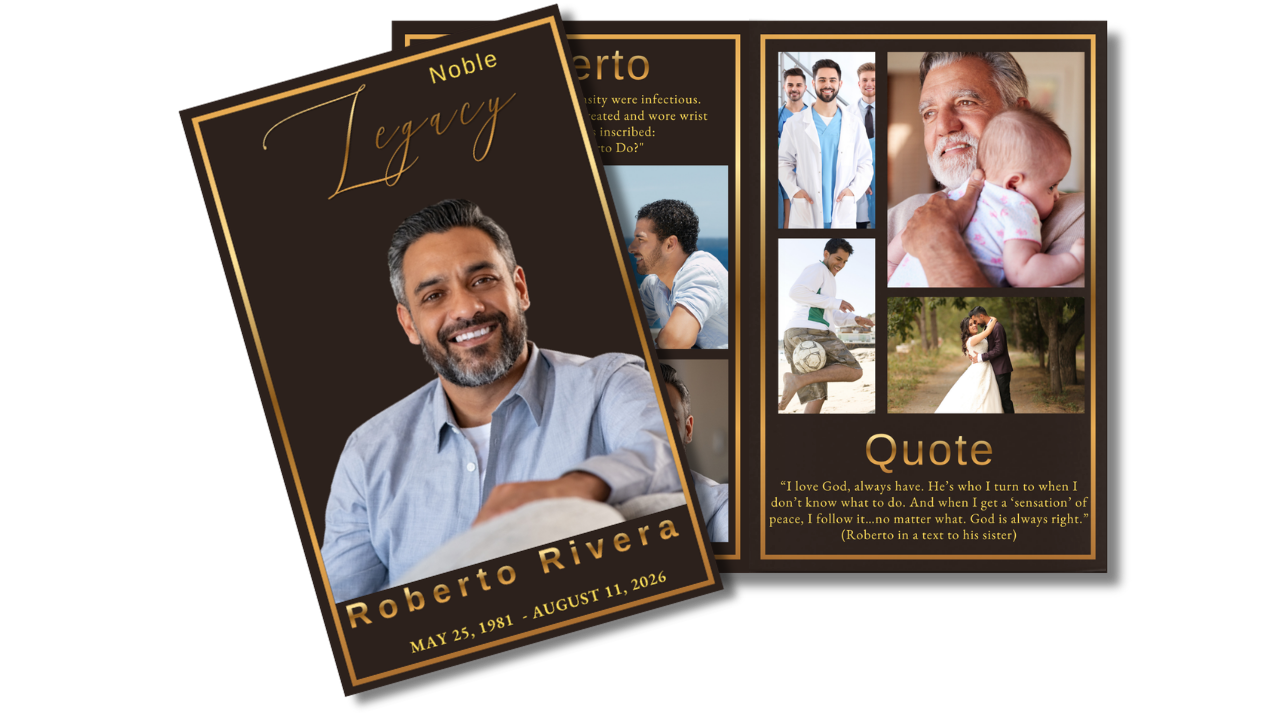
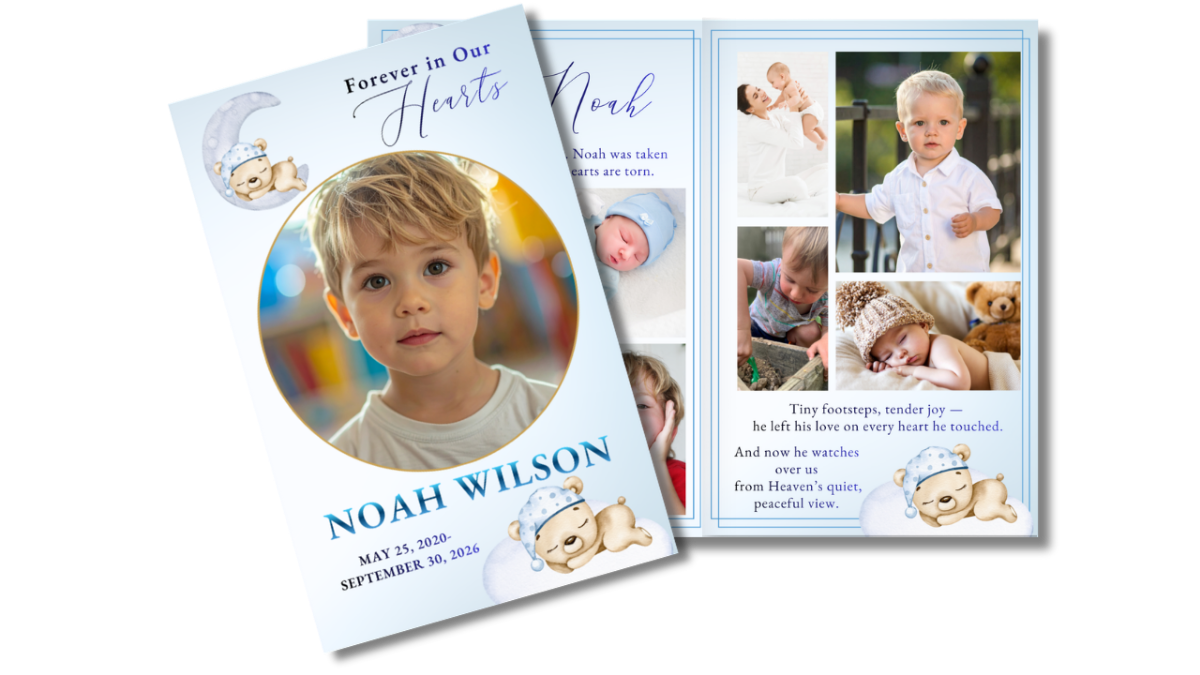
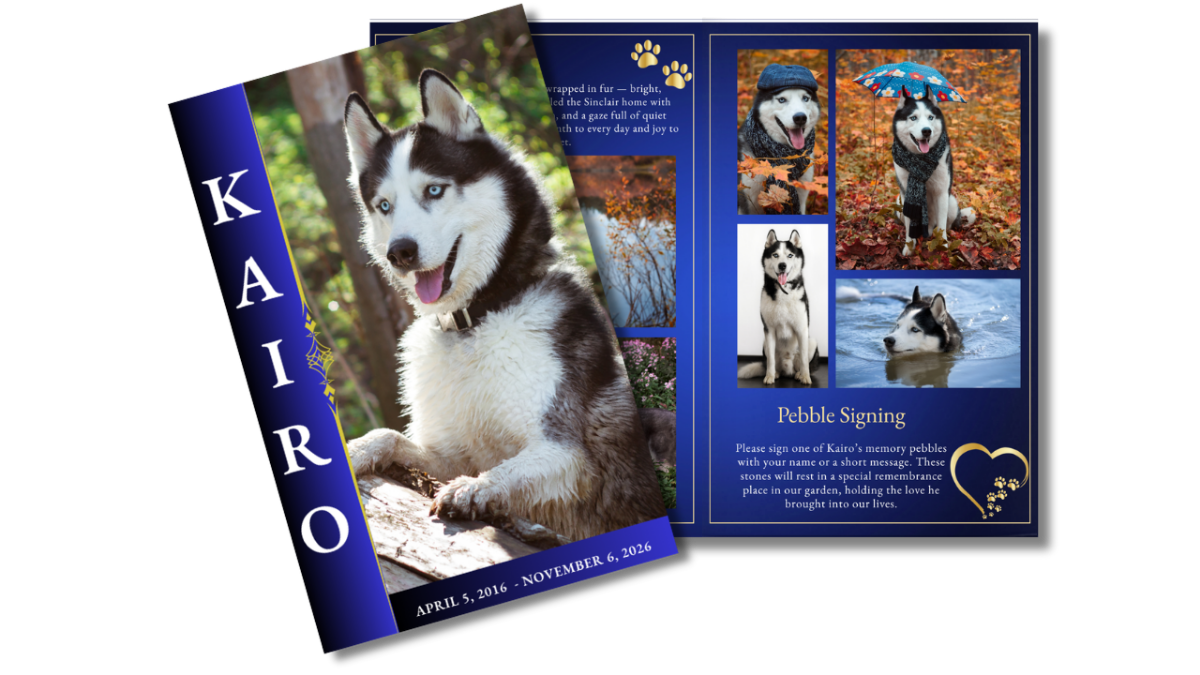
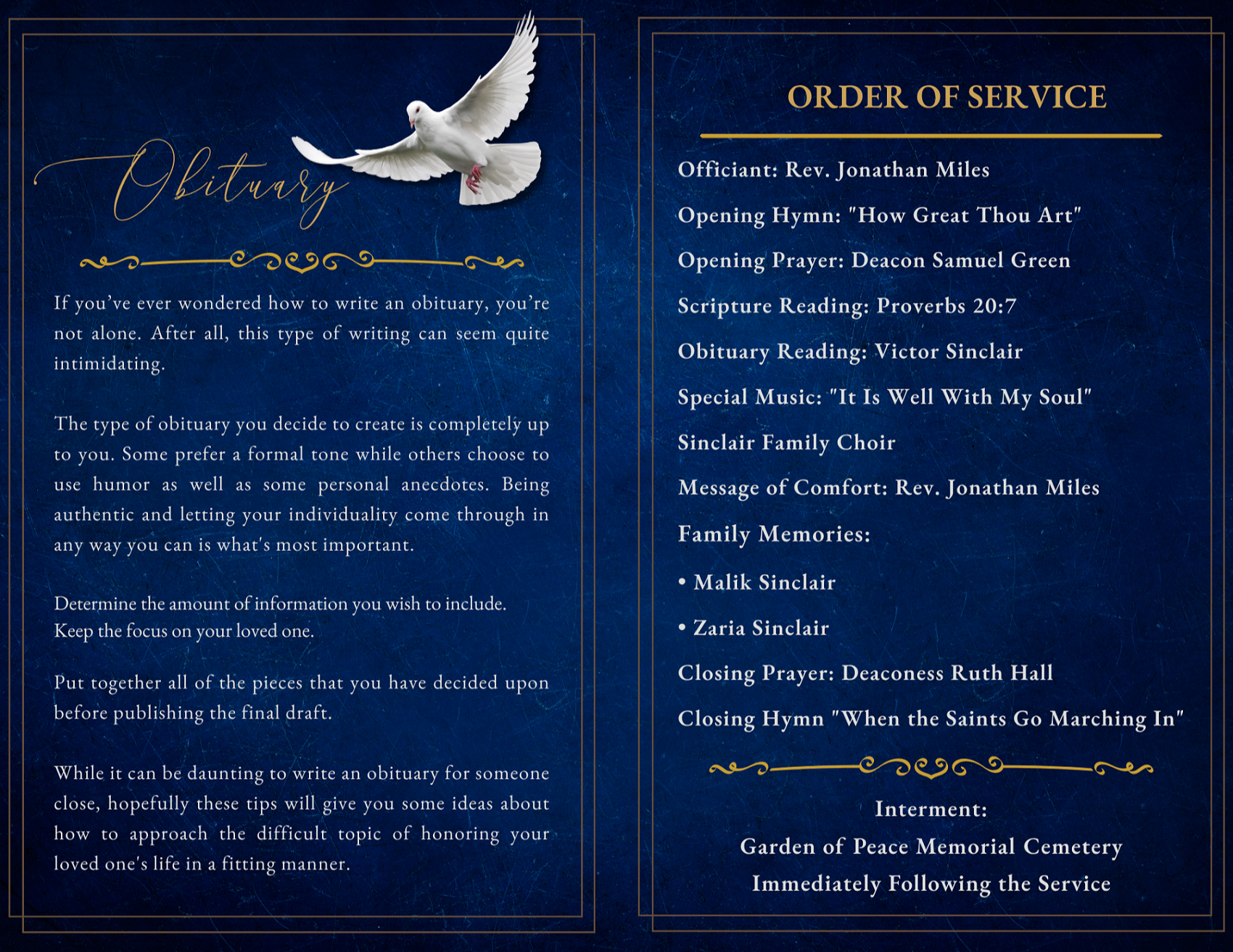
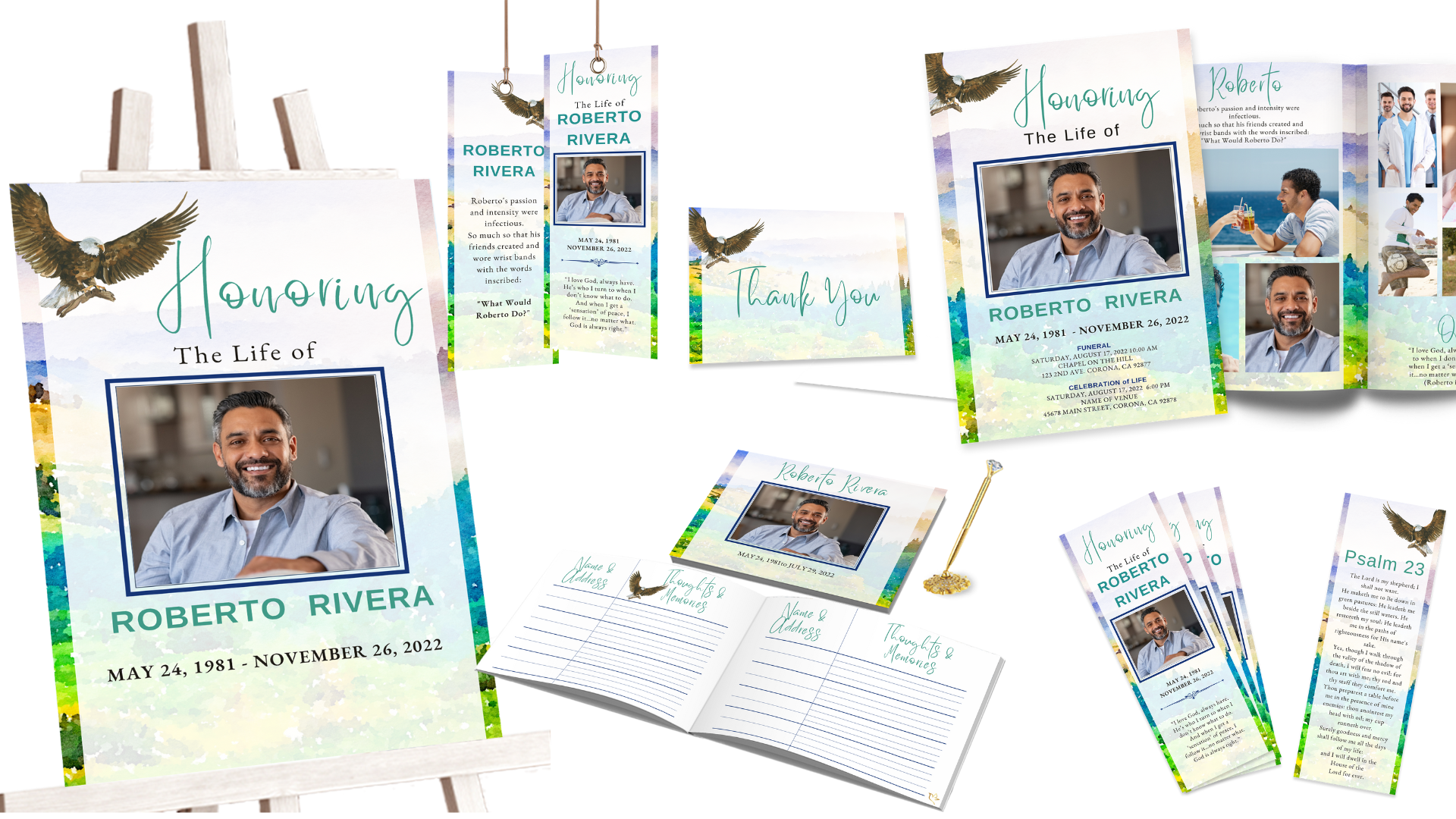
You’re welcome to explore our funeral program collections and find the design that feels right for your loved one—created to help you honor their memory with care and ease.
Each template is fully editable in Canva, allowing you to add photos, update text, adjust colors, and personalize every detail—no design experience needed.
If you need additional support during this tender time, our compassionate team is here for you. Please fill out the form below, and let us guide you through creating a beautiful memorial for your loved one. We're with you every step of the way
Your privacy is incredibly important to us. Rest assured, we will always protect your information and never share it with anyone, for any reason. We're committed to keeping your trust