How to Write a Eulogy for My Wife
A Heartfelt Guide
There are some relationships that become so woven into our everyday lives that it is difficult to remember where one person's story ends and the other's begins. A marriage can become that kind of relationship. You build a home together, create traditions, weather difficult seasons, celebrate wonderful ones, make ordinary decisions, share private jokes, and accumulate thousands of little memories that belong only to the two of you.
And then suddenly, or perhaps after a long illness, you are being asked to put that life together into words.
Writing a eulogy for your wife can feel almost impossible because you aren't simply writing about someone you loved. You're writing about the woman with whom you shared your life. She may have been your wife, your closest friend, your confidante, your partner, the mother of your children, the grandmother of your grandchildren, or the person you expected would be beside you for many more years.
How are you supposed to explain all of that in a few minutes?
You aren't.
That may be the most important thing to understand before you write a single word.
A eulogy doesn't have to contain everything you loved about your wife. It doesn't have to tell the complete story of your marriage or somehow capture every year you spent together. It simply needs to give the people gathered to remember her a glimpse of the woman you knew and the life you were fortunate enough to share.
Your eulogy can tell them about her kindness. Her strength. Her laugh. The way she loved your family. The little things she did that nobody else noticed. The memories that still make you smile even while your heart is breaking.
You don't need perfect words.
You need your words.
And that is where we will begin.
Why Writing a Eulogy for Your Wife Feels So Difficult
Writing about your wife is different from writing about almost anyone else because so much of what made your relationship meaningful happened in the ordinary spaces of life.
It may have happened over breakfast at the kitchen table. During long drives. While raising children. On vacations that didn't go according to plan. During evenings spent watching television together. In quiet conversations at the end of a difficult day.
A marriage is made from thousands of moments that rarely seem important while they are happening.
Until one day, they are priceless.
Perhaps you keep remembering the sound of her coming into the room. The way she said your name. The side of the bed where she slept. The restaurant she always chose for her birthday. The expression on her face when she was trying not to laugh.
Those details may seem too small to belong in a eulogy.
They aren't.
In fact, they may be exactly what belongs there.
When people gather for your wife's funeral or celebration of life, many of them will already know the facts of her life. They know where she worked. They know the names of her children. They may know where she went to school, what organizations she belonged to, or the accomplishments she was proud of.
What they may not know is what it was like to share a life with her.
You can give them that.
You can tell them how she made your home feel. You can share the qualities you admired in her. You can tell a story that captures her humor, compassion, courage, faith, determination, or wonderfully imperfect humanity.
And you can tell her, through your words, what sharing your life with her meant to you.
That is more than enough for a beautiful eulogy.
Six Simple Steps to Writing a Heartfelt Eulogy for Your Wife
When you're grieving, even a blank page can feel overwhelming. Rather than sitting down and expecting yourself to produce a finished speech, approach the eulogy slowly. You are gathering pieces of a life before you are arranging them into a story.
These six steps can help make that process feel much more manageable.
Step 1: Begin by Remembering, Not Writing
Before you worry about introductions, conclusions, or the right words, give yourself permission simply to remember your wife.
Look through photographs if that feels comforting. Think about the early years of your relationship. Remember your first home, trips you took, traditions you created, difficult periods you survived, and ordinary days you would give almost anything to experience once more.
Write down whatever comes to you.
Don't edit it. Don't decide whether it belongs in the eulogy yet. At this stage, you're simply gathering memories.
You may be surprised by what surfaces.
Sometimes it isn't the wedding day or the once-in-a-lifetime vacation that comes first. It is the way she drank her coffee, the song she sang while cooking dinner, or the way she reached for your hand when you walked together.
Those memories matter too.
Step 2: Decide What You Most Want People to Remember About Her
Your wife was many things to many people. She may have been a mother, daughter, sister, grandmother, friend, colleague, neighbor, volunteer, or woman of faith.
But what was at the center of who she was?
Perhaps she had an extraordinary ability to make people feel welcome. Maybe she was fiercely devoted to her family. Perhaps she met difficult circumstances with remarkable courage. Maybe she was funny, adventurous, thoughtful, stubborn in the very best way, or unfailingly generous.
Try completing this sentence:
"If everyone remembers only one thing about my wife, I hope they remember..."
Your answer can become the quiet theme running through your eulogy.
Step 3: Choose Two or Three Stories That Bring Her to Life
You don't need to tell twenty stories.
Two or three well-chosen memories are often far more powerful because they allow everyone listening to see your wife through your eyes.
If you want people to remember her generosity, don't simply say she was generous. Tell them about the time she noticed someone was struggling and quietly helped without ever mentioning it again.
If you want them to remember her sense of humor, share one of those stories your family has told so many times that everyone begins smiling before you even reach the ending.
If you want them to understand how deeply she loved you, you don't have to make a grand declaration. Sometimes one small story—a note she left in your lunch, a tradition you shared every anniversary, or the way she cared for you during a difficult season—says everything.
Step 4: Let Your Marriage Be Part of the Story Without Making It the Whole Story
This is an important balance when writing a eulogy for your wife.
Of course you should talk about your relationship. You were her husband, and your life together is an important part of her story.
But she was also her own person.
Allow the people listening to remember the woman beyond the marriage. Talk about what mattered to her, what she loved, the people she cared about, the things she believed in, and the qualities that made her uniquely herself.
You can celebrate your love story while also celebrating her story.
That balance often creates an especially meaningful tribute.
Step 5: Write the Way You Would Speak to People Who Love Her
You don't need formal language.
You don't need to sound like a writer.
And you certainly don't need to find impressive words for grief.
Imagine that you're sitting with people who loved your wife and someone asks, "What was she really like?"
How would you answer?
That is the voice you want on the page.
If you normally called her by a nickname, you may want to use it. If there was a phrase she always said, include it. If something makes you laugh when you remember it, let yourself share it.
A eulogy becomes powerful when the person listening can hear you in the words and recognize her in the stories.
Step 6: Read It Aloud and Give Yourself Permission to Feel
Once you have a draft, read it aloud several times.
You will quickly notice sentences that are difficult to say or passages that feel too formal. Change them until the words sound natural in your voice.
Reading aloud also helps you discover the places where emotion may be especially strong.
You may cry when you give your wife's eulogy.
You may need to stop.
You may look down at the page and realize you cannot speak for several seconds.
Nothing has gone wrong.
No one sitting in that room expects you to stand before them unaffected by the loss of the woman you loved. Take the time you need, find your place again, and continue when you can.
Your love for her is not something you need to hide from the people who came to honor her.
Questions to Help You Remember Your Wife
If you're struggling to decide what to include, don't immediately return to the blank page. Spend some time with your memories instead.
Think about your wife at different stages of your life together. Who was she when you first met? What made you fall in love with her? How did your relationship change through the years? What challenges did you face together? What made the two of you laugh when nobody else understood why it was funny?
Then think beyond your marriage.
What kind of mother, grandmother, daughter, sister, or friend was she? What mattered deeply to her? What did she do when someone she loved needed help? What made her proud? What made her happy?
You might ask yourself:
- What first made me fall in love with her?
- What is one ordinary moment with her that I wish I could experience again?
- What did she do that always made me smile?
- What did she teach me about love, marriage, family, or life?
- What did she love doing?
- What traditions did she create for our family?
- What did other people admire about her?
- What did she do better than anyone else I knew?
- What story captures her personality perfectly?
- What will our children or grandchildren always remember about her?
- What will I miss most?
- If I could tell her one more thing, what would I want her to know?
Don't feel as though you have to answer every question.
One may be enough to unlock a memory you hadn't thought about in years.
And that memory may become the heart of your eulogy.
Common Mistakes to Avoid
One of the easiest mistakes to make when writing a eulogy for your wife is trying to fit your entire marriage into it. You may have shared twenty, forty, fifty, or even sixty years together. There is simply no way to capture all of that in a few pages.
Don't try.
Choose the moments that reveal something meaningful about her and trust that those stories can represent a much larger life.
Another common mistake is allowing the eulogy to become entirely about your own grief. Your grief absolutely belongs in your words. It would be unnatural to pretend otherwise. But the purpose of the eulogy is to celebrate your wife's life, so try to keep bringing the story gently back to her—who she was, what she loved, how she lived, and what she gave to the people around her.
It's also easy to fall into the trap of making someone sound perfect after they die. You don't have to turn your wife into someone unrecognizable in order to honor her. Often the little quirks, habits, stubborn streaks, funny sayings, and imperfections are precisely the things a family remembers most tenderly.
Be thoughtful, of course. A funeral is not the place to settle old disagreements or reveal private information. But there is a beautiful difference between being respectful and pretending someone never had a flaw.
Finally, don't judge your eulogy by how well you deliver it.
If your voice shakes, that's okay.
If you cry, that's okay.
If you have to ask someone else to finish reading it for you, that's okay too.
The gift is not the performance.
The gift is that you took the time, in the middle of your own heartbreak, to gather the memories of the woman you loved and put them into words.
That is an extraordinary act of love.
And that is enough.
Frequently Asked Questions
Even after you have begun writing, you may still wonder whether you are doing it “right.” That feeling is especially understandable when the person you are writing about is your wife. You aren't simply preparing remarks for a funeral. You are trying to honor someone with whom you may have shared years—or decades—of your life.
There is no single right way to write or deliver a eulogy. Still, there are a few questions that come up often, and knowing the answers may make the process feel a little less overwhelming.
How long should a eulogy for my wife be?
Most eulogies are somewhere between five and ten minutes long. That is enough time to share several meaningful memories without feeling as though you need to tell the entire story of your marriage.
If yours is a little shorter or longer, that's okay. The more important question is whether the words feel true to the woman you are honoring. A simple, heartfelt tribute can be far more meaningful than a longer speech that tries to include everything.
Is it okay if I cry while giving my wife's eulogy?
Of course.
You are standing in front of people you love and speaking about the woman with whom you shared your life. No one expects you to do that without emotion.
If tears come, allow them to come. Pause. Look down at your pages. Take a moment before continuing. There is no need to apologize.
You may also want to ask someone you trust beforehand to be prepared to finish reading the eulogy if you discover that you simply cannot continue. Knowing that person is there can remove some of the pressure before you ever stand up to speak.
Should I talk about our marriage?
Yes. Your marriage was an important part of your wife's life, and your memories offer a perspective no one else can give.
Share how you met if that story is meaningful. Talk about what you admired about her, what you learned from her, or the things you loved about sharing everyday life together.
At the same time, remember that she had relationships and experiences beyond your marriage. Allow room in the eulogy for the woman her children, grandchildren, siblings, friends, coworkers, and others knew and loved too.
Can I include romantic memories?
Absolutely, as long as they are appropriate for the setting.
You might talk about the first time you saw her, why you fell in love with her, a favorite anniversary, or the way your relationship changed and deepened through the years. Those memories can be especially moving because they allow others to glimpse the love story behind the family they know today.
Private memories can remain private. You don't need to share everything for people to understand how deeply you loved one another.
Is it appropriate to include humor?
If your wife loved to laugh, it would almost feel strange not to.
A favorite saying, a funny habit, or a story everyone in the family recognizes can bring a moment of warmth to a difficult day. You may hear people laugh and cry almost simultaneously.
That's okay.
A funeral can hold both emotions. You are grieving because there was also joy.
Sample Openings
The first few sentences can feel particularly difficult because they make everything suddenly real. If you have been staring at the beginning of your eulogy and changing it over and over again, try not to put so much pressure on those first words.
You don't need a dramatic opening. You simply need a way into the story.
Here are several approaches you can adapt to sound like you and reflect the relationship you shared with your wife.
Warm and Personal Opening
"Thank you all for being here today to remember my wife. I've spent the last few days trying to decide how I could possibly put into words what she meant to me and to our family. The truth is, I don't think I can. But I can tell you a little about the woman I loved and the life I was so fortunate to share with her."
A Love-Story Opening
"I still remember when I first met her. I couldn't have known then how completely this woman would change my life or how many years, memories, challenges, celebrations, and ordinary Tuesdays we would eventually share. Looking back now, I realize just how fortunate I was that our lives found each other."
Faith-Centered Opening
"Today my heart is filled with both sorrow and gratitude. I grieve because I miss my wife more than I can possibly explain, but I am also profoundly grateful—for her life, for our years together, for the family we shared, and for the faith that gives me hope that this goodbye is not forever."
Conversational Opening
"My wife would probably have had some very specific opinions about what I should say today. And if I didn't get it quite right, I'm fairly certain she would have let me know. That was one of the things I loved about her. She knew who she was, she loved deeply, and she made our lives infinitely more interesting simply by being herself."
Sample Closings
Your closing doesn't have to summarize everything you've said. In fact, some of the most beautiful endings are very simple.
Think of the final words as something you would want your wife to hear if she were sitting quietly in the room with you. What would you want to say one last time?
Closing Example One
"Thank you for choosing to share your life with me. Thank you for the laughter, the patience, the memories, the family we built, and the love you gave so freely. I don't know yet how to imagine this life without you beside me, but I do know that loving you changed me forever. I will carry that love with me always."
Closing Example Two
"There are so many things I will miss—the sound of your voice, your smile, our conversations, and all the ordinary moments I never realized were extraordinary. But more than anything, I will be grateful. Grateful that of all the people in this world, I had the privilege of calling you my wife."
Closing Example Three
"Today we say goodbye to a remarkable woman, but we don't say goodbye to the love she gave us. That remains in our children, in our family, in the memories we tell, and in the countless ways she changed our lives. I love you. I miss you. And I always will."
Complete Sample Eulogy for a Wife
Good afternoon, everyone.
Thank you for being here today to remember and celebrate my wife. Seeing so many people who loved her means more to our family than I can adequately express.
When I sat down to write this, I thought the hardest part would be finding the right words.
I was wrong.
The hardest part was realizing that there simply aren't enough words.
How do you take years of marriage, family, laughter, disagreements, adventures, worries, celebrations, and quiet evenings at home and turn them into a few pages? How do you explain what it means to lose the person who knew the story behind almost every story you tell?
I finally realized I couldn't.
So instead, I want to tell you about the woman I knew.
My wife had a way of making ordinary life feel special. She didn't need elaborate plans or grand occasions. Some of our happiest memories happened around our own kitchen table, during long drives, or sitting together at the end of a day talking about absolutely nothing important.
Those are the moments I find myself missing most.
She cared deeply about the people she loved. She remembered the things other people forgot. She noticed when someone was struggling. She worried about our family, celebrated every accomplishment, and somehow carried a hundred little details in her head that the rest of us never even realized needed remembering.
She also made me laugh.
Sometimes intentionally.
Sometimes not.
And sometimes at moments when neither of us was supposed to be laughing.
Those are the memories that keep finding their way back to me now—the little looks across a room, the private jokes, and the conversations that wouldn't mean anything to anyone else but meant everything to us.
Our life together wasn't perfect. No marriage is.
We disagreed. We frustrated each other. We faced seasons that were difficult and days when life didn't look anything like we had planned.
But through all of it, we kept choosing each other.
And when I look back now, I realize that may be one of the greatest gifts of marriage. Love isn't only found in the big moments. It is found in the thousands of ordinary days when two people continue building a life together.
She taught me that.
She taught me many things, actually.
She taught me to pay attention to the people I love. She taught me that kindness often happens quietly. She taught me that a home isn't created by furniture or walls but by the people who make you want to return to it.
And she taught me that some of the greatest blessings in life can become so familiar that we forget how extraordinary they really are.
She was one of those blessings.
I wish we had more time.
Of course I do.
There are conversations I still want to have. Places I would still like to go. Ordinary mornings I would happily take back if I could.
But alongside that sadness is enormous gratitude.
I am grateful that I knew her.
I am grateful that I loved her.
And I am especially grateful that she loved me.
To our family, I hope we continue telling her stories. I hope we keep the traditions she cared about, laugh about the things that made her laugh, and recognize the pieces of her that continue to live in each of us.
And to my wife, if I could say just one more thing, it would simply be this:
Thank you.
Thank you for the life we shared.
Thank you for every ordinary day I didn't appreciate nearly enough while I was living it.
Thank you for the family we built, the memories we made, and the love that became such a familiar part of my life that I once couldn't imagine living without it.
I love you.
I miss you.
And I will carry you with me for the rest of my life.
Free Downloadable Eulogy Outline
If you're still struggling to turn your memories into a finished eulogy, an outline can make the blank page feel much less intimidating. You don't have to complete it in order. Begin with whichever section feels easiest, and allow the rest to develop naturally.
Opening
Introduce yourself if necessary, thank family and friends for coming, and say a few simple words about what your wife meant to you.
Who She Was
Describe the qualities that made her uniquely herself. Think beyond roles and accomplishments to the personality, values, habits, humor, strengths, and little characteristics people loved about her.
Your Life Together
Share something about your relationship. You might tell how you met, what made you fall in love, something you learned from your marriage, or one ordinary memory that captures what sharing a life with her was really like.
Two or Three Meaningful Stories
Choose stories that reveal her character rather than simply filling in a timeline. Let people see her kindness, humor, strength, faith, generosity, determination, or love through moments that actually happened.
Her Life Beyond Your Marriage
Remember the other parts of her life that mattered deeply. Talk about the people she loved, the roles she treasured, the things she enjoyed, and the ways she made a difference to others.
Her Legacy
Consider what remains because she was here. What did she teach your family? What traditions will continue? What qualities do you see living on in her children or grandchildren? How did knowing her change the people around her?
Closing
End with gratitude, a final memory, a message of hope, or simply the words you would want to say to your wife one more time.
You don't have to fill every section with paragraphs immediately. Begin with a few words or memories beneath each heading. Little by little, those fragments can become the story you want to tell.
Related Resources
Writing your wife's eulogy may be only one of many things you're trying to manage while grieving. Give yourself permission to accept help wherever you can and to make the practical parts of planning her service as simple as possible.
Free Heartfelt Eulogy Book — If you would like additional help, download our free Heartfelt Eulogy guide for more encouragement, ideas, and examples as you prepare your tribute.
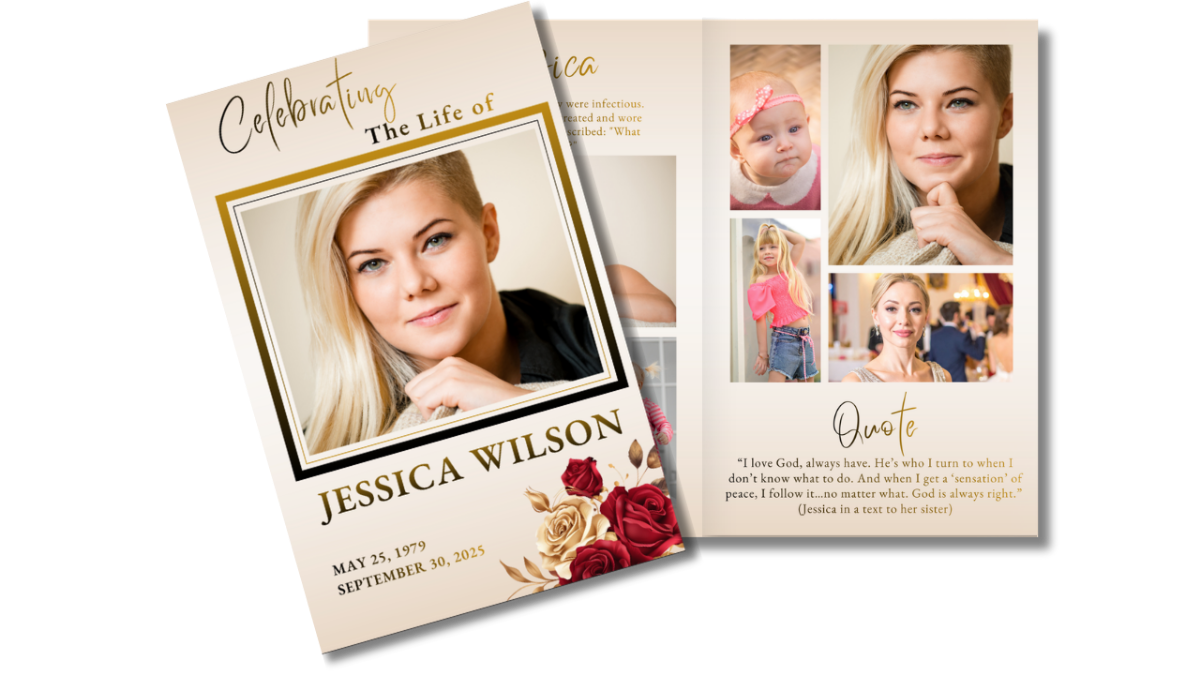
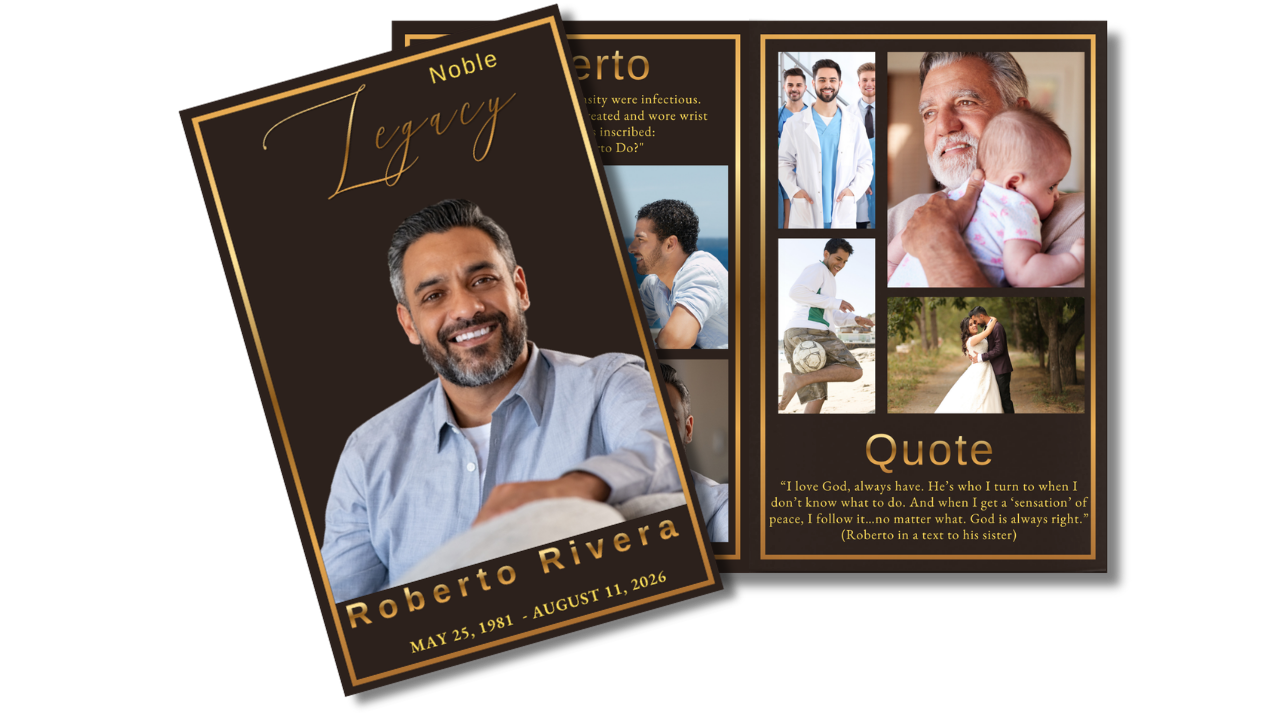
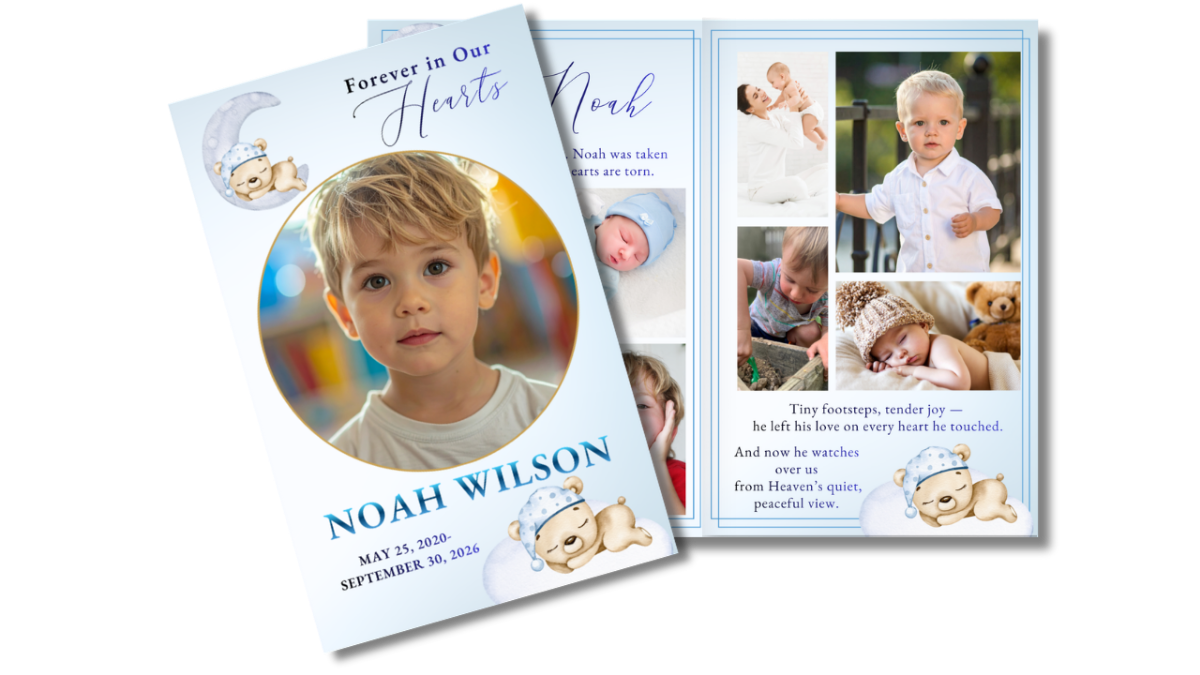
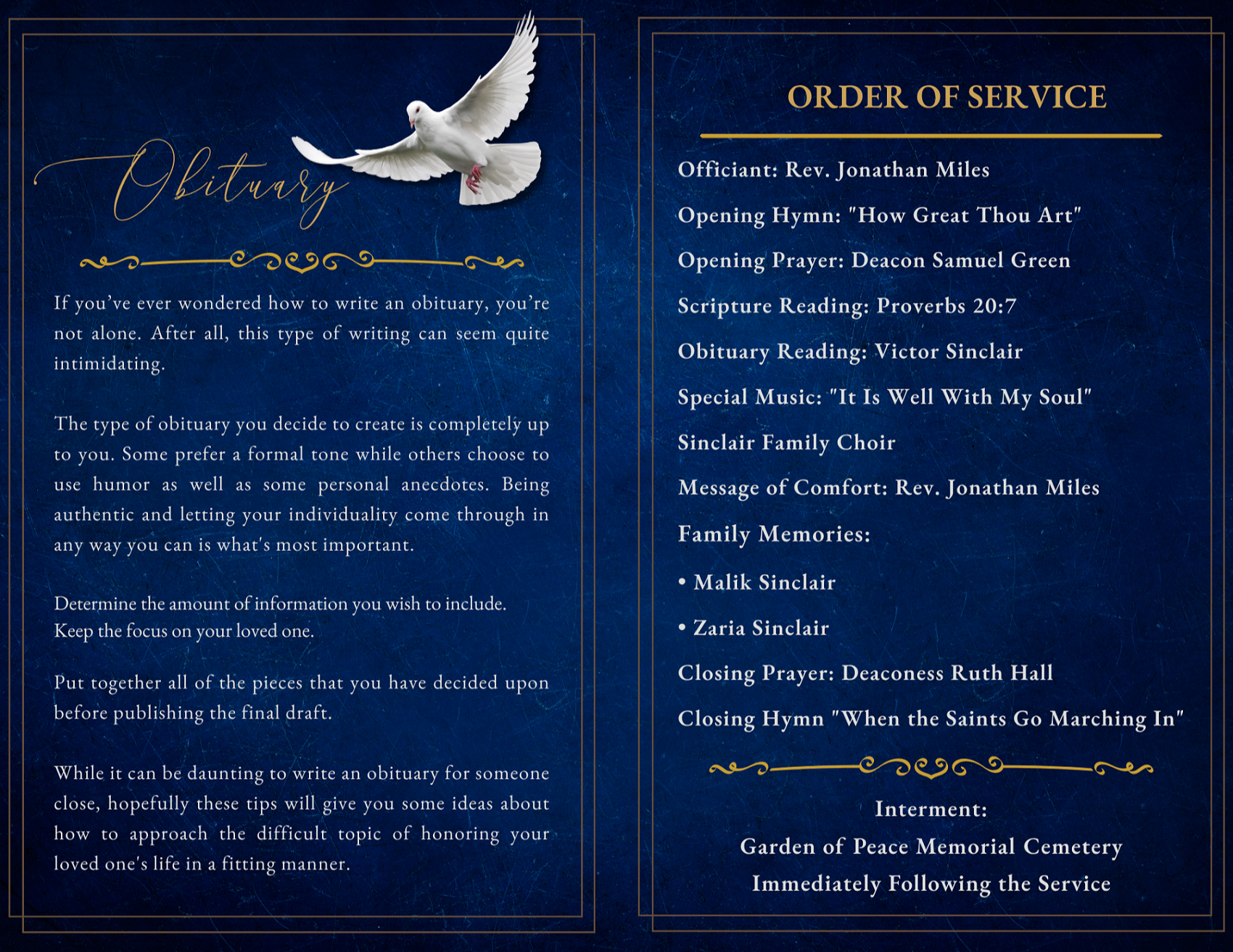
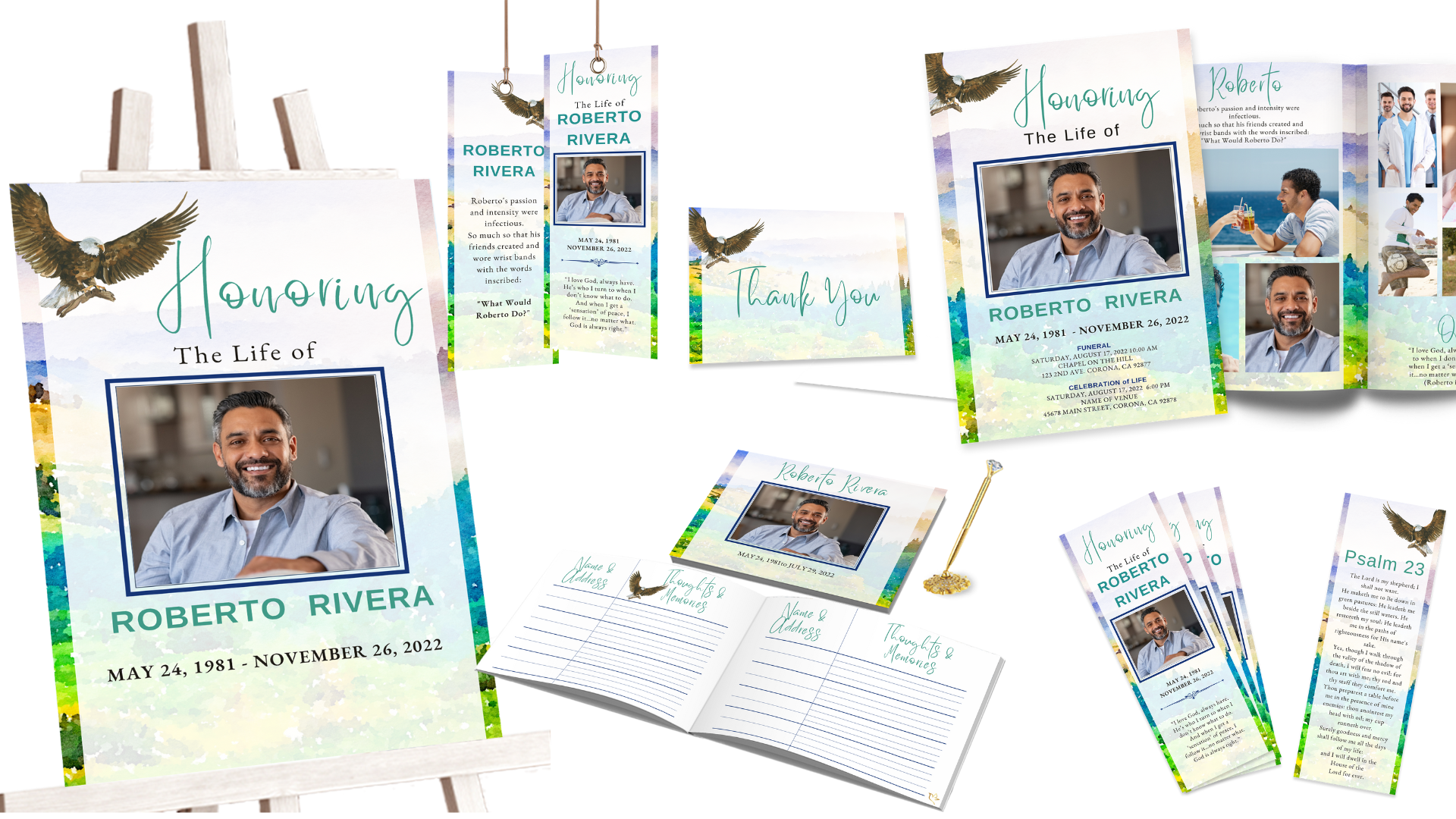
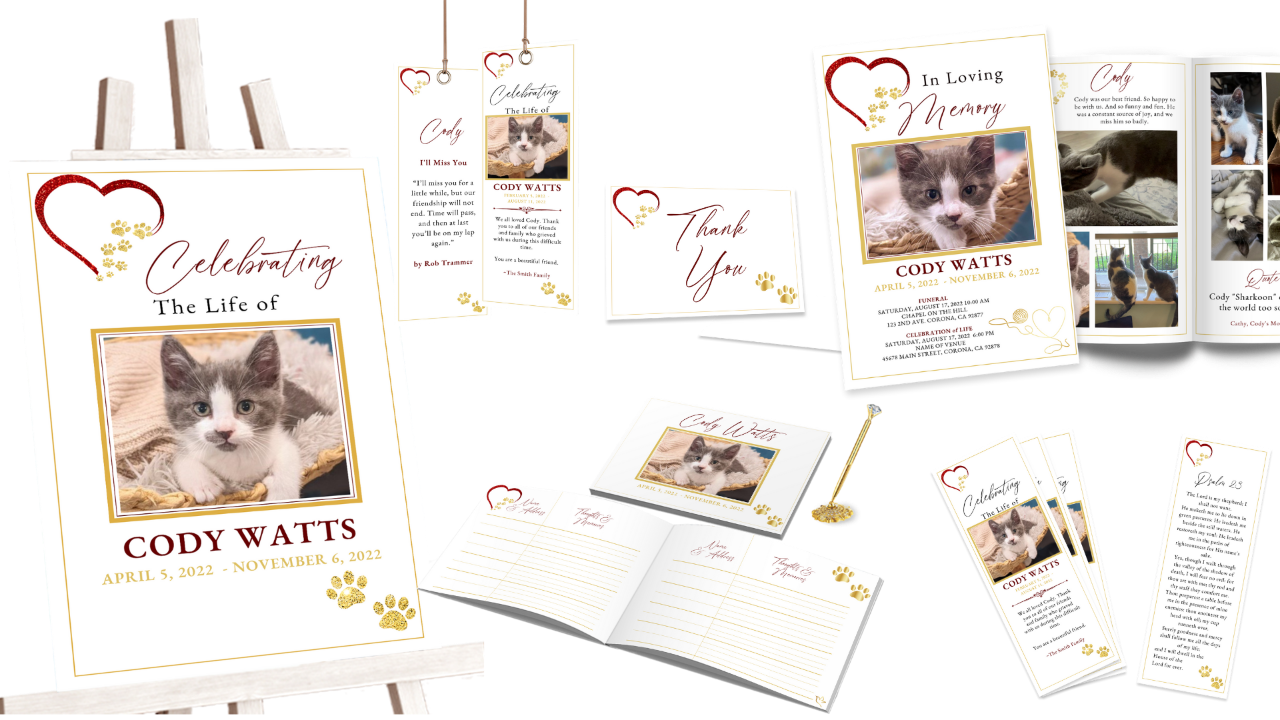
Funeral Program Bundle Templates — Create a beautiful, personalized funeral program that reflects your wife's life and gives family and friends a meaningful keepsake from her service.
Funeral Program Templates for Women — Browse designs created especially for honoring mothers, wives, grandmothers, sisters, daughters, and other beloved women.
How to Write an Obituary (Coming Soon) — Get step-by-step help writing an obituary that tells the story of your wife's life with warmth and dignity.
Funeral Poems (Coming Soon) — Find meaningful poems that can be read during the service, included in her funeral program, or shared with family.
Funeral Readings (Coming Soon) — Explore comforting religious and non-religious readings that can help personalize her funeral or celebration of life.
There may be no collection of words large enough to contain an entire marriage.
There are simply too many memories. Too many ordinary mornings. Too many conversations, celebrations, disappointments, private jokes, shared decisions, and moments that belonged only to the two of you.
Your eulogy doesn't have to hold all of them.
It only needs to open a small window into the life you shared and the woman you loved.
Years from now, the people who heard you speak may not remember every sentence. But they may remember the story that made them laugh. They may remember something about your wife they had never known before. They may remember looking around the room and realizing how many lives she touched.
And you will have given them something precious.
For a few minutes, through your memories and your words, you will have brought a little bit of her back into the room.
That is enough.
That is a beautiful eulogy.

You’re welcome to explore our funeral program collections and find the design that feels right for your loved one—created to help you honor their memory with care and ease.
Each template is fully editable in Canva, allowing you to add photos, update text, adjust colors, and personalize every detail—no design experience needed.
If you need additional support during this tender time, our compassionate team is here for you. Please fill out the form below, and let us guide you through creating a beautiful memorial for your loved one. We're with you every step of the way
Your privacy is incredibly important to us. Rest assured, we will always protect your information and never share it with anyone, for any reason. We're committed to keeping your trust