How to Write a Eulogy for My Sister

A Heartfelt Guide
There are relationships in life that are difficult to explain to anyone who hasn't lived them.
A sister can be one of them.
She may have been the first friend you ever had—and possibly the first person you ever argued with. She may have known you before either of you really knew yourselves. She knew the family you came from, the stories behind the stories, the childhood versions of both of you, and perhaps a thousand little things about you that no one else could possibly know.
Maybe she was your older sister, the one who went first and showed you what was coming.
Maybe she was your younger sister, someone you felt protective of even long after she was perfectly capable of taking care of herself.
Maybe you were only a year or two apart and grew up almost as a pair.
Or perhaps there were many years between you, and your relationship changed dramatically as you both became adults.
A sister can be your confidante, your cheerleader, your fiercest defender, the keeper of your secrets, the person who can make you laugh at exactly the wrong moment, or the only person in a room who understands why something matters without your having to explain it.
Sometimes she can be several of those things at once.
And sometimes sister relationships are more complicated.
Perhaps you loved each other deeply but didn't always agree. Maybe life took you in different directions for a while. Perhaps your relationship had seasons of closeness and seasons of distance.
That belongs to your story too.
A meaningful eulogy does not require you to pretend that two human beings had a perfect relationship.
It asks you to remember a real person.
Your sister.
And now, while you're grieving her, you're somehow supposed to take a lifetime of shared history and turn it into a few minutes of words.
That can feel impossible.
But you don't have to tell everything.
You don't have to explain your entire relationship.
You simply need to help the people gathered remember her.
Her laugh.
Her personality.
The things she cared about.
The stories only your family knows.
The things that drove you crazy and now make you smile.
The way she loved.
The place she occupied in your life.
And the things about her you will carry with you for the rest of yours.
Why Writing a Eulogy for Your Sister Feels So Difficult
One of the hardest things about losing a sister is losing someone who may have shared so much of your history.
Parents remember your childhood from above it.
A sister often remembers it from beside you.
She may remember the bedroom you shared, the family vacations, the neighborhood where you grew up, the teachers you liked, the relatives you visited, the embarrassing phases you hoped everyone had forgotten, and the things that happened around the dinner table that no one outside your family would ever understand.
She may know exactly why one particular phrase can make you both laugh until you cry.
That kind of shared history is difficult to replace.
And when your sister dies, you may suddenly realize that you've lost one of the people who remembered your life with you.
That can make writing her eulogy especially emotional.
You aren't simply remembering her life.
You are remembering pieces of your own life too.
Childhood.
Teenage years.
Weddings.
Babies.
Holidays.
Family changes.
Hard seasons.
Wonderful seasons.
Perhaps decades of phone calls, texts, birthday cards, vacations, arguments, reconciliations, celebrations, and ordinary conversations that you never imagined would someday become memories you desperately wanted back.
But your sister was more than your shared childhood.
She had a life that belonged to her.
She may have been a wife or partner, mother, grandmother, aunt, friend, coworker, neighbor, volunteer, artist, teacher, professional, caregiver, traveler, or something else entirely.
The people gathered at her funeral may have known versions of your sister that you didn't.
Your eulogy can bring those worlds together.
You can give them something no one else in the room can give quite the same way:
What it was like to be her sister or brother.
Six Simple Steps to Writing a Heartfelt Eulogy for Your Sister
Before you try to write the opening sentence, give yourself permission not to write a eulogy yet.
Start by remembering.
Your first job isn't to create something polished.
It's to find your sister inside all those memories.
Step 1: Go Back to the Beginning
Think about your earliest memories together.
What was she like as a little girl?
What did you do together?
What did you fight about?
What made you laugh?
What family stories still get told about the two of you?
Look through photographs if you have them.
Read old cards, letters, emails, or text messages.
Think about family vacations, school years, holidays, bedrooms, clothes borrowed without permission, secrets whispered after bedtime, and all the ordinary pieces of growing up together.
Don't decide yet whether a memory belongs in the eulogy.
Just write it down.
One memory will often lead to another.
Step 2: Ask What Made Her Unmistakably Herself
Try completing this sentence:
“Nobody else could quite ______ the way my sister did.”
Maybe nobody told a story like she did.
Maybe nobody made you laugh like she did.
Perhaps she could turn a five-minute phone call into an hour.
Maybe she remembered everyone's birthday, brought people together, gave extraordinarily good advice—or wonderfully terrible advice that became a family joke.
Think beyond words such as kind, loving, or funny.
Those qualities matter, but ask yourself how she expressed them.
What did her kindness actually look like?
What did her laughter sound like?
How did people know she loved them?
Those details will make your eulogy sound like your sister, rather than a tribute that could have been written about anyone.
Step 3: Choose Two or Three Stories That Reveal Her
You don't need twenty stories.
Choose a few that show people who your sister was.
Perhaps there is a childhood story that captures her personality perfectly.
Maybe there is a story from adulthood that shows how your relationship grew and changed.
Perhaps there is something she did for another person that reveals her generosity, courage, humor, loyalty, or compassion.
Stories do something adjectives cannot.
Instead of telling everyone she was fiercely loyal, tell them about the time she dropped everything because someone in the family needed her.
Instead of saying she was funny, tell the story that still makes everyone laugh.
Let people see her.
Step 4: Talk About the Relationship You Actually Shared
Sisterhood does not have one shape.
Some sisters talk every day.
Some can go weeks without speaking and then pick up exactly where they left off.
Some are extraordinarily alike.
Others spend their entire lives wondering how two people raised in the same family could possibly be so different.
Your eulogy doesn't need to describe an idealized version of sisterhood.
Describe yours.
What did you understand about each other?
What did you learn from her?
How did your relationship change as you grew older?
What could she say to you that no one else could?
What did she know about you without needing to ask?
That truth is where the heart of your tribute often lives.
Step 5: Remember the Life She Built Beyond You
One of the most loving things you can do in your sister's eulogy is allow her to be more than your sister.
Think about the life she created.
Who loved her?
Whom did she love?
What mattered to her?
What was she proud of?
What did she work hard for?
What brought her joy?
If she had children, what kind of mother was she?
If she had a spouse or partner, what did that relationship mean to her?
What kind of friend was she?
What did coworkers, neighbors, church members, or other people know about her that the family may not have seen?
Your relationship gives you the beginning of the story.
Her whole life gives you the rest.
Step 6: Write in Your Own Voice
You do not need to sound formal.
You do not need to become a poet.
And you certainly do not need to pretend you aren't grieving.
Write the way you would talk about your sister to someone who genuinely wanted to know her.
If you called her Sis, use it.
If there was something she always said, include it.
If you have a story that makes you laugh even while you're crying, tell it.
If you need to say, “I still can't believe she's gone,” you can say that too.
The goal isn't to sound impressive.
The goal is to sound true.
Questions to Help You Remember Your Sister
Sometimes memories don't arrive when we demand them.
They arrive sideways.
A song comes on.
You find an old photograph.
You open a drawer and discover something she gave you.
Suddenly, there she is.
If you're struggling to decide what belongs in your eulogy, don't ask yourself, What should I write?
Ask yourself questions about her instead.
You might begin with these:
-
What is my earliest memory of my sister?
-
What did we love doing together when we were young?
-
What did we argue about that seems funny now?
-
What could she do that always made me laugh?
-
What was something only the two of us understood?
-
What did she know about me that almost no one else knew?
-
What did I admire most about her?
-
What did she teach me?
-
How were we completely different?
-
In what ways were we exactly alike?
-
What role did she naturally play in our family?
-
What was she especially proud of?
-
What brought her genuine happiness?
-
What did other people love about her?
-
What story captures her personality better than anything else?
-
What ordinary thing about her do I already miss?
-
What do I understand about our relationship differently now that I'm older?
-
What did she give me that I will carry for the rest of my life?
-
If I could have one more ordinary day with her, what would we do?
-
If I could tell her one more thing, what would I say?
Don't feel that you need to answer all of them.
You aren't completing a worksheet.
You're opening doors.
One answer may bring back a story you haven't thought about for years.
Follow it.
Sometimes the memory that arrives unexpectedly is exactly the one your eulogy needs.
Common Mistakes to Avoid
One of the easiest mistakes to make when writing a eulogy for your sister is trying to explain your entire relationship.
You can't.
A lifetime between siblings contains too much history.
You don't have to tell every childhood story, explain every stage of your relationship, or mention every important event.
Choose what reveals her best.
Another mistake is making the entire eulogy about childhood.
Childhood memories can be wonderful, especially between sisters and brothers, but your sister continued becoming herself long after you both grew up.
Let people see the adult woman too.
Talk about the life she built, the people she loved, the things she cared about, and the person she became.
It can also be tempting to make your sister perfect after she dies.
You don't need to.
The little quirks, stubborn streaks, ridiculous habits, family disagreements, and wonderfully human characteristics may be part of what everyone loved about her.
You can honor someone without turning her into someone she never was.
Another common mistake is believing the eulogy must be entirely sad.
If your sister was funny, let her be funny.
If she was mischievous, tell us.
If your family has a story that would have made her laugh hardest of anyone in the room, there may be no better day to tell it.
And finally, don't believe you have to be strong enough to read every word without emotion.
You may cry.
You may stop.
You may need a moment.
You may even ask someone you trust to stand nearby in case you cannot finish.
None of that means you failed.
The people listening aren't judging your delivery.
They're listening because they loved her too.
And if your words allow them to recognize your sister—to remember her voice, her laughter, her heart, or some little thing that made her completely herself—then you have already done what a eulogy is meant to do.

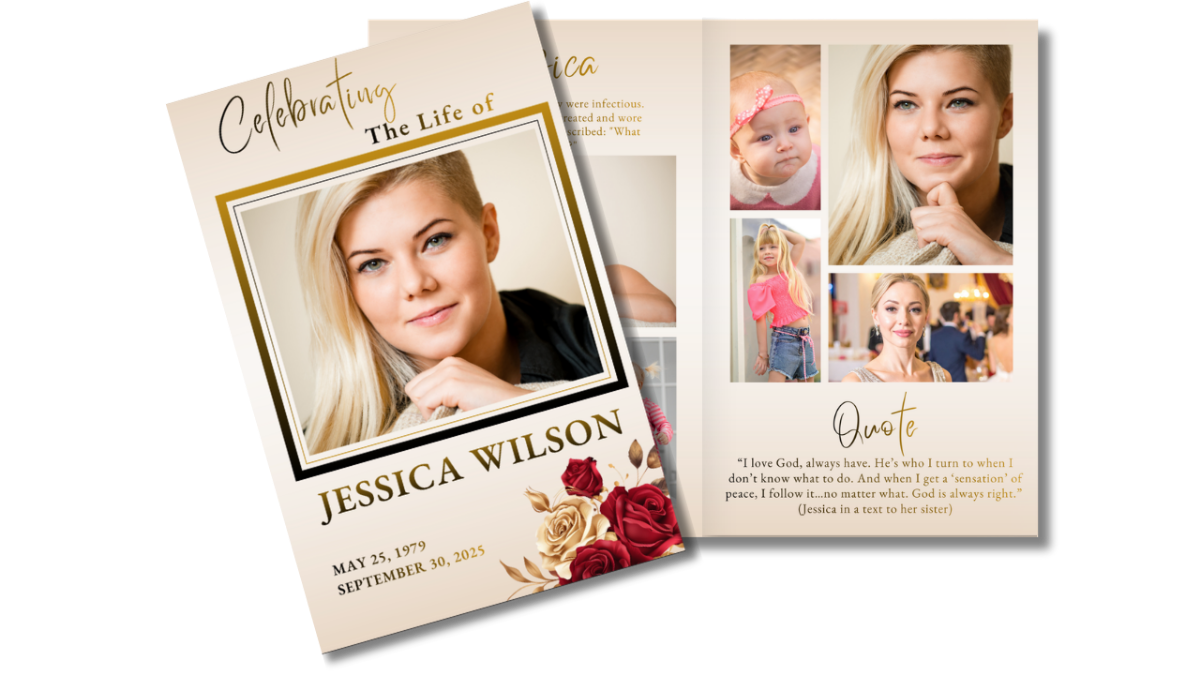
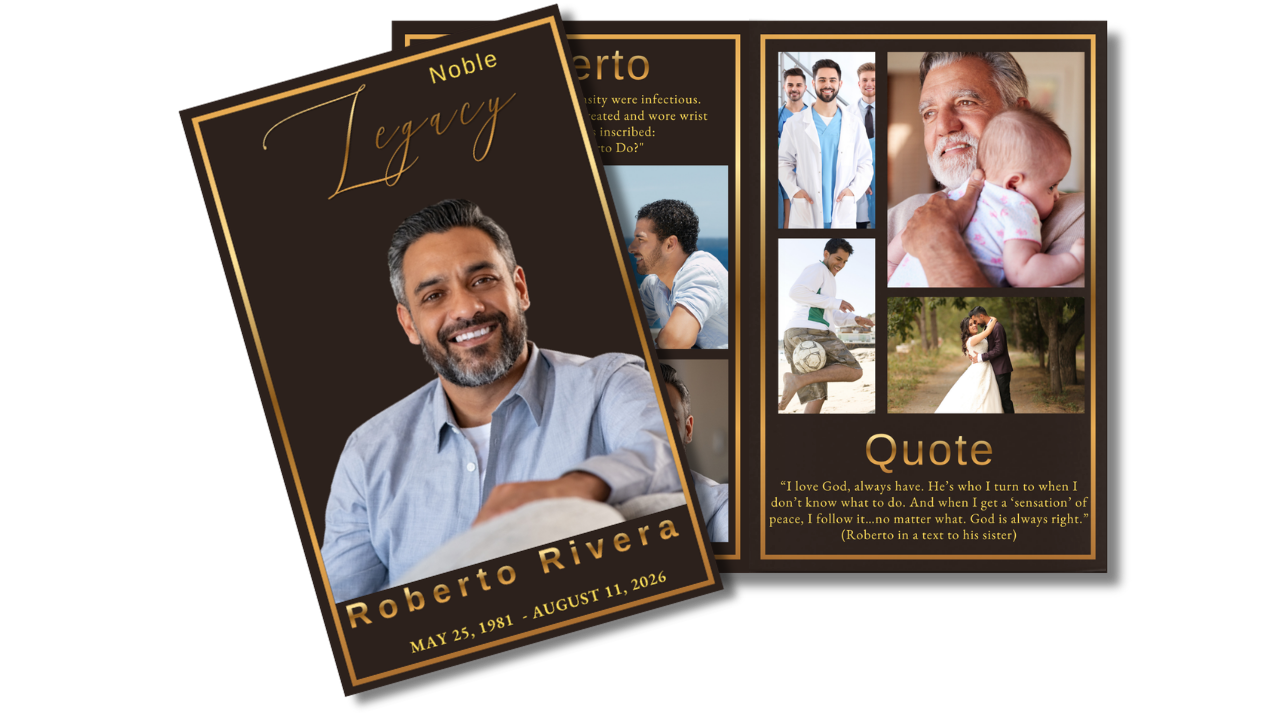
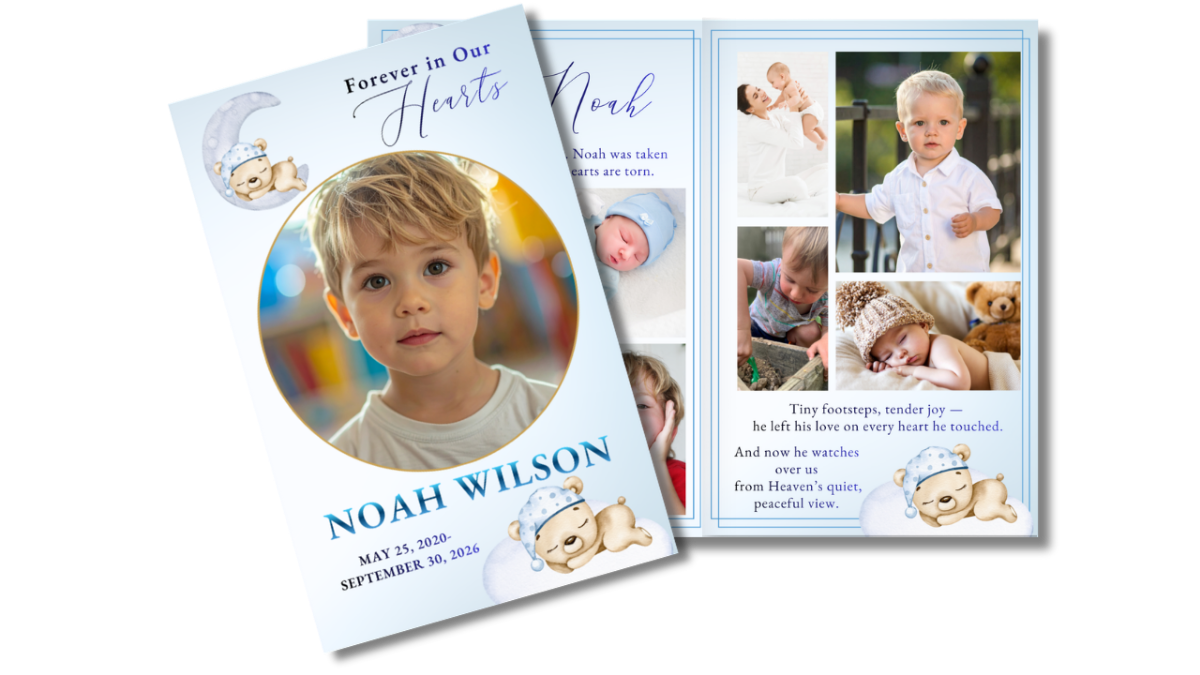
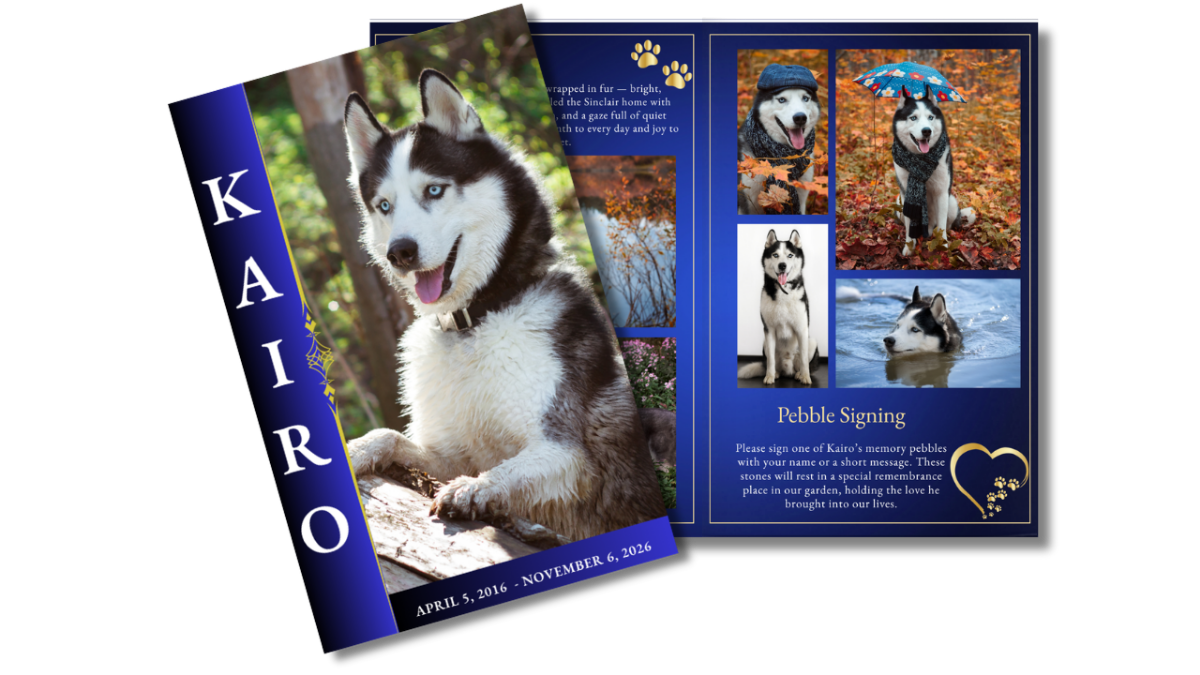
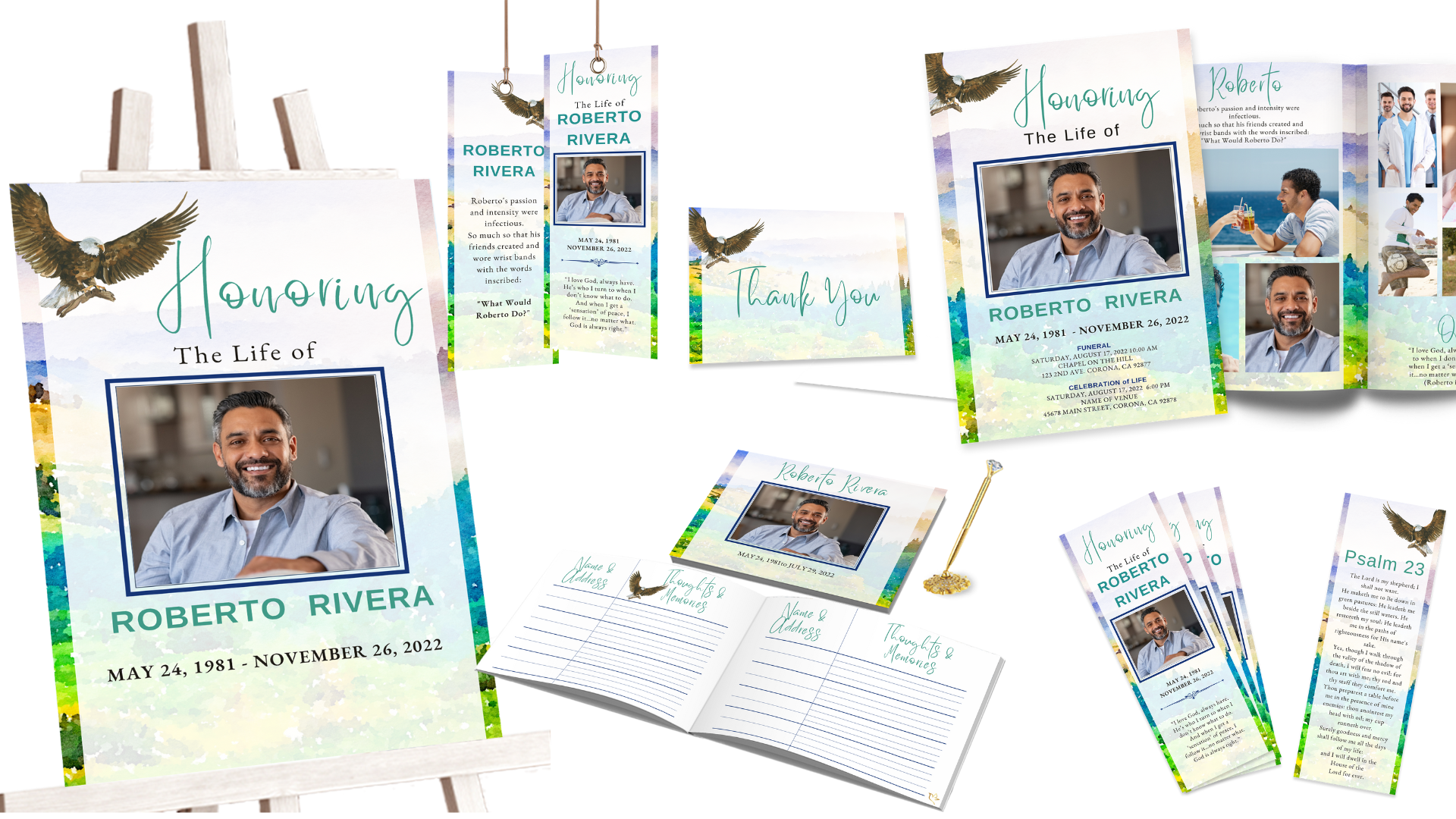
You’re welcome to explore our funeral program collections and find the design that feels right for your loved one—created to help you honor their memory with care and ease.
Each template is fully editable in Canva, allowing you to add photos, update text, adjust colors, and personalize every detail—no design experience needed.
If you need additional support during this tender time, our compassionate team is here for you. Please fill out the form below, and let us guide you through creating a beautiful memorial for your loved one. We're with you every step of the way
Your privacy is incredibly important to us. Rest assured, we will always protect your information and never share it with anyone, for any reason. We're committed to keeping your trust