How to Write a Eulogy for My Friend

A Heartfelt Guide
Some friendships become so deeply woven into our lives that the word friend hardly seems big enough.
A close friend may have known you through years that no one else shared. They may have been there for new jobs, bad breakups, weddings, babies, moves, losses, celebrations, ordinary Tuesdays, late-night conversations, and the kind of laughter that leaves you unable to breathe.
Perhaps your friend knew parts of you that even family did not.
Maybe they were the person you called first when something happened.
The one who could tell from a single text that something was wrong.
The person who knew the story behind the story and did not need you to explain.
Now you are being asked to write a eulogy for that person.
That can feel strangely difficult because friendship does not always fit neatly into the categories people use at funerals. Your friend may not have been related to you by blood or marriage, yet they may have occupied one of the most important places in your life.
That bond deserves to be honored.
You do not have to prove how important your friendship was.
You do not need a perfect story or formal words.
You simply need to help everyone gathered remember the person you knew.
Their laugh.
Their loyalty.
The way they showed up.
The things you always did together.
The memories that belonged only to the two of you.
The person they were beyond your friendship and the ways they touched other lives too.
A eulogy for a friend is one way of saying:
You mattered to me. Your life mattered. And I am grateful that our stories crossed.
Why Writing a Eulogy for Your Friend Feels So Difficult
Friendships are built differently than family relationships.
You usually choose each other.
Perhaps you met at school, at work, through church, through your children, in the military, at a hobby group, while traveling, or because circumstances put you in the same place at exactly the right time.
Then, gradually, that person became part of your life.
Friendships often grow through ordinary repetition.
Coffee.
Phone calls.
Lunches.
Text messages.
Walks.
Road trips.
Shared complaints.
Inside jokes.
Moments when one of you needed the other and there was never any question that you would show up.
That is part of why writing the eulogy can be so hard. There may not be one dramatic moment that explains what the friendship meant.
It may have been thousands of small moments instead.
Perhaps your friend remembered the little things.
Maybe they knew exactly what to order for you.
Maybe they could make you laugh when you did not want to laugh.
Perhaps they were the person who told you the truth when everyone else was being polite.
Maybe they celebrated your successes without jealousy and stood beside you when life was difficult.
When a close friend dies, you may also discover that grief can feel a little invisible.
Immediate family members are naturally at the center of a funeral, but that does not mean the loss of a friend is small.
Sometimes a friend has walked beside you for decades.
Sometimes they knew you during a chapter of life no one else did.
Sometimes they became family in every way except the official one.
Your eulogy gives you a place to honor that relationship while also remembering the whole person your friend was.
Six Simple Steps to Writing a Heartfelt Eulogy for Your Friend
If you are staring at a blank page, do not begin by asking yourself how to write a funeral speech.
Begin with your friend.
Think about why this particular person became part of your life and what made the friendship last.
Step 1: Remember How the Friendship Began
Go back to the beginning.
How did you meet?
Did you like each other immediately, or did the friendship grow slowly?
Was there a moment when you realized this person had become more than an acquaintance?
Think about the early stories.
First trips.
First long conversations.
The moment one of you showed up when the other needed help.
Sometimes remembering how a friendship began makes it easier to understand what made it so important.
Write down whatever returns to you.
You are not organizing yet.
You are simply collecting the history of the two of you.
Step 2: Ask What Made Your Friend Unmistakably Themselves
Try finishing this sentence:
“Nobody else quite ______ the way my friend did.”
Maybe nobody made you laugh the same way.
Perhaps no one listened as well.
Maybe your friend could walk into a room and know everyone by the end of the evening.
Perhaps they were fiercely private, wonderfully dramatic, relentlessly optimistic, brutally honest, calm in a crisis, or incapable of arriving anywhere on time.
Those details matter.
Generic words like kind or funny are useful only when you show what they meant.
What did their kindness look like?
How did they make people laugh?
What did they do that immediately made everyone think, That is so them?
Those are the details that bring a person back into the room.
Step 3: Choose Two or Three Stories That Show the Friendship
A friendship is often best explained through stories.
Perhaps there was a trip that became legendary.
A terrible dinner you still talked about years later.
A time your friend dropped everything because you needed them.
A moment when they made you laugh during one of the hardest seasons of your life.
Choose memories that show both who your friend was and what the two of you meant to each other.
You do not need to select the biggest moments.
Sometimes a familiar coffee shop, a weekly phone call, or a ritual the two of you repeated for years says more about a friendship than any grand adventure.
Step 4: Remember the Person Beyond Your Friendship
Your friend belonged to other people too.
They may have been a spouse or partner, parent, grandparent, sibling, coworker, mentor, neighbor, volunteer, or member of a community you knew little about.
Think about those relationships.
What did their family love about them?
What did coworkers rely on them for?
What kind of parent or grandparent were they?
What causes mattered to them?
What did they build, teach, create, or contribute?
Your perspective is valuable because no one else had exactly your friendship.
But allowing the eulogy to include the broader person makes the tribute even richer.
Step 5: Think About What the Friendship Gave You
Friendship changes us.
Sometimes quietly.
Perhaps your friend made you braver.
Maybe they taught you to laugh at yourself.
Perhaps they helped you through a difficult period and never once made you feel like a burden.
Maybe they showed you how to be loyal, generous, adventurous, forgiving, or present.
Ask yourself:
Who am I because this person was my friend?
That question may lead you directly to the heart of your eulogy.
Step 6: Write Like You Are Talking About Someone You Loved
Do not make the eulogy more formal than the relationship.
If the two of you teased each other constantly, let a little of that appear.
If you had a nickname for your friend, use it when it feels appropriate.
If there was a phrase they always said, include it.
The people listening want to recognize them in your words.
And if you become emotional while reading, that is okay.
A close friendship is a form of love.
There is no reason to pretend otherwise.
Questions to Help You Remember Your Friend
Sometimes the easiest way to find the right story is to stop trying to write and simply ask yourself questions about the friendship.
Let your mind move through different years and different versions of the two of you.
You might ask:
-
How did we first meet?
-
What made us become friends?
-
When did I realize this person was going to be important in my life?
-
What did we always do together?
-
What made my friend laugh?
-
What could they talk about for hours?
-
What did they care about deeply?
-
What did they do that always made me smile?
-
What habit of theirs drove me crazy but now makes me laugh?
-
What was our best trip or adventure?
-
What ordinary ritual do I already miss?
-
What inside joke would no one else fully understand?
-
When did my friend show up for me when I needed them most?
-
What did I admire about them?
-
What did they teach me about friendship?
-
How did they treat strangers?
-
What did their family mean to them?
-
What did other friends love about them?
-
What part of them do I carry with me now?
-
What story captures their personality perfectly?
-
If we had one more afternoon together, what would we do?
-
If I could tell them one more thing, what would I say?
You do not need to answer everything.
One question may bring back a memory you have not thought about in years.
Follow it.
That memory may be exactly the one your eulogy needs.
Common Mistakes to Avoid
One common mistake when writing a eulogy for a friend is spending so much time explaining the friendship that the person themselves begins to disappear.
Your relationship matters, but the eulogy should still help everyone see your friend.
Talk about what they valued, what they loved, how they treated people, and the life they built beyond your friendship.
Another mistake is trying to prove that your grief is important.
You do not need to.
Friendship can be one of the most significant relationships in a person's life. You are allowed to grieve someone who was not related to you.
Simply speak honestly about what the friendship meant.
It is also easy to fall into generic language.
Instead of saying your friend was loyal, tell the story of how they showed loyalty.
Instead of saying they were funny, let everyone hear the story that makes them laugh again.
Specific memories make the eulogy feel personal.
Another common mistake is making every story about the past.
If your friendship lasted many years, let the eulogy show how it changed.
You may have started as teenagers and ended up comparing grandchildren.
You may have met at work and become family.
You may have gone through periods when life was busy and then picked up exactly where you left off.
Friendships have seasons too.
Finally, do not think you need to keep your emotions perfectly controlled.
If your voice breaks, pause.
If a story makes you laugh while you are crying, let both things happen.
If you need someone else to finish reading, that is okay too.
Your friend would not need a perfect performance from you.
They would simply need you to remember them honestly.
And if your words make the people listening think, Yes. That was exactly who they were, then you have given your friend a beautiful tribute.
Sample Opening for a Eulogy for a Friend
The beginning of a eulogy can sometimes be the hardest part to write. You know your friend. You know what they meant to you. But finding the first few sentences that somehow open the door to everything you want to say can feel overwhelming.
You do not need to begin with anything elaborate.
You can simply begin with the relationship.
Sample Opening
“Trying to describe what [Name] meant to me using the word friend feels almost impossible, because somewhere along the way, [he/she/they] became so much more than that.
We met [briefly explain how or when you met], and I don't think either of us could have known then just how much life we would end up sharing. There were celebrations and hard times, long conversations and ridiculous adventures, and so many ordinary moments that I never thought to call special at the time.
Now those ordinary moments are some of the ones I treasure most.
If you knew [Name], you know that [he/she/they] had a way of [distinctive characteristic]. And if you were lucky enough to call [Name] your friend, you also knew what it felt like to have someone in your corner.”
You can make this much shorter if that feels more natural. Even something as simple as, “I was lucky enough to call [Name] my friend for 27 years, and there are more stories from those years than I could possibly tell today,” can be a beautiful beginning.
The important thing is that the opening sounds like you.
Sample Closing for a Eulogy for a Friend
The closing does not have to summarize everything you have said. In fact, trying to neatly summarize an entire friendship can make the ending harder to write.
Instead, think about what you most want to leave in the room.
Maybe it is gratitude.
Maybe it is a final memory.
Maybe it is something your friend taught you.
Or perhaps it is simply the truth that your life is better because this person was part of it.
Sample Closing
“I don't know yet what it will feel like to move through life without [Name] in it.
There will be moments when I instinctively reach for my phone because something happened that I know would have made [him/her/them] laugh. There will be places I go, songs I hear, and memories that come back when I least expect them.
But I also know how incredibly fortunate I was.
Out of all the people in this enormous world, our paths crossed. Somehow, we found each other, and for [number] years I got to call [Name] my friend.
I will miss [him/her/them] more than I know how to say.
But I will carry the laughter, the stories, the lessons, and the love of this friendship with me for the rest of my life.
Thank you, [Name], for being my friend.
I will always be grateful that you were.”
Complete Sample Eulogy for a Friend
The following example is meant to give you a sense of how the different pieces can come together. You do not need to copy its structure exactly. Your friendship had its own rhythm, history, humor, and language, and your eulogy should reflect that.
Sample Eulogy
When I sat down to write about Sarah, I kept staring at the word friend.
It is technically correct. Sarah was my friend.
But after 31 years, it doesn't seem remotely adequate.
We met when we were both working our first real jobs and neither one of us had any idea what we were doing. Sarah sat two desks away from me, and within our first week she leaned over and whispered something during a staff meeting that made me laugh so hard I had to pretend I was coughing.
That was pretty much the beginning.
Over the years, we went from coworkers to friends, and then from friends to something much closer to family.
Sarah was there when I got married. She was there when my children were born. She was there through job changes, moves, illnesses, family problems, celebrations, disappointments, and more cups of coffee than either of us could possibly count.
And she was one of those rare people who understood that friendship didn't always require an occasion.
Sometimes it was just, “Do you have time for coffee?”
And somehow coffee turned into three hours.
Sarah could talk.
Those of you who knew her are laughing because you know exactly what I mean.
She could begin by telling you what happened at the grocery store and twenty minutes later we would somehow be discussing her grandmother, a television show, something she read six months ago, and why people should never be allowed to put raisins in potato salad.
I never completely understood how we got from one subject to another.
But I loved every minute of it.
What I loved most about Sarah, though, was the way she showed up.
She remembered things.
If you told her you had an appointment on Thursday, she would text Thursday morning to ask how you were feeling.
If your child had an interview, she remembered.
If you were going through something difficult, she didn't disappear because she didn't know what to say.
She showed up.
Sometimes with food.
Sometimes with coffee.
Sometimes with advice you hadn't asked for.
And sometimes she simply sat beside you.
There was a time several years ago when I was going through one of the hardest periods of my life. I remember apologizing to Sarah because I felt as though every conversation we had had become about my problems.
She looked at me and said, “That's what friends are for. Someday I'll be the disaster and you can listen to me.”
That was Sarah.
She could make you laugh while reminding you that you were not alone.
She loved her family fiercely. She talked about them constantly, worried about them endlessly, and was enormously proud of them. If you wanted to see Sarah light up, ask her about the people she loved.
She was not perfect, of course.
She was late for almost everything.
She could hold a grudge against a restaurant for years if they once gave her bad service.
And she had absolutely no understanding of the phrase “I'll just tell you the short version.”
I would give anything to hear one of those long versions today.
That is the strange thing about losing someone who has been part of your ordinary life for so long.
You don't only miss the big things.
You miss the coffee.
The texts.
The phone calls.
The person you would have told something to.
The person who knew exactly why something was funny without needing the entire backstory.
Sarah knew so many versions of me, and I knew so many versions of her.
We grew up together in a way.
We weren't the young women sitting two desks apart anymore. Life changed us both many times over.
But somehow the friendship remained.
And I think that is one of the greatest gifts of my life.
Sarah taught me that friendship isn't measured only by how much fun you have together, although we had plenty of that.
It is measured by showing up.
By remembering.
By listening.
By laughing.
By forgiving.
By staying.
I don't know how many times over these past few days I have thought, I need to tell Sarah about this, only to remember that I can't.
I think that will happen for a long time.
But I also know that Sarah isn't simply gone from my life.
Thirty-one years of friendship changed me.
Her kindness changed me.
Her loyalty changed me.
Her ridiculous sense of humor changed me.
And all of the memories we made together are mine to keep.
Sarah, thank you for every cup of coffee, every phone call, every laugh, every honest conversation, and every time you showed up.
Thank you for knowing me.
Thank you for letting me know you.
And thank you for being my friend.
I will miss you for the rest of my life.
A Simple Eulogy Outline You Can Use
If you still feel unsure about how to organize your thoughts, you do not need to begin with a blank page. Use this outline as a starting point and fill it in with your own memories.
1. Introduce Your Friendship
Begin with your friend's name, how you knew each other, and perhaps how long you were friends.
2. Tell How You Met
Share a little about how the friendship began or when you realized this person had become important to you.
3. Describe Who Your Friend Was
Choose two or three characteristics that truly capture their personality. Whenever possible, connect those qualities to specific examples.
4. Share Two or Three Memories
Choose stories that make your friend recognizable—the funny story, the meaningful story, the ordinary memory that now means everything.
5. Remember Their Other Relationships
Acknowledge the people and parts of life that mattered deeply to your friend: family, other friends, work, faith, community, interests, or passions.
6. Talk About What the Friendship Gave You
What did your friend teach you? How did knowing them change you? What will you carry forward because they were part of your life?
7. Say Goodbye
End simply. You can express gratitude, share one final thought, repeat something your friend often said, or speak directly to them.
If you use this outline, remember that you can rearrange it. There is no rule saying a eulogy has to follow a particular order. The structure exists only to help you when grief makes it difficult to know where to begin.
Frequently Asked Questions About Writing a Eulogy for a Friend
How long should a eulogy for a friend be?
Most eulogies do not need to be long. Around five to ten minutes is often enough time to share several meaningful memories without feeling rushed.
But there is no perfect number of words.
If the family or funeral director has given you a time limit, use that as your guide. Otherwise, concentrate more on what needs to be said than on reaching a particular length.
Is it appropriate for a friend to give the eulogy?
Absolutely.
A close friend can offer a perspective on someone's life that even family members may not have. You may know stories from school, work, travel, hobbies, or other chapters of your friend's life that their relatives never experienced firsthand.
Your perspective can add something deeply personal to the service.
Can I use humor in my friend's eulogy?
Yes, when the humor reflects your friend and feels appropriate for the people gathered.
In fact, laughter can be one of the most beautiful moments during a funeral.
If your friend was funny, mischievous, sarcastic, or known for particular quirks, leaving all of that out may make the tribute feel less like them.
The goal is never to perform comedy. It is simply to let your friend's personality remain present.
What if I cry while giving the eulogy?
You probably will, and there is nothing wrong with that.
Print the eulogy in a large, easy-to-read font. Mark places where you can naturally pause. Keep water nearby, breathe, and take your time.
You may also want to give a copy to someone you trust beforehand. If you reach a point where you genuinely cannot continue, that person can finish reading for you.
What if I wasn't friends with them near the end of their life?
You can still honor the friendship you shared.
Some friendships change because of distance, family responsibilities, careers, illness, misunderstandings, or simply the movement of life.
You do not need to pretend the relationship was something it wasn't.
You can speak honestly about the years you shared and the place that person holds in your memories.
What if my friend's family doesn't know me very well?
Introduce yourself briefly near the beginning of the eulogy and explain how you knew your friend.
Then let the stories do the rest.
You may actually be able to give the family something especially meaningful: a glimpse of the person they loved in another part of life.
Related Resources for Honoring Someone You Love
Writing the eulogy is only one of the many things families and friends may be trying to manage while grieving. If you are also helping plan the funeral or memorial service, you may find these additional resources helpful.
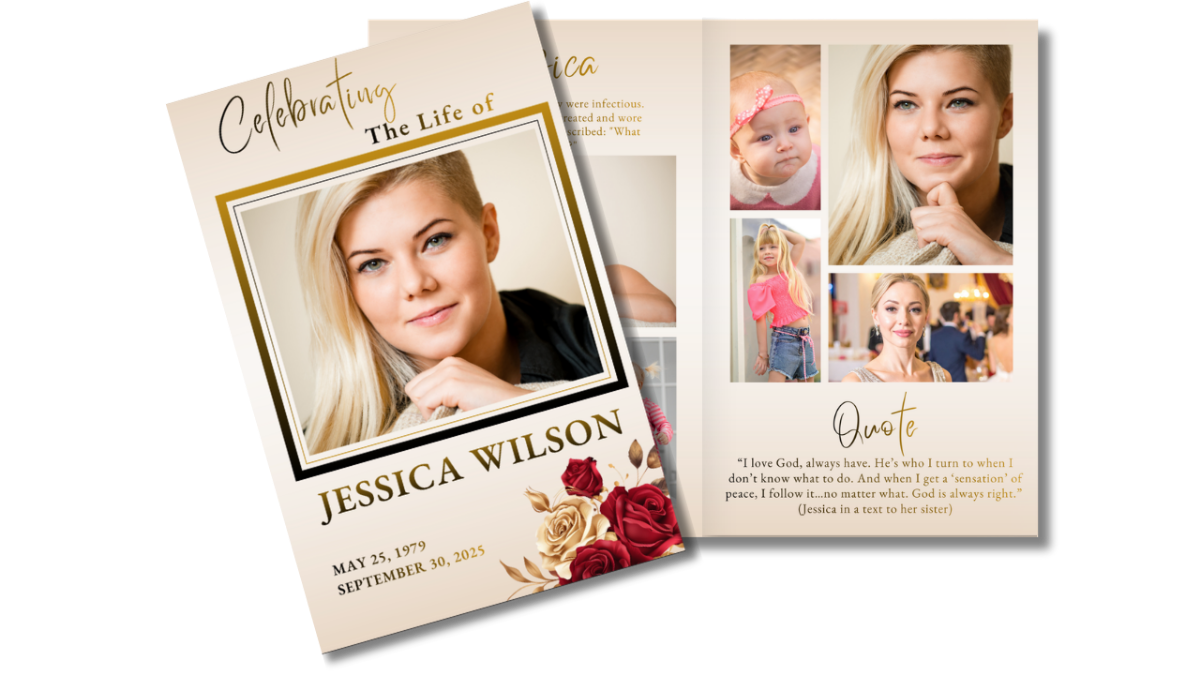
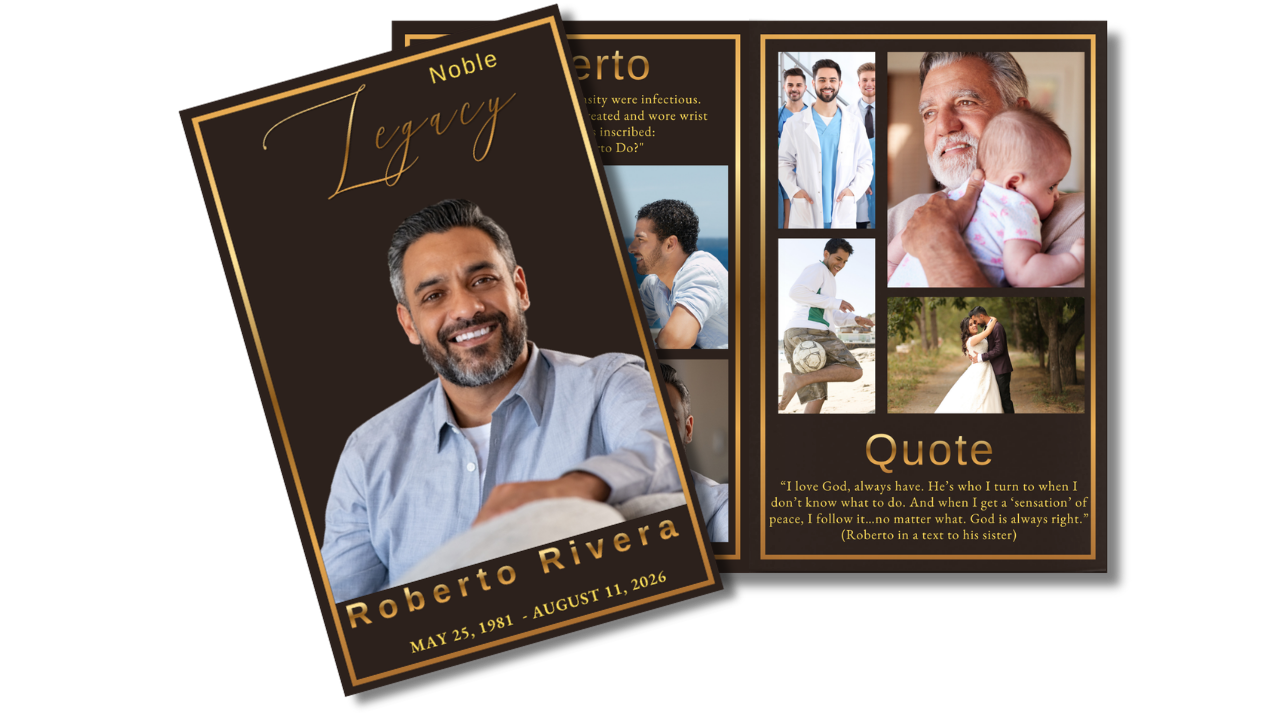
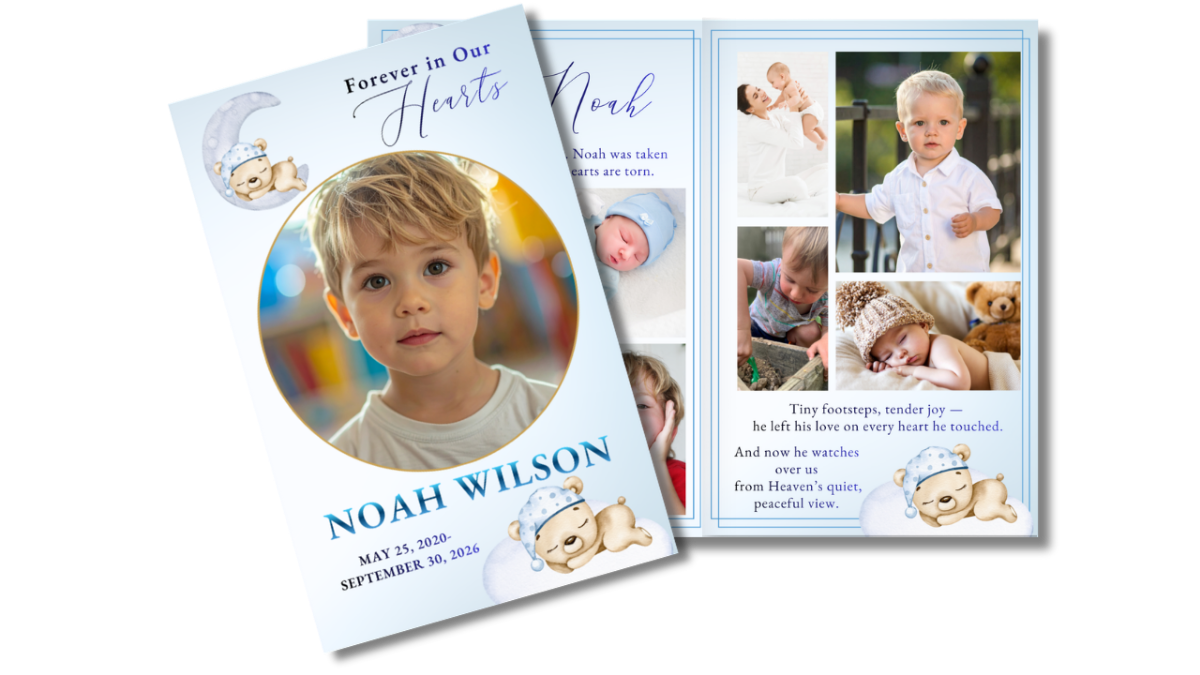
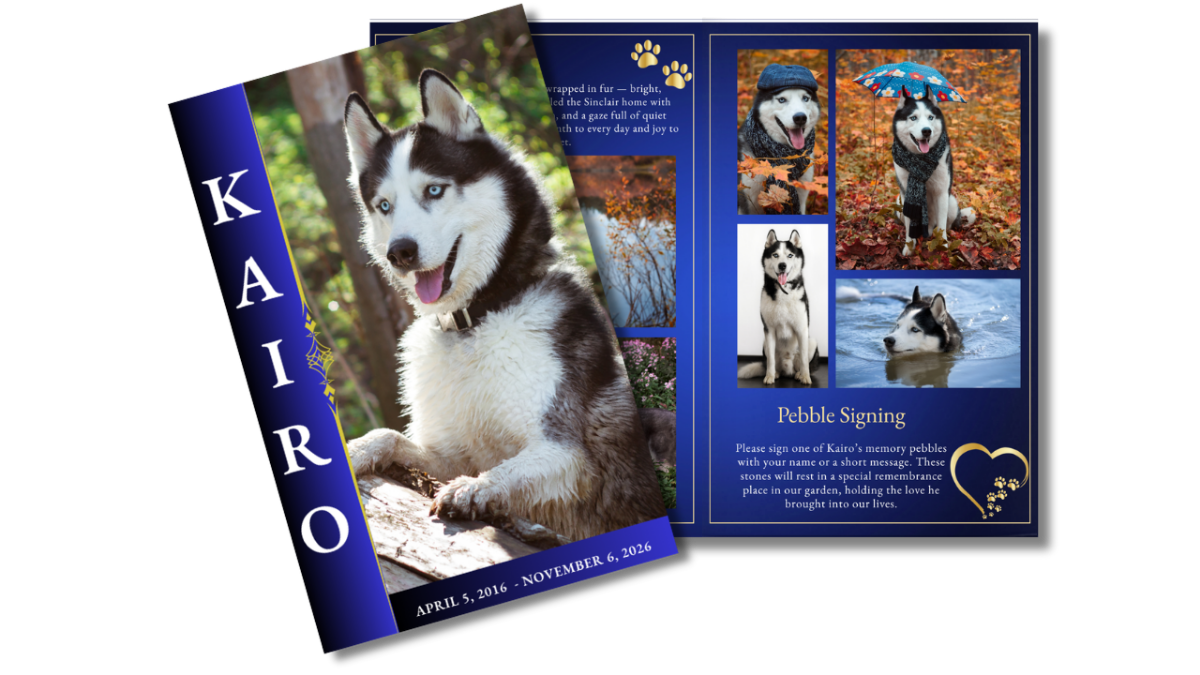
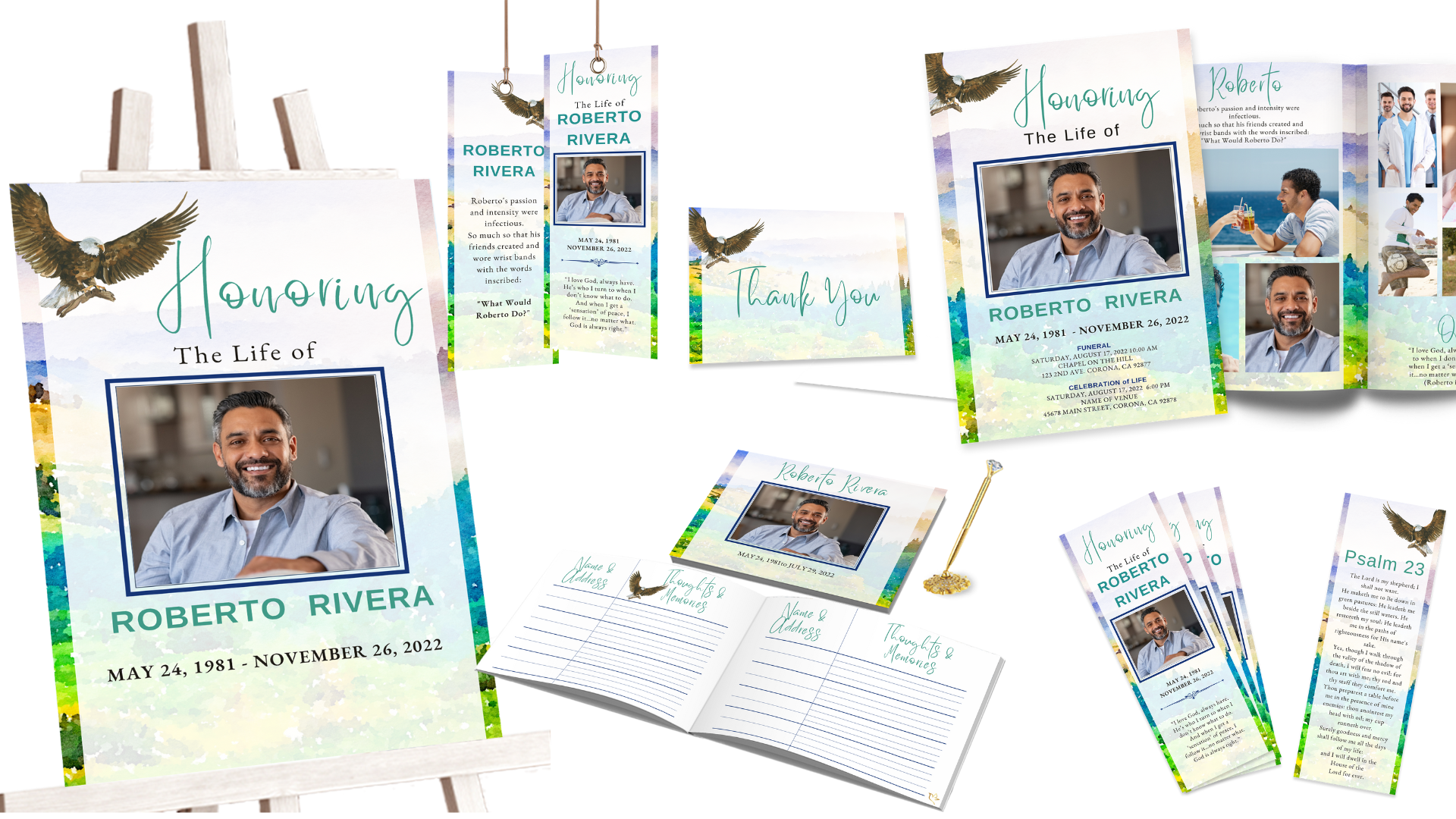
Funeral Programs
A funeral or memorial program can bring together photographs, service information, readings, poems, memories, and other meaningful details into a keepsake family and friends can take home.
Explore our funeral program templates when you're ready to create something that reflects the person you're remembering.
Obituary Guide
An obituary and a eulogy serve different purposes. While a eulogy shares stories and helps people understand who someone was, an obituary usually records the important details of their life and announces their passing.
Our obituary resources can help you decide what information to include and how to organize it.
Funeral Poems
Sometimes another person's words express something we cannot quite say ourselves.
Funeral poems can be included in the service, printed inside a funeral program, shared during the eulogy, or simply kept as a source of comfort.
Funeral Readings
A meaningful reading can provide a quiet moment of reflection during a funeral or memorial service. Depending on your friend's beliefs and personality, you might choose scripture, poetry, literature, or another passage that reflects something important about their life.
You Don't Have to Find Perfect Words
There is no perfect eulogy for a friend.
There couldn't be.
A friendship is made from too many things that cannot be neatly placed on a page: familiar looks across a room, private jokes, conversations no one else heard, shared history, forgiveness, laughter, comfortable silence, and countless ordinary moments that did not seem important until you realized there would be no more of them.
You cannot fit all of that into one speech.
You don't need to.
Choose a few memories.
Tell the truth about who your friend was.
Let people laugh if the stories are funny.
Let yourself cry when they aren't.
And say what perhaps matters most:
You were grateful for the friendship.
Because years from now, people may not remember every sentence you spoke at the funeral. They may not remember the exact order of the stories or precisely how you ended the eulogy.
But they may remember how clearly they could see your friend in your words.
And for a few minutes, in a room filled with people who miss them, you will have helped bring those memories home.

You’re welcome to explore our funeral program collections and find the design that feels right for your loved one—created to help you honor their memory with care and ease.
Each template is fully editable in Canva, allowing you to add photos, update text, adjust colors, and personalize every detail—no design experience needed.
If you need additional support during this tender time, our compassionate team is here for you. Please fill out the form below, and let us guide you through creating a beautiful memorial for your loved one. We're with you every step of the way
Your privacy is incredibly important to us. Rest assured, we will always protect your information and never share it with anyone, for any reason. We're committed to keeping your trust