How to Write a Eulogy for Grandma
A Heartfelt Guide
There are some people whose love becomes part of the background of childhood.
Grandma may have been one of those people.
Perhaps her house was the place where you always knew you were welcome. Maybe she had a particular chair where she sat, a recipe everyone still associates with her, a perfume you would recognize anywhere, or a way of hugging you that somehow made everything feel better.
Maybe she was the keeper of your family's stories.
She remembered who everyone was related to, what happened before you were born, which traditions mattered and why, and the little pieces of family history no one else thought to write down.
Or perhaps your relationship with your grandmother was entirely different.
Maybe she was funny and outspoken. Maybe she was adventurous. Perhaps she loved sports, traveled the world, worked most of her life, had a wonderfully mischievous sense of humor, or refused to behave the way anyone thought a grandmother was supposed to behave.
There is no single kind of grandma.
And that is exactly why writing her eulogy can feel so difficult.
You're not trying to write about a grandmother.
You're trying to write about your grandma.
The woman whose voice you can still hear in your mind. The woman whose stories became part of your family's stories. The woman whose influence may reach through several generations without anyone fully realizing just how much of her they carry with them.
Now you're being asked to somehow put that into words.
You may be wondering where to begin.
You may have too many memories rather than too few.
Or perhaps grief has made everything feel strangely blank, and the stories you know are there simply won't come when you sit down to write.
All of those reactions are normal.
You do not need to tell your grandmother's entire life story.
A beautiful eulogy simply needs to help everyone in the room remember her.
Her laugh.
Her strength.
Her wisdom.
Her quirks.
Her traditions.
Her love.
And perhaps most importantly, the way being loved by her changed you.
Why Writing a Eulogy for Your Grandma Feels So Difficult
Grandmothers occupy an unusual place in our lives.
They often connect us to a world that existed before we did.
Through your grandmother, you may have learned stories about your parents when they were children. You may have heard about relatives you never had the opportunity to meet. She may have carried traditions, recipes, beliefs, expressions, songs, photographs, and family stories from one generation into the next.
When she dies, it can feel as though you have lost not only someone you loved, but one of the people who helped hold your family's history together.
And then there is the personal relationship.
Perhaps Grandma was the person who slipped you a little extra dessert when your parents weren't looking.
Maybe she attended every school program, birthday party, graduation, wedding, or family gathering she possibly could.
Perhaps she taught you to cook, sew, garden, pray, save money, play cards, tell a good story, or simply sit still long enough to listen.
Maybe she gave wonderful advice.
Or perhaps she gave advice whether anyone asked for it or not.
Those little details matter.
In fact, they're often much more meaningful in a eulogy than a list of accomplishments.
A eulogy isn't an obituary.
The obituary can tell people where your grandmother was born, whom she married, where she worked, and how many children and grandchildren she had.
Your eulogy can tell people what it felt like to be her grandchild.
That is something only you can give them.
And you don't have to represent every grandchild's relationship with her. You don't have to somehow speak for an entire family.
You can simply tell the truth about the grandmother you knew.
That is enough.
Six Simple Steps to Writing a Heartfelt Eulogy for Grandma
If you are staring at a blank page wondering how you're supposed to begin, don't begin with the eulogy.
Begin with Grandma.
Put the speech aside for a moment and simply remember her.
The words can come later.
Step 1: Gather the Things That Remind You of Her
Grandmothers often leave behind an extraordinary collection of little memory triggers.
Look through old photographs.
Find one of her handwritten cards or letters.
Pull out a recipe written in her handwriting.
Think about the dishes she made, the holidays she loved, the music she listened to, or the objects you always remember seeing in her home.
Sometimes one small object can unlock an entire memory.
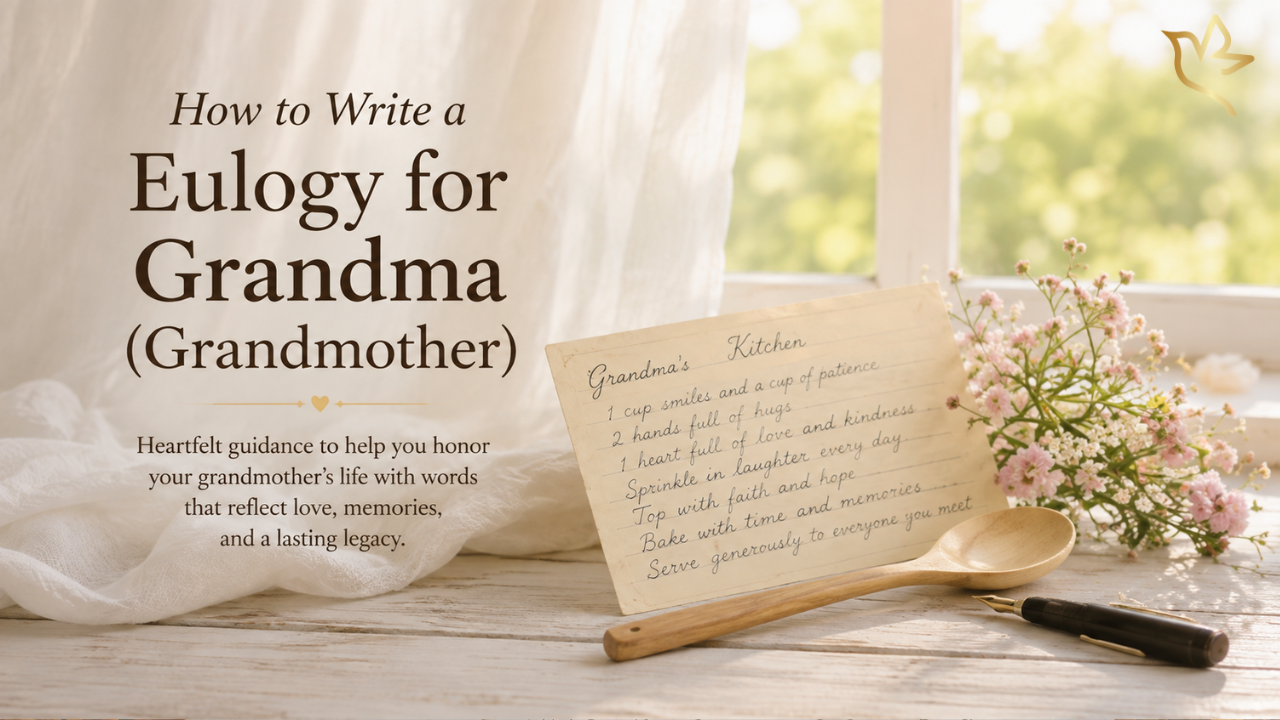
A recipe card isn't only a recipe.
It may remind you of standing beside her in the kitchen while she showed you how to make something your family had been eating for generations.
An old photograph isn't simply a photograph.
It may remind you of a story she told every time someone pulled out the family albums.
You aren't deciding what belongs in the eulogy yet.
You're simply opening the door to your memories.
Step 2: Ask Yourself What Made Grandma Grandma
Try completing this sentence:
"When I think about Grandma, I immediately think about..."
Don't overthink the answer.
Maybe it's her kitchen.
Her garden.
Her faith.
Her laugh.
Her hugs.
Her stubbornness.
Her generosity.
Her stories.
Her Sunday dinners.
Her absolute refusal to let anyone leave her house hungry.
Whatever comes to mind may reveal the emotional center of your eulogy.
Step 3: Choose Two or Three Stories That Show Who She Was
You don't need a dozen stories.
Choose a few that allow people to see your grandmother again.
If she was generous, tell a story that shows her generosity.
If she had an unforgettable sense of humor, share something that still makes your family laugh.
If family mattered more to her than anything else, tell everyone what she did to keep that family connected.
Specific memories are powerful because they make someone real.
Saying, "Grandma loved us" is beautiful.
Telling the story of how she drove three hours through a snowstorm because she refused to miss your school play shows that love.
Step 4: Remember the Woman Beyond the Role of Grandma
This can make a grandmother's eulogy especially beautiful.
For much of your life, you may have known her simply as Grandma.
But she had an entire life before you arrived.
She was once a little girl.
A teenager.
Perhaps a young bride.
A mother trying to figure things out.
A woman with dreams, disappointments, friendships, talents, worries, adventures, and stories that had nothing to do with being someone's grandmother.
If you know something about those parts of her life, include a little of them.
It reminds everyone that the woman you called Grandma lived a rich, complicated life long before you were lucky enough to become part of it.
Step 5: Think About What She Passed Down
A grandmother's legacy is rarely limited to possessions.
Often, what she leaves behind is woven into the people she loved.
Perhaps you make Thanksgiving dinner the way she did.
Maybe you repeat one of her sayings without even realizing it.
Perhaps you inherited her faith, her resilience, her sense of humor, her love of books, her generosity, or even her tendency to worry about everyone.
Look around your family.
Where do you still see her?
That question can lead to one of the most meaningful parts of your eulogy.
Step 6: Write Like Her Grandchild, Not Like a Professional Speaker
You do not need to sound impressive.
You don't need formal funeral language.
You don't need to make your grandmother sound like someone who belonged in a history book.
You simply need to sound like someone who loved her.
If you called her Grandma, call her Grandma.
If everyone called her Nana, Granny, Mimi, Nonna, Abuela, Oma, or another special name, use that name in your actual eulogy.
Speak naturally.
Tell her stories.
Let yourself smile when you remember something funny.
And if your voice breaks when you read it aloud, that's okay too.
You aren't performing.
You're remembering your grandma.
Questions to Help You Remember Your Grandma
Sometimes you know your grandmother so well that deciding what to write becomes harder rather than easier. There are simply too many years, too many family gatherings, and too many small memories competing for space.
Questions can help you move past the pressure of "writing a eulogy" and return to the much gentler task of remembering someone you loved.
You might ask yourself:
- What is my earliest memory of Grandma?
- What did her home feel like?
- What food, recipe, scent, song, or tradition immediately reminds me of her?
- What could she do better than anyone else?
- What phrase or saying did she repeat all the time?
- What made her laugh?
- What did she worry about?
- What did she teach me?
- What did she teach our family?
- What story about Grandma gets told over and over again?
- How did she make her grandchildren feel special?
- What did I understand about her only after I became older?
- What part of her do I see in my parent, my siblings, my cousins, myself, or the next generation?
- What will I miss most?
- If I could sit beside her one more time, what would I want to tell her?
Don't treat these questions like an assignment.
You don't need to answer them all.
You may read one question and suddenly remember something you haven't thought about in twenty years.
Write that memory down.
That may be exactly the story you were looking for.
Common Mistakes to Avoid
One of the most common mistakes when writing a eulogy for a grandmother is turning it into a list of family history.
Your grandmother may have lived a long life. There may be eighty or ninety years of dates, places, jobs, children, grandchildren, moves, accomplishments, and milestones that could be mentioned.
You don't need to mention all of them.
Let the obituary preserve the chronology.
Let your eulogy preserve the woman.
Another mistake is relying too heavily on familiar descriptions of grandmothers. Not every grandmother baked cookies, knitted blankets, tended roses, or spent her days quietly rocking grandchildren.
Write about the woman you actually knew.
If Grandma loved motorcycles, tell us.
If she was still beating everyone at cards when she was ninety, tell us.
If she hated cooking and ordered pizza every Christmas Eve, that's a family tradition too.
The details that make her different are often the details that make the eulogy unforgettable.
It's also easy to believe that because she lived a long life, your grief should somehow be smaller.
Love doesn't work that way.
Whether you had your grandmother for twenty years or sixty, losing someone who has always seemed to be part of your world can leave an enormous absence.
Finally, don't try so hard to make the eulogy beautiful that you remove all of Grandma's personality from it.
She doesn't need perfect words.
She needs your memories.
If the people listening can smile through their tears and think, Yes. That was Grandma, you have written something wonderful.
Frequently Asked Questions
Even after you have gathered your memories and begun writing, you may still wonder whether you are including the right things or saying enough. That uncertainty is completely normal. A grandmother can occupy such a large place in a family that no single eulogy could ever hold every memory.
What matters most is not saying everything. It is helping the people gathered remember the woman they loved.
How long should a eulogy for Grandma be?
Most eulogies are between five and ten minutes long, which is usually enough time to share a few meaningful stories without feeling rushed.
If your grandmother lived a long life, you may feel tempted to include every important chapter. Resist that pressure. Choose the memories that best reflect who she was. A few vivid stories usually stay with people far longer than a long list of dates and accomplishments.
Is it okay to call her Grandma instead of Grandmother?
Absolutely.
Use the name that feels natural to you.
If you called her Grandma, Nana, Granny, Mimi, Nonna, Abuela, Oma, or something else, use that name in the eulogy. It makes the tribute feel personal and true to your relationship.
What if I become emotional while speaking?
That is completely okay.
You are talking about someone who may have been part of your life for as long as you can remember. No one expects you to stand there without emotion.
If you need to pause, take a breath, or collect yourself, do so. Your love for your grandmother is not something you need to hide.
Should I include funny stories?
Yes, if they reflect her personality.
A grandmother's humor, sayings, habits, or wonderfully predictable reactions are often some of the things a family treasures most. A gentle story that makes people smile can bring warmth to a difficult day.
Laughter does not make the tribute less respectful.
It makes it more human.
What if other grandchildren had a different relationship with her?
That is okay too.
You do not have to speak for everyone.
You are sharing your experience of your grandmother. Other family members may remember different parts of her life, and that is part of what makes a family tribute so rich.
Your eulogy only needs to be honest about the Grandma you knew.
Sample Openings
The first few sentences are often the hardest because they make the moment feel real. Try not to put too much pressure on your opening. You do not need to begin with something dramatic.
You only need to begin with love.
Warm and Personal Opening
"Thank you all for being here today to remember my grandma. When I sat down to write this, I realized that almost every stage of my life includes a memory of her somewhere in it. She was simply always there, and it is hard to imagine our family without her."
Family-Legacy Opening
"Grandma was one of the people who held our family's stories together. She remembered where we came from, kept traditions alive, and somehow made each generation feel connected to the one before it. Today I want to share a little about the woman behind those stories."
Faith-Centered Opening
"Today we gather with sadness, but also with gratitude. We are grateful for Grandma's life, for the faith and love she shared, and for the generations of family who were blessed because she was part of our lives."
Conversational Opening
"If Grandma were here today, she would probably have something to say about all of us making such a fuss. And depending on the time of day, she might also be wondering whether everyone had eaten yet. That was Grandma. She loved us in a hundred practical, unforgettable ways."
Sample Closings
A beautiful closing does not need to summarize every story you have shared. It can simply leave everyone with one final thought about your grandmother and the legacy she leaves behind.
Closing Example One
"Grandma, thank you for the stories, the traditions, the laughter, the lessons, and the love. Thank you for helping shape our family into what it is today. We will miss you deeply, but we will carry pieces of you with us always."
Closing Example Two
"The greatest tribute we can give Grandma is to keep sharing the love she gave us. To tell her stories. To make her recipes. To repeat her sayings. To care for one another the way she cared for us. In that way, she will always remain part of our family."
Closing Example Three
"Today we say goodbye to Grandma, but not to everything she gave us. Her influence continues in her children, her grandchildren, her great-grandchildren, and in the traditions and memories that will be passed down for years to come. We love you, Grandma. Thank you for everything."
Complete Sample Eulogy for Grandma
Thank you all for being here today to celebrate my grandma's life.
When I started thinking about what I wanted to say, I realized that almost every memory I have of Grandma is connected to something simple.
A kitchen.
A family gathering.
A story.
A holiday.
A phone call.
A chair she always sat in.
The kinds of things that seem completely ordinary while they are happening and then become priceless when the person you love is no longer there.
Grandma had a remarkable way of making people feel welcome.
You never had to wonder whether there was room for you at her table. Somehow there always was.
She remembered birthdays, asked about things you had mentioned months earlier, and seemed to know when someone needed a little extra encouragement.
She also had opinions.
Plenty of them.
And if you spent any amount of time with Grandma, chances are you knew exactly what she thought about most things.
That was part of her charm.
She was honest, loving, funny, and completely herself.
One of the things I appreciated more as I got older was how much history she carried with her.
When I was younger, the stories about people I had never met sometimes felt like just that—stories.
Now I understand that she was giving us something important.
She was telling us where we came from.
She was connecting us to people and places that existed before we did.
She was making sure our family remembered.
Grandma also taught through the way she lived.
She taught us that love is often practical.
Sometimes love is cooking enough food for twice as many people as expected.
Sometimes it is remembering what someone likes.
Sometimes it is calling just to make sure everyone got home safely.
Sometimes it is showing up again and again until being there becomes part of who you are.
That is how Grandma loved.
She showed up.
She cared.
She remembered.
She made room.
And she made our family feel like family.
There are so many little things I will miss.
Her voice.
Her expressions.
The stories I heard a hundred times and somehow wish I could hear one more time.
The way she could turn an ordinary afternoon into a memory without even trying.
But I am also incredibly grateful.
Grateful for the years we had with her.
Grateful for the things she taught us.
Grateful that future generations of our family will continue to know her through the stories we tell.
Grandma, thank you for loving us.
Thank you for the traditions you created.
Thank you for the memories.
Thank you for every ordinary moment that became extraordinary simply because you were part of it.
We love you.
We miss you.
And we will carry your stories with us for the rest of our lives.
Free Downloadable Eulogy Outline
If you are still unsure how to turn your memories into a complete eulogy, begin with a simple outline. You do not have to fill it in all at once. Add memories as they come to you.
Introduction
Welcome family and friends.
Thank everyone for being there.
Briefly explain what your grandmother meant to you.
Who Grandma Was
Describe the qualities that made her uniquely herself.
Think about her personality, values, habits, humor, faith, strength, or generosity.
Family Memories
Share two or three stories that bring her to life.
Choose memories that reveal her character rather than simply listing milestones.
The Woman Beyond Grandma
Include something about her life before you knew her, if appropriate.
Who was she as a young woman, wife, mother, worker, friend, or community member?
Her Legacy
What did she pass down?
Think about traditions, recipes, stories, values, sayings, beliefs, or qualities that continue in the family today.
Closing
Thank her.
Share what you will miss.
End with a final thought about the love or legacy she leaves behind.
Start with a few words beneath each heading. You may find that once the memories are there, the eulogy begins to write itself.
Related Resources
As you continue preparing for your grandmother's service, you may find these additional resources helpful.
Free Heartfelt Eulogy Book — Download our complimentary guide for more writing tips, examples, and encouragement as you prepare your tribute.
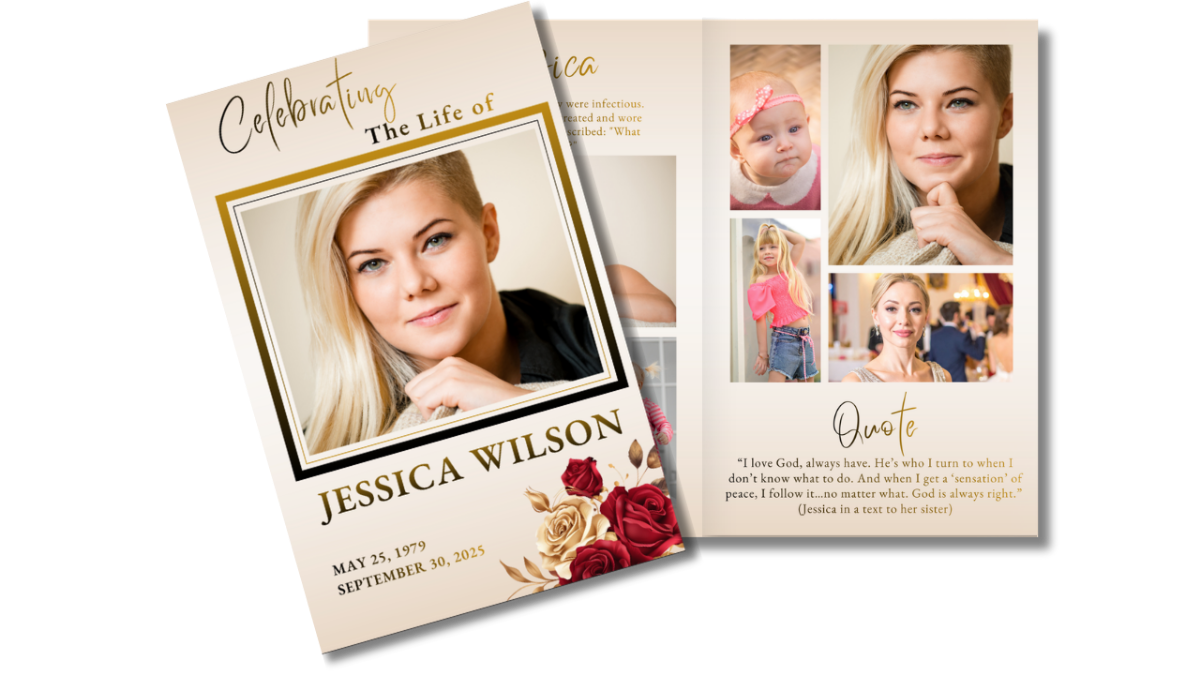
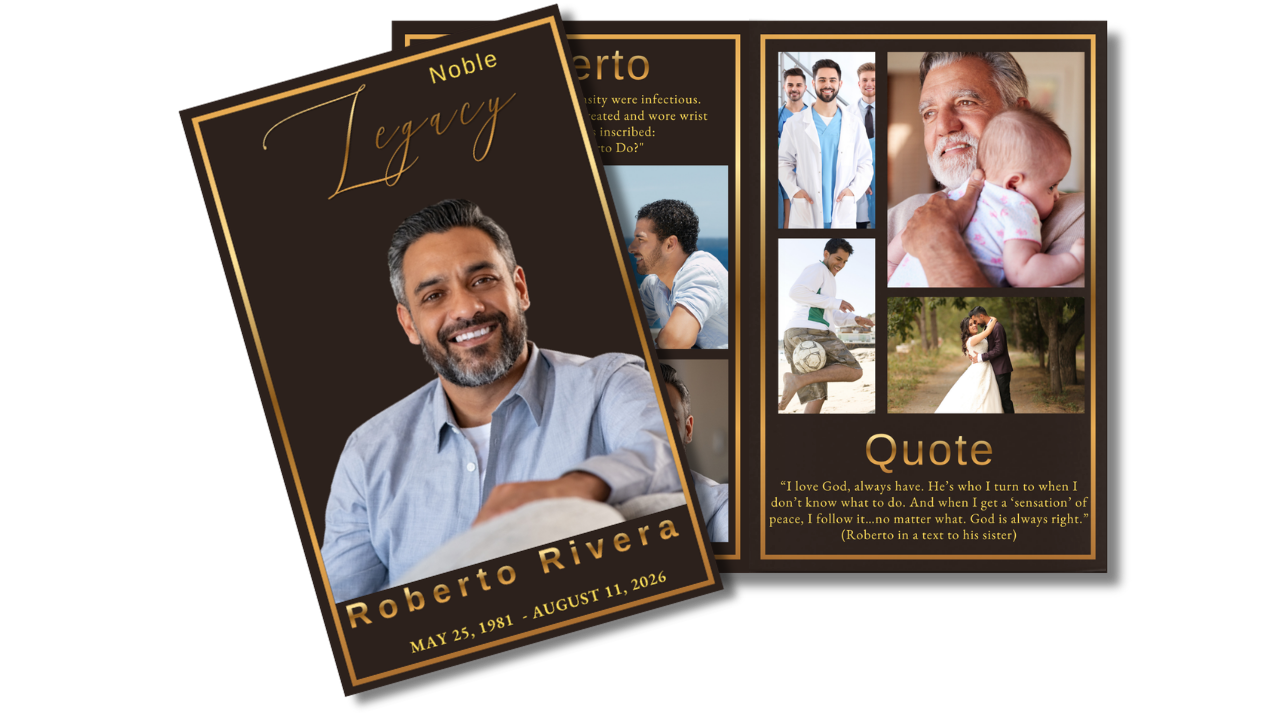
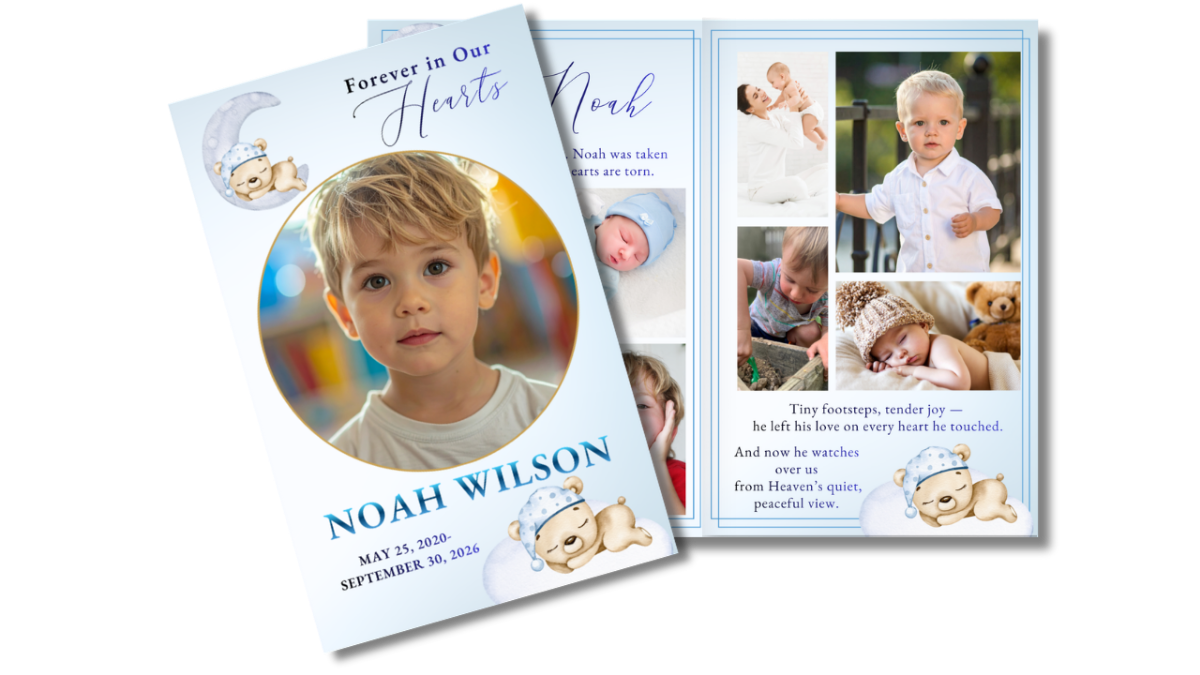
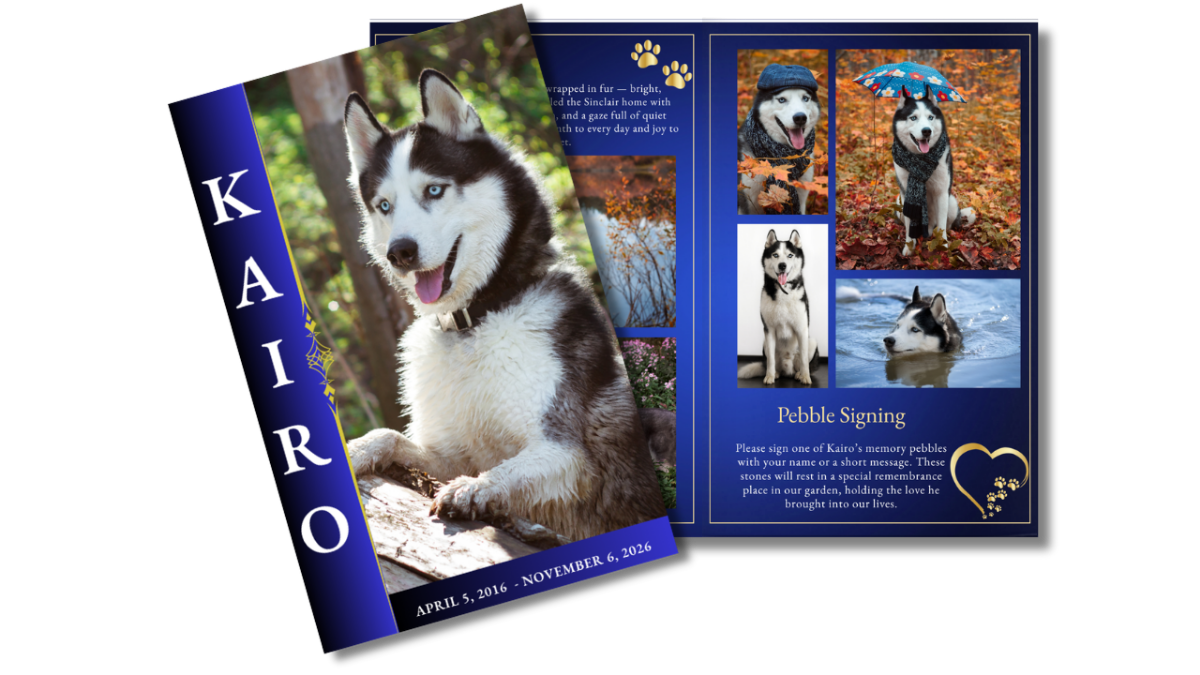
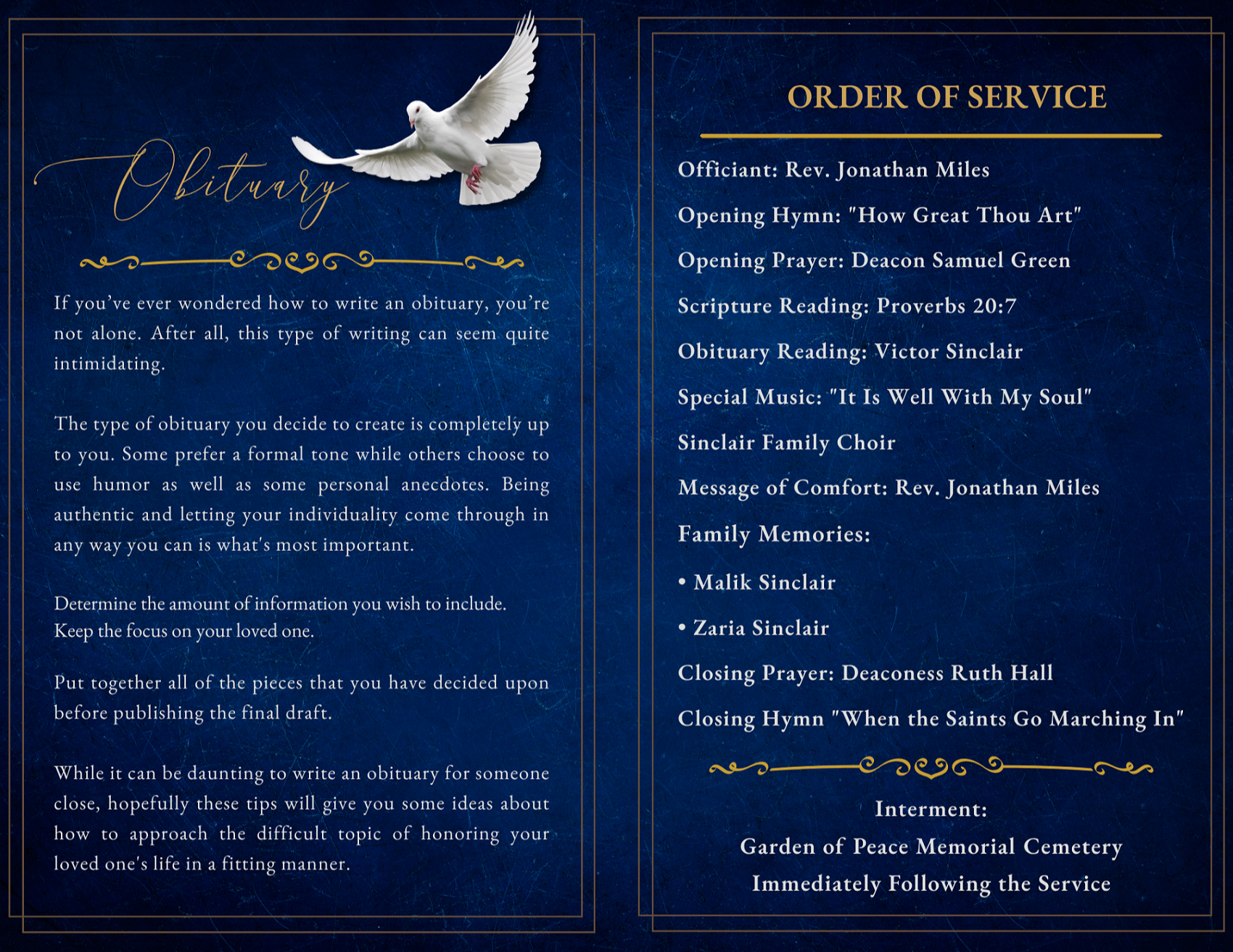
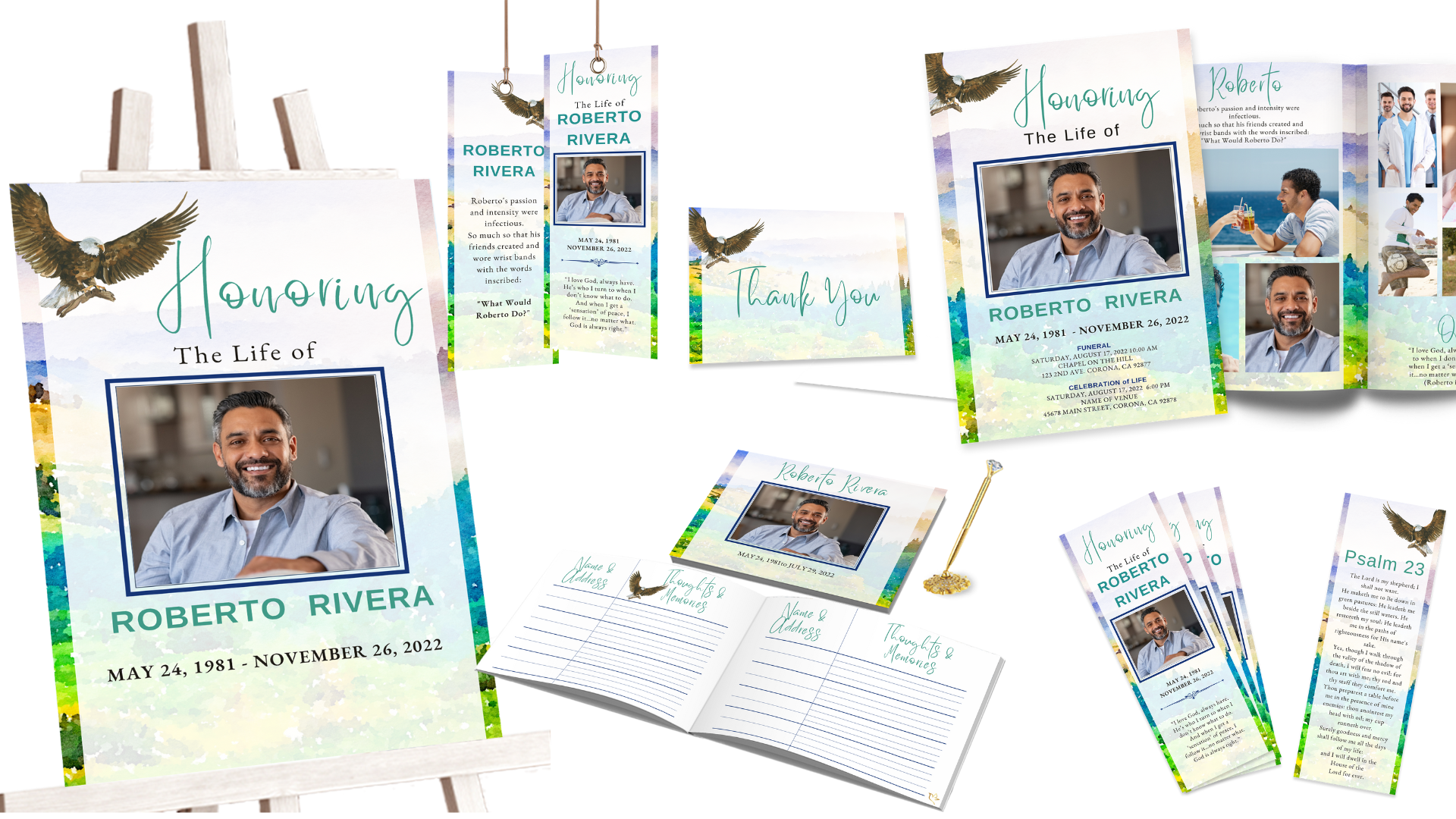
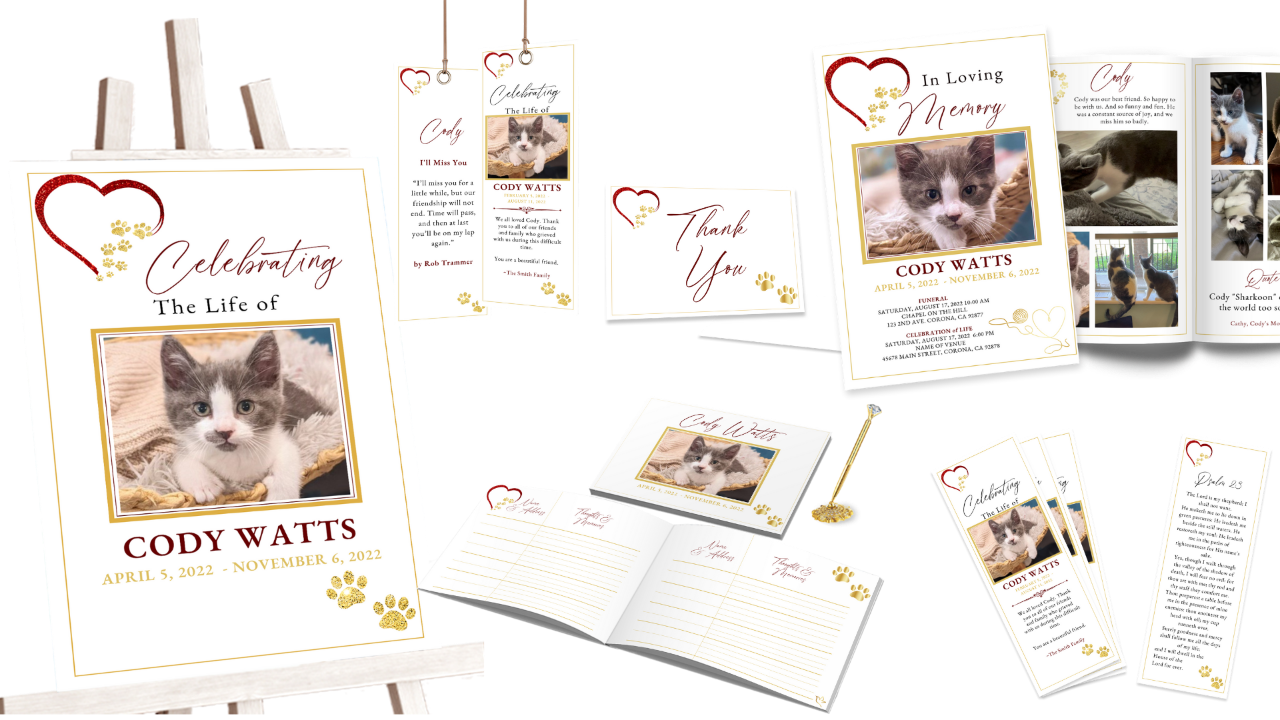
Funeral Program Templates — Create a personalized funeral program that reflects your grandmother's life and gives family and friends a meaningful keepsake.
Funeral Program Templates for Women — Browse designs created especially for honoring grandmothers, mothers, wives, sisters, daughters, and other beloved women.
How to Write an Obituary (Coming Soon) — Learn how to write an obituary that thoughtfully celebrates your grandmother's life and family history.
Funeral Poems (Coming Soon) — Discover meaningful poems that can be read during the service or included inside her funeral program.
Funeral Music (Coming Soon) — Explore comforting religious and non-religious music appropriate for a funeral or celebration of life.
There is something powerful about the love of a grandmother.
It often stretches backward and forward at the same time.
She carries the stories of the people who came before you, and she becomes part of the stories told by the people who come after her.
That is why her loss can feel so significant.
A generation has changed.
A familiar voice is gone.
A place that once felt permanent suddenly feels different.
But the things she gave your family are still here.
Her stories remain.
Her traditions remain.
Her influence remains.
And every time someone makes her recipe, repeats one of her sayings, tells a favorite Grandma story, or recognizes a little bit of her in the next generation, her life continues to ripple outward.
Your eulogy becomes part of that legacy too.
It does not need to contain every memory.
It only needs to help everyone remember the woman behind them.
And if, for a few minutes, the people listening can smile through their tears and think, Yes. That was our Grandma, then you have given her a beautiful tribute.

You’re welcome to explore our funeral program collections and find the design that feels right for your loved one—created to help you honor their memory with care and ease.
Each template is fully editable in Canva, allowing you to add photos, update text, adjust colors, and personalize every detail—no design experience needed.
If you need additional support during this tender time, our compassionate team is here for you. Please fill out the form below, and let us guide you through creating a beautiful memorial for your loved one. We're with you every step of the way
Your privacy is incredibly important to us. Rest assured, we will always protect your information and never share it with anyone, for any reason. We're committed to keeping your trust