How to Write a Eulogy for Dad

A Heartfelt Step-by-Step Guide
There is something uniquely difficult about saying goodbye to your father.
Whether he was the quiet strength of your family, the one who always knew how to fix what was broken, the storyteller at family gatherings, or simply the person whose steady presence made the world feel a little safer, losing him leaves an emptiness that words rarely seem capable of expressing.
Now you've been asked to write a eulogy.
Perhaps you've already opened a blank document several times, only to close it again because you didn't know where to begin. Maybe you're worried you'll leave out an important memory. Maybe you're wondering how anyone could possibly summarize an entire lifetime into a speech that lasts only a few minutes.
If that's how you're feeling, please know you're not alone.
Almost everyone who writes a eulogy for a parent experiences the same uncertainty. It's not because they don't have enough memories. Quite the opposite. It's because they have far too many.
The good news is that you don't need to tell your father's entire life story.
A meaningful eulogy isn't measured by the number of memories it includes. It's measured by whether the people listening leave the service feeling as though they spent a few precious moments with him again.
They'll remember the stories you shared.
They'll remember the values he lived by.
Most of all, they'll remember the love that shines through your words.
That's what makes a eulogy truly meaningful.
As your Heartfelt Eulogy guide explains, the purpose of a eulogy is not to create a perfect speech. It's to honor the unique person your father was and preserve the memories that matter most.
This guide will help you do exactly that, one step at a time.
Why Writing a Eulogy for Your Dad Feels So Difficult
For many people, a father represents strength, guidance, protection, and quiet sacrifice.
He may have been the one who taught you how to ride a bicycle, throw a baseball, drive a car, change a tire, balance a checkbook, or solve problems without giving up. Perhaps he wasn't a man of many words, yet somehow his actions spoke louder than conversations ever could.
Or maybe your dad expressed his love through jokes, encouragement, weekend projects, family vacations, or simply by showing up whenever someone needed him.
Every father leaves a different legacy.
That's why writing about him can feel overwhelming.
You're not simply remembering a parent.
You're remembering decades of ordinary moments that quietly became extraordinary because he was there.
Many people make the mistake of believing they need to include every important event in their father's life. They feel responsible for telling his complete story from beginning to end.
But that's not what a eulogy is meant to do.
A eulogy is not a biography.
It's a tribute.
Instead of trying to tell everything about your dad, focus on helping everyone remember the man behind the milestones. What made him laugh? What principles guided his life? What kind of father, grandfather, husband, friend, or mentor was he?
Those are the memories people will carry home with them.
Sometimes one heartfelt story reveals more about a person's character than an entire list of accomplishments ever could.
As you begin writing, give yourself permission to let go of the impossible expectation that you must say everything.
Instead, simply say the things that mattered most.
That is enough.
Six Simple Steps to Writing a Heartfelt Eulogy
Many people think they should begin by writing the first sentence.
In reality, that's often the hardest place to start.
Instead of searching for the perfect opening, begin by gathering memories. Imagine you're sitting with family members around the kitchen table, sharing stories about your dad. Those conversations are often where the most meaningful parts of a eulogy begin.
The following six steps build upon the thoughtful approach presented throughout your Heartfelt Eulogy guide while expanding each step into a practical framework that makes writing feel much more manageable.
Step 1: Begin with Memories Instead of Words
Don't pressure yourself to write paragraphs immediately.
Instead, write down every memory that comes to mind. Think about conversations, traditions, vacations, hobbies, holidays, lessons, and simple everyday moments. At this stage, you're collecting memories—not writing a speech.
Step 2: Decide What You Hope People Remember
Ask yourself one important question.
When everyone leaves the funeral, what do you hope they remember most about your dad?
Perhaps it's his integrity.
His generosity.
His quiet sense of humor.
His devotion to his family.
Choosing one central theme helps every story work together.
Step 3: Choose Stories That Reveal His Character
Rather than simply telling people your father was hardworking or kind, choose stories that allow them to see those qualities for themselves.
Perhaps it's the Saturday mornings he spent helping neighbors without ever expecting anything in return.
Maybe it's the way he quietly supported his family through difficult times without complaining.
Stories help people remember.
Step 4: Write the Way You Naturally Speak
Don't try to sound like a professional writer.
The people listening don't need polished language.
They need your memories.
The words that come from your heart will always be the right ones.
Step 5: Read Your Eulogy Aloud
A eulogy isn't meant to stay on paper.
Reading it aloud helps you hear where the writing flows naturally and where it may need a few gentle revisions. You'll also become more comfortable with the rhythm of your speech before the service.
Step 6: Give Yourself Permission to Be Human
You may pause.
You may become emotional.
You may need a moment before continuing.
That's perfectly okay.
No one expects you to hide your grief. In fact, your emotions often become a quiet reminder of the love that existed between you and your father.
Questions to Help You Remember Your Dad
Sometimes the memories are there, but they're hidden beneath the sadness of the moment. Instead of trying to force yourself to write, spend a little time simply remembering.
Close your eyes and picture your dad.
Think about the places where you spent time together. Think about the hobbies he enjoyed, the sayings he repeated, the lessons he taught, and the little habits that made him unmistakably himself.
As memories begin to return, write them down without worrying about whether they'll make it into your final eulogy. Often, one small memory leads naturally to another, and before long you'll have more material than you expected.
Here are a few questions that may help you begin:
- What lesson from your dad still guides your life today?
- What made him laugh the hardest?
- What hobby or passion brought him the most joy?
- What family tradition always reminds you of him?
- What did he teach without ever saying a word?
- What is one story your family tells over and over again?
- What will you miss the most?
- If someone had never met your dad, what would you want them to know about him?
These questions aren't meant to produce perfect answers.
They're simply invitations to remember.
Common Mistakes to Avoid
When someone we love passes away, it's natural to feel as though every memory deserves to be included. That's why one of the most common mistakes people make is trying to fit an entire lifetime into a single eulogy.
Instead, choose the memories that best reflect your father's character. A few meaningful stories will paint a far clearer picture than a long list of accomplishments or dates ever could.
Another mistake is believing you need to sound eloquent or poetic. The people attending the service aren't hoping to hear beautiful writing nearly as much as they're hoping to hear authentic memories. Speak the way you naturally would if you were telling someone about your dad over a cup of coffee.
Some people also avoid sharing humorous stories because they worry a funeral should be entirely serious. Yet some of the most touching moments during a service happen when family and friends smile together while remembering the little things that made someone so special.
Finally, don't wait until the last minute. Give yourself time to think, reflect, and revise. You may discover that some of your most meaningful memories appear while taking a walk, driving to work, or looking through old family photographs.
Above all, remember this:
Your father doesn't need a perfect eulogy.
He deserves an honest one.
And the people who loved him will hear that honesty in every word.
Frequently Asked Questions
Even after you've begun writing, you may still have questions. That's completely natural. In fact, nearly everyone who has been asked to deliver a eulogy wonders many of the same things. Grief has a way of making even simple decisions feel difficult, and writing about someone you love is never as easy as it sounds.
If you've found yourself asking any of the questions below, know that you're not alone.
How long should a eulogy for my dad be?
Most eulogies last between five and ten minutes, which usually works out to somewhere between 750 and 1,500 words. While that may not seem like enough time to honor an entire lifetime, remember that a eulogy isn't meant to include every memory or accomplishment.
Instead, think of it as an introduction to the man everyone came to remember. Your goal isn't to tell every chapter of his story. It's to help everyone reconnect with the qualities that made him such an important part of their lives.
Is it okay if I cry?
Absolutely.
Many people become emotional while speaking at a parent's funeral, and no one expects otherwise. Your tears don't distract from your message—they remind everyone just how deeply your father was loved.
If you need to pause for a moment, take a breath, or collect your thoughts, that's perfectly okay. Those quiet moments often become some of the most meaningful parts of a service because they reflect the genuine love behind your words.
Should I memorize my eulogy?
For most people, the answer is no.
There is nothing wrong with reading your eulogy from printed pages. In fact, many people find it comforting to have their thoughts written in front of them, especially when emotions run high.
Consider printing your speech using a larger font with generous spacing between paragraphs. That simple adjustment can make it much easier to find your place if you need to pause.
Is it appropriate to include humor?
Yes—if it reflects your father's personality.
Many fathers were known for their sense of humor, their favorite sayings, or the playful traditions they shared with their families. Including one or two lighthearted memories doesn't make a funeral less respectful. Quite the opposite.
A genuine smile shared through a favorite story often reminds everyone that grief exists because love came first.
Who usually gives the eulogy?
There is no right or wrong answer.
Sometimes it's a son or daughter. Other times it's a spouse, grandchild, sibling, close friend, or another family member. Occasionally, several people each share a few memories.
The best person to give a eulogy is simply the person who can lovingly tell your father's story.
Sample Openings
Beginning a eulogy often feels like the hardest part of the entire process. Once you've found those first few sentences, the rest usually begins to flow much more naturally.
Your opening doesn't need to be dramatic or elaborate. Its purpose is simply to welcome everyone, express gratitude for their presence, and gently begin remembering your father.
Below are a few examples that may help you find your own voice.
Traditional Opening
"Thank you all for being here today to celebrate my father's life. On behalf of our family, I want to thank each of you for your love, your prayers, and your support during this difficult time. Seeing so many familiar faces reminds us just how many lives Dad touched throughout his life."
Warm and Personal Opening
"When I began writing this eulogy, I quickly realized something. There simply aren't enough words to describe my dad. He wasn't just my father. He was my teacher, my role model, my encourager, and one of the people I admired most."
Faith-Centered Opening
"Although our hearts are heavy today, we're also filled with gratitude. We gather not only to mourn my father's passing, but to celebrate a life of faith, kindness, and service that continues to influence all of us."
Conversational Opening
"If Dad were standing here today, he'd probably be wondering why everyone was making such a fuss over him. He was never someone who wanted attention. He was much happier helping someone else behind the scenes. Yet I think he'd be deeply touched to see so many people gathered here because of the life he lived."
Sample Closings
The closing of your eulogy leaves your family and friends with one final memory to carry home. It doesn't need to be long. It simply needs to come from your heart.
Closing Example One
"Dad, thank you for your steady example, your quiet sacrifices, your wisdom, and your unconditional love. You showed us what integrity looks like, what hard work means, and what it means to care deeply for the people around you. We love you, we miss you, and we'll carry your lessons with us every day."
Closing Example Two
"Although today we say goodbye, we know your influence doesn't end here. It lives on in your children, your grandchildren, your friends, and everyone whose life you quietly made better. Thank you for everything you gave us. Rest peacefully, Dad."
Closing Example Three
"Perhaps the greatest way we can honor Dad isn't simply by remembering him today. It's by living the values he demonstrated throughout his life. May we work a little harder, love a little deeper, forgive a little quicker, and serve others with the same humility that he showed us every day."
Complete Sample Eulogy
Good afternoon, everyone.
Thank you for being here today as we celebrate my father's life. Our family is deeply grateful for your presence, your prayers, and the kindness you've shown us during these past few days. Looking around this room reminds us that Dad's life reached far beyond our own family.
When I thought about what I wanted to say today, I realized there was no way to summarize everything he meant to us. How do you capture an entire lifetime in just a few minutes? The answer, I think, is that you don't try. Instead, you remember the moments that reveal who he truly was.
My dad wasn't someone who sought recognition. He simply believed that if something needed to be done, you rolled up your sleeves and did it. Whether he was helping a neighbor, fixing something around the house, or quietly supporting our family, he never looked for praise. He simply showed up.
Some of my favorite memories are wonderfully ordinary. Saturday mornings working together in the garage. Family vacations where he insisted on taking the scenic route because "you never know what you might discover." Even the way he laughed at his own jokes before anyone else had the chance.
Those small moments became the foundation of our lives.
Dad taught us that character isn't built through big speeches. It's built through daily choices. He taught us to keep our promises, to treat people with respect, to work hard, and to love our families well.
Most of all, he taught us by example.
Today our hearts are heavy because we'll miss his voice, his advice, and his steady presence. But we're also grateful. Grateful that we had the privilege of calling him Dad. Grateful for every lesson he taught us, every sacrifice he made, and every memory we'll continue to cherish.
Dad, thank you for believing in us. Thank you for always being there. Thank you for showing us what a life of integrity looks like.
We love you.
We'll miss you.
And we'll carry your legacy forward every day.
Free Downloadable Eulogy Outline
If you're still feeling overwhelmed, don't worry about writing your entire eulogy all at once. Many people find it easier to begin with a simple outline and then fill in each section as memories come to mind.
Use this framework as your starting point.
Introduction
- Welcome family and friends.
- Thank everyone for coming.
- Introduce your relationship to your dad.
Who He Was
- Describe the qualities that defined him.
- Share what people admired most about him.
Favorite Memories
- Include two or three stories that capture his personality.
- Focus on moments that reveal his character rather than simply listing accomplishments.
His Legacy
- What lessons did he teach?
- How did he influence your family and others?
- What values will continue because of his example?
Closing
- Express gratitude.
- Share a final farewell.
- Leave everyone with one lasting thought about his life.
You'll often discover that once you've written a few memories under each heading, the eulogy begins to come together naturally.
Related Resources
As you continue preparing for your father's service, you may also find these resources helpful.
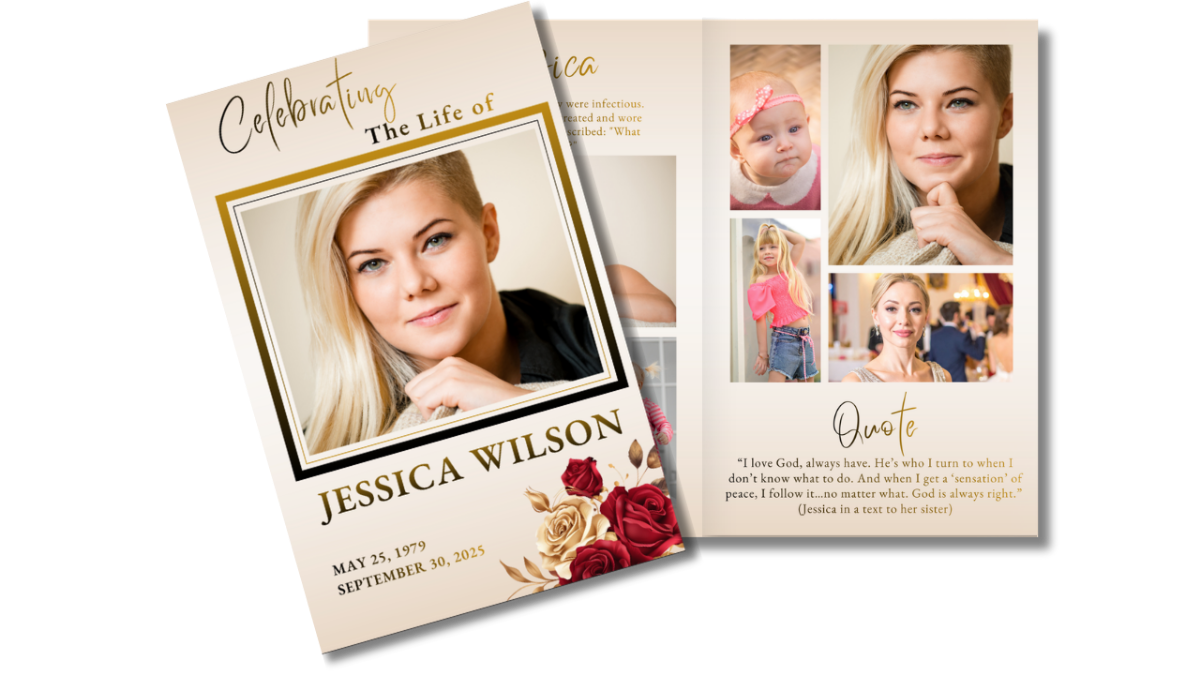
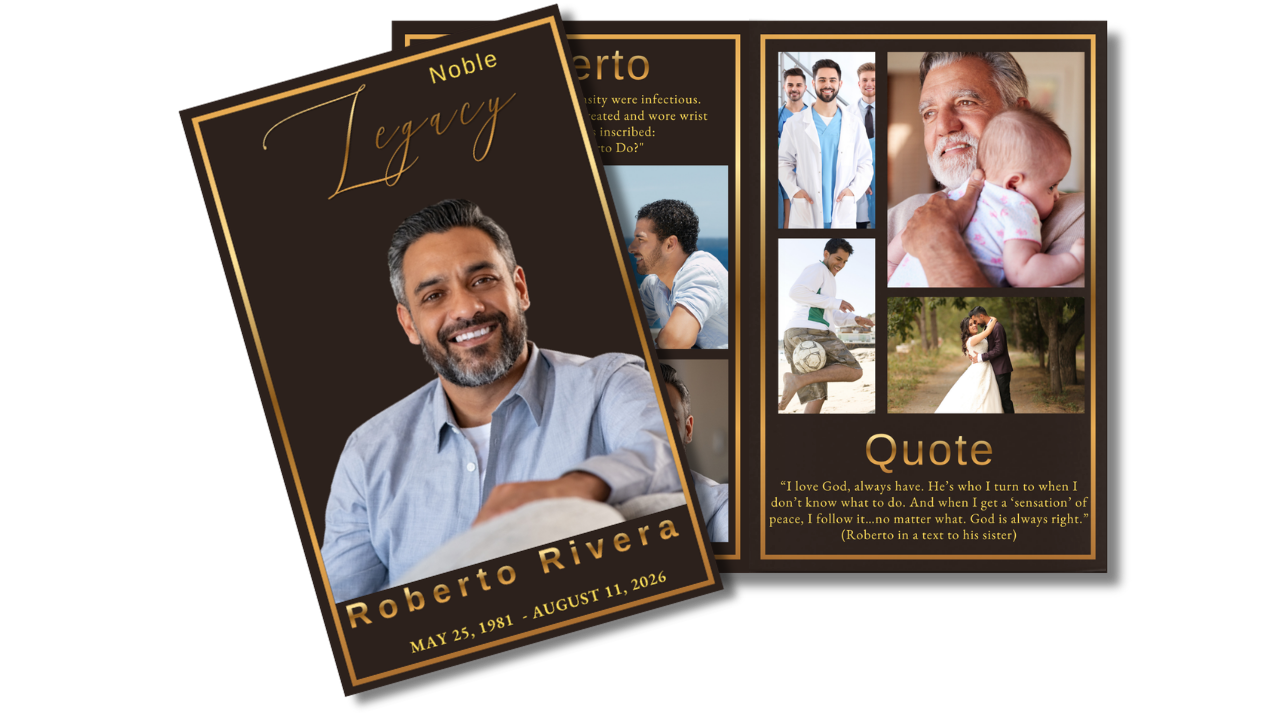
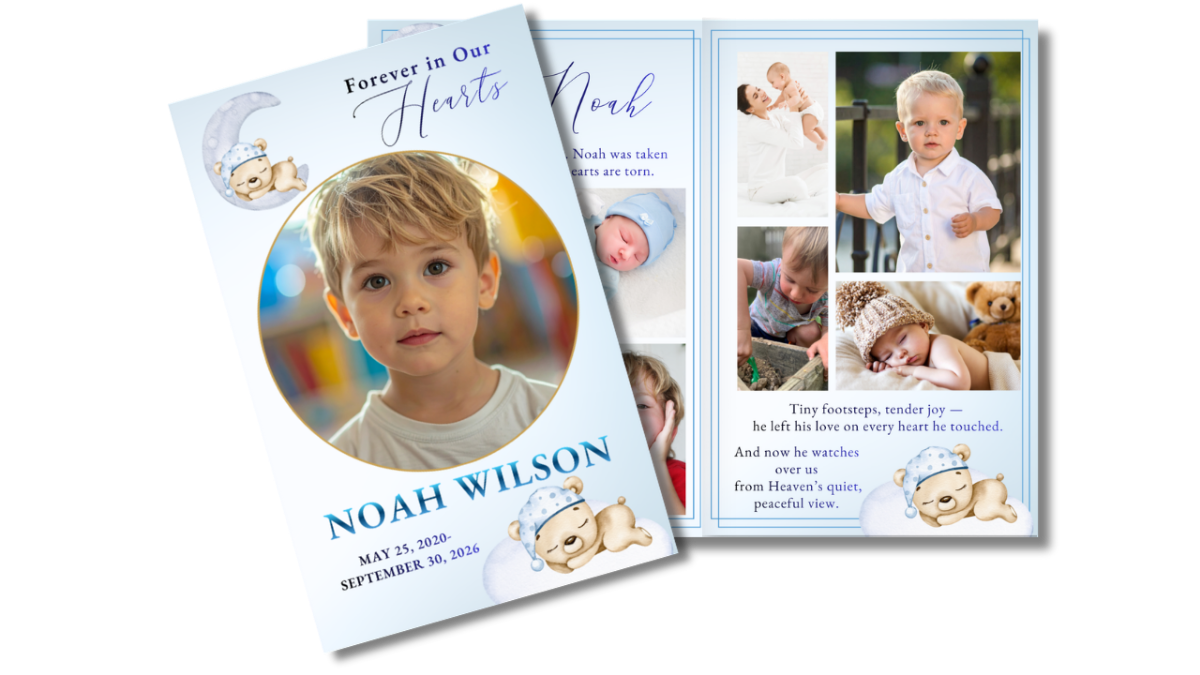
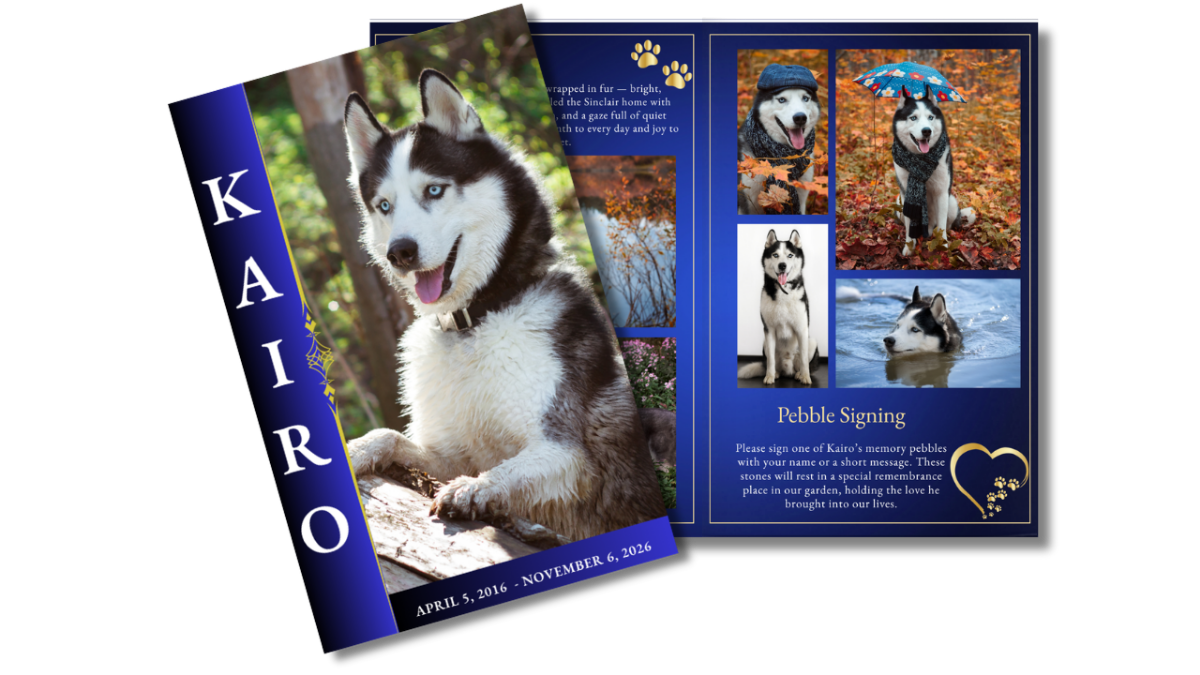
- Funeral Program Templates — Create a personalized funeral program that celebrates your father's life and provides family and friends with a meaningful keepsake.
- Free Heartfelt Eulogy Book — Download our complimentary guide for additional writing tips, examples, and encouragement as you prepare your tribute.
- How to Write an Obituary (Coming Soon) — Learn how to write an obituary that thoughtfully reflects your father's life and legacy.
- Funeral Poems (Coming Soon) — Discover meaningful poems that can be read during the service or included inside a funeral program.
- Funeral Readings (Coming Soon) — Browse comforting religious and non-religious readings appropriate for memorial services.
Writing a eulogy for your father is one of the greatest acts of love you may ever offer.
Long after the flowers have faded and everyone has returned home, your family will remember the stories you shared. They will remember hearing your father's kindness, humor, wisdom, and character reflected through your words. They will remember being reminded not simply of how he died, but of how beautifully he lived.
That is the true purpose of a eulogy.
It is one final opportunity to say, "This is the man we loved."
And that, more than perfectly chosen words or polished public speaking, is what will make your tribute unforgettable.

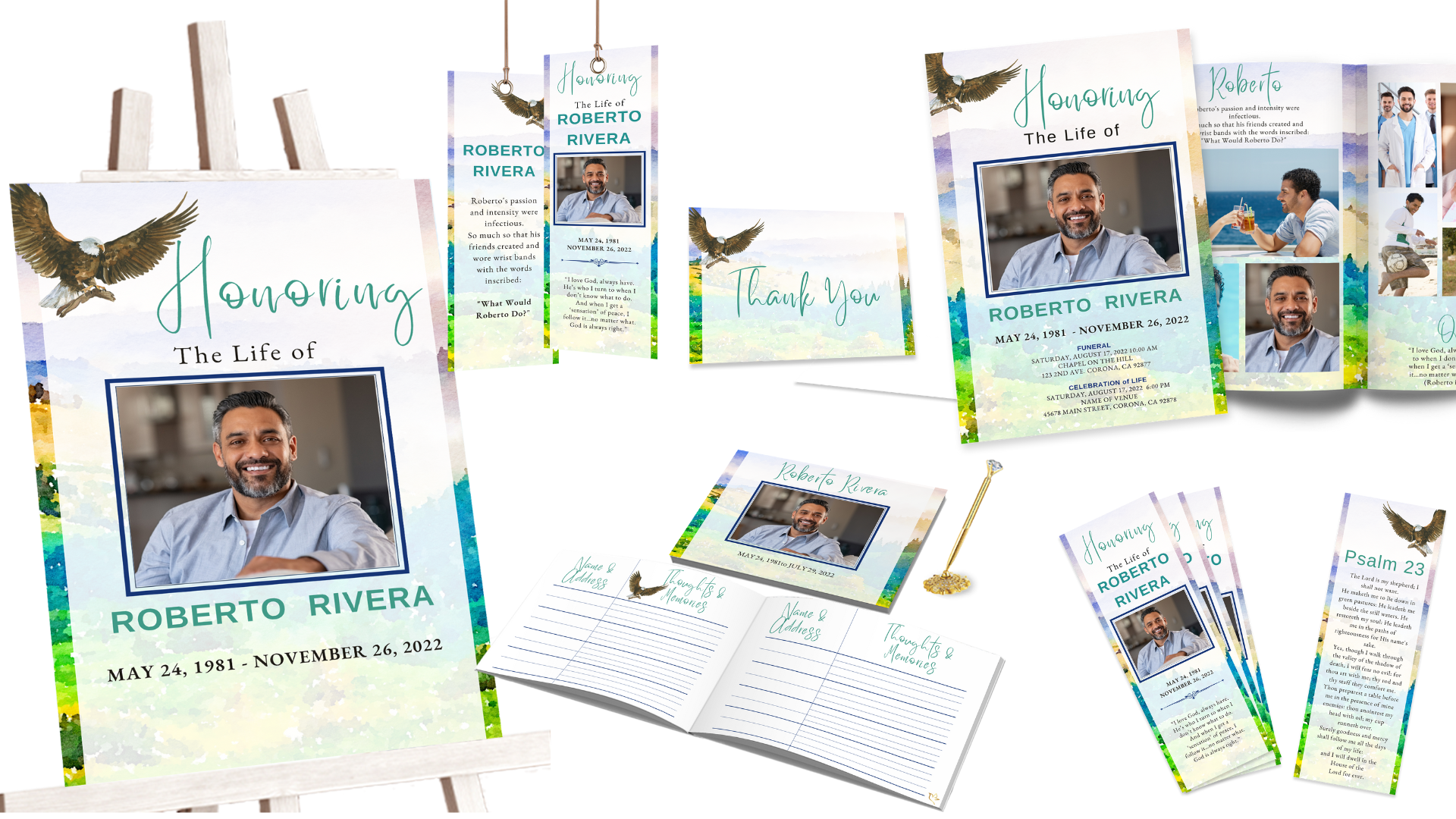
You’re welcome to explore our funeral program collections and find the design that feels right for your loved one—created to help you honor their memory with care and ease.
Each template is fully editable in Canva, allowing you to add photos, update text, adjust colors, and personalize every detail—no design experience needed.
If you need additional support during this tender time, our compassionate team is here for you. Please fill out the form below, and let us guide you through creating a beautiful memorial for your loved one. We're with you every step of the way
Your privacy is incredibly important to us. Rest assured, we will always protect your information and never share it with anyone, for any reason. We're committed to keeping your trust