How to Create an Online Funeral Fundraiser

A Step-by-Step Guide for Families Who Need Help With Funeral Expenses
Creating a fundraiser probably wasn't something you expected to be doing while grieving someone you love. You may be making funeral arrangements, notifying relatives, looking for important paperwork, answering phone calls, trying to support other family members—and somewhere in the middle of all of that, you're wondering how you're going to pay for everything.
An online funeral fundraiser can give friends, relatives, coworkers, neighbors, and members of your community a simple way to help. And it doesn't need to be complicated. This guide will walk you through the process one step at a time.
Before You Begin Know This: It's Okay to Ask for Help
For some families, this is the hardest part. You may feel uncomfortable asking other people for money. You may worry about what they'll think or wonder whether your family's situation is something you should keep private.
But after someone dies, people often genuinely want to do something. They bring food, send flowers, make phone calls, sit with you, and ask, "What can I do?" A funeral fundraiser simply gives them another answer to that question.
No one is obligated to contribute, and you aren't demanding anything from anyone. You're simply allowing people who want to help to do so.
If finding the words is the part you're struggling with, you may also want to read How to Gracefully Ask for Funeral Donations, where we've included gentle wording and examples you can adapt for your own family.
Step 1: Decide What You're Raising Money For
Before creating your fundraiser, make a simple list of the expenses you're trying to cover. That might include funeral home expenses, burial or cremation, cemetery costs, a casket or urn, transportation, flowers, funeral programs and printed materials, obituary expenses, a memorial service or reception, a headstone or monument, travel expenses for immediate family, or other unexpected costs associated with the death.
You don't necessarily need to publish every expense on the fundraising page, but you should understand what you're raising money for. That will help you choose a realistic fundraising goal and explain the need clearly to others.
Step 2: Choose a Fundraising Platform
There are several online fundraising platforms available, and families should choose whichever one feels most comfortable for them.
For funeral and memorial fundraising, I personally recommend Spotfund. Spotfund has a dedicated memorial fundraising option and currently advertises 0% platform fees, with standard payment-processing fees of 2.9% plus 30 cents per transaction. It also advertises next-day payouts, which can be particularly important when funeral expenses need to be paid quickly.
It also offers features that can be genuinely useful for grieving families, including the ability to add another person as a beneficiary, easy sharing tools, QR codes, and text-to-donate options.
Affiliate disclosure: If you create a fundraiser through the Spotfund links on this page, we may receive a small commission or referral benefit at no additional cost to you. I recommend Spotfund because I believe it is a useful option for families, not because you are required to use it.
Step 3: Choose a Realistic Fundraising Goal
One of the first decisions you'll make is how much you're hoping to raise. If you already have estimates from the funeral home and cemetery, start there.
Then subtract resources you already know will be available, such as life insurance proceeds you intend to use, savings, Veterans benefits, Social Security or other benefits, family contributions, or church and community assistance. The difference can help you determine an appropriate fundraising goal.
And don't feel that you have to raise the entire cost of the funeral. If your family can cover $7,000 but unexpectedly needs another $3,000, asking for help with that $3,000 is perfectly reasonable. The goal isn't to create the biggest fundraiser possible. It's to identify the help your family actually needs.
Step 4: Tell People About the Person You Loved
This is perhaps the most important part of the fundraising page. Don't make the entire story about bills. Tell people who this person was.
You might include their name, their relationship to you, something about their personality, what they loved, who they left behind, what made them special, a favorite memory, whether the death was unexpected, and why the family now needs financial assistance.
You don't need to write a biography. A few sincere paragraphs are enough.
For example:
Our family is heartbroken by the unexpected loss of our father, Michael. He was the person everyone called when something needed fixing, the grandfather who never missed a ballgame, and the first one to show up when someone else needed help. We want to give him a meaningful farewell surrounded by the people he loved.
Then explain the financial need simply:
Several funeral and cemetery expenses were greater than our family anticipated. If you would like to help us with the cost of his funeral and burial, we would be deeply grateful. Every contribution, regardless of the amount, will help.
That's enough. You don't have to convince people. You simply have to tell the truth.
Step 5: Choose a Meaningful Photograph
Use a photograph that immediately reminds people of the person they're helping honor. It doesn't have to be professionally taken.
In fact, a warm photograph of your loved one smiling, laughing, fishing, gardening, holding a grandchild, or simply looking like themselves can sometimes be far more meaningful. Choose something that makes people think, "That's exactly how I remember them."
Step 6: Make It Clear Where the Money Will Go
Transparency builds trust. You don't need to publish every receipt or disclose every detail of your family's finances, but people should understand generally how their donations will be used.
You might simply say, "Funds raised will help our family with funeral home expenses, burial costs, the cemetery, and the memorial service." Or, "All donations will be used toward Mary's cremation, celebration of life, and related memorial expenses."
Simple, clear, and honest is enough.
Step 7: Decide Who Should Receive the Funds
Sometimes the person creating the fundraiser isn't the person who should ultimately receive the money. For example, a daughter might create the fundraiser while the surviving spouse handles the funeral expenses.
Spotfund allows a fundraiser organizer to invite a beneficiary to connect a bank account and receive the money raised directly. That's something worth deciding before—or shortly after—you create the fundraiser.
Step 8: Share the Fundraiser Personally First
Don't simply post the fundraiser on social media and hope people notice it. Start with the people closest to your family.
Send the link personally to relatives, close friends, coworkers, church members, neighbors, and others who knew your loved one. You don't need an elaborate message. Something as simple as this works:
Several people have asked how they can help our family. We've created a fundraiser to help with Dad's funeral expenses. Please don't feel any obligation to contribute, but if you'd like to help or simply share the page, we're very grateful.
Then you can share it more broadly. Spotfund provides several sharing options so supporters can pass the fundraiser along to others easily.
Step 9: Remember That Sharing Helps Too
Not everyone who sees your fundraiser will be able to donate, and that's okay. Someone may not have $50 to contribute, but they may share the fundraiser with 200 people. Someone else may send it to coworkers, a church member may share it with a congregation, or a friend may post it in a community group.
Sharing can be enormously valuable. When you ask people for support, consider adding, "If you're unable to contribute, sharing the fundraiser with others would mean just as much to us."
That gives everyone a way to help.
Step 10: Consider a QR Code at the Memorial
This is one of the Spotfund features I particularly like. Spotfund allows organizers to create QR codes for their fundraisers, which means you could place one small, tasteful card near the guest book or memory table.
It could simply say:
For those who have asked how they can help the family
Then place the fundraiser QR code underneath. Guests who want to contribute can scan it privately with their phones.
I wouldn't plaster fundraising signs around a funeral. But one discreet card can make it easy for people who have already asked how they can help.
Step 11: Keep People Updated
Once people begin contributing, don't feel that you have to provide constant updates, especially while you're grieving. But an occasional message can mean a lot.
You might write, "We are overwhelmed by the kindness our family has received. Because of your generosity, we've been able to take care of several of the unexpected funeral expenses. Thank you for helping us honor Dad."
A brief update reassures people that their kindness has made a difference while also giving you another opportunity to thank everyone together.
Step 12: Say Thank You
Every donation represents someone choosing to step into your family's difficult moment and help. When you're able, acknowledge that kindness.
You don't have to write something elaborate to every person while you're grieving. Even, "Thank you so much for helping our family. Your kindness means more than you know," is enough.
What If You Don't Reach Your Fundraising Goal?
Don't consider the fundraiser unsuccessful. If your goal was $5,000 and people contributed $2,700, that's still $2,700 your family doesn't have to find somewhere else.
Funeral funding often comes from several different sources rather than one. You may receive some help from Veterans benefits, some from Social Security, some from family, some from your church or community, some from savings, and some through fundraising.
That's exactly why we're building our Help Paying for a Funeral Resource Center—to help families understand all of the options that may be available rather than relying on just one.
Why I Recommend Spotfund
There are several fundraising platforms available, and I'm not suggesting that Spotfund is the only option. I recommend it because the things it emphasizes—simplicity, quick access to funds, straightforward fees, easy sharing, beneficiary options, and tools designed for memorial fundraising—make sense to me for families dealing with funeral expenses.
Spotfund currently advertises 0% platform fees, with standard payment-processing charges, as well as next-day payouts. Its memorial fundraising tools also include beneficiary options, QR codes, text-to-donate, sharing tools, updates, and thank-you messages.
Most importantly, you should choose the fundraising platform you trust and feel comfortable using.
Create a Funeral Fundraiser with Spotfund →
Final Thoughts
Creating a funeral fundraiser can feel uncomfortable at first. You're grieving, you're tired, and asking for help may be the last thing you ever imagined doing.
But there are people who love your family and loved the person you've lost, and many of them genuinely want to help. An online fundraiser simply gives them a way.
Tell your loved one's story honestly. Explain what your family needs. Make it easy for people to contribute or share. Then allow your community to decide how they would like to support you.
You don't need a perfect campaign. You need a sincere one. And sometimes hundreds of small acts of kindness are exactly what help a family get through an extraordinarily difficult time.

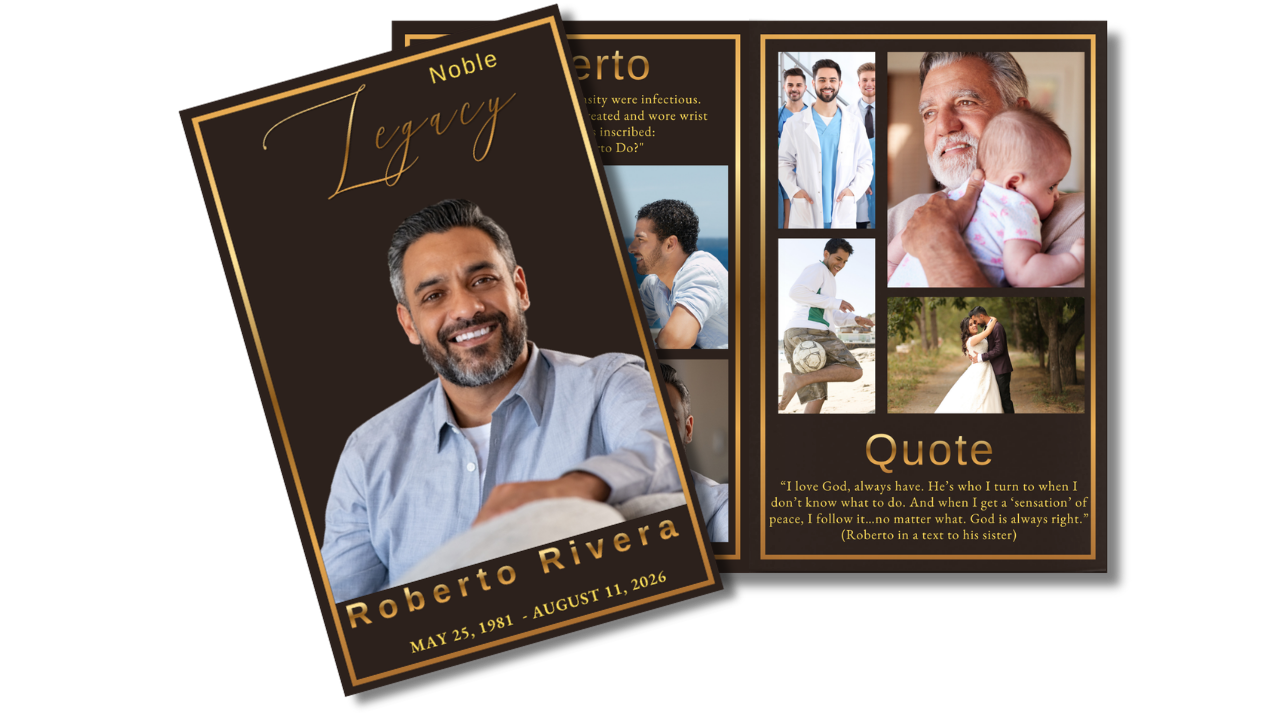
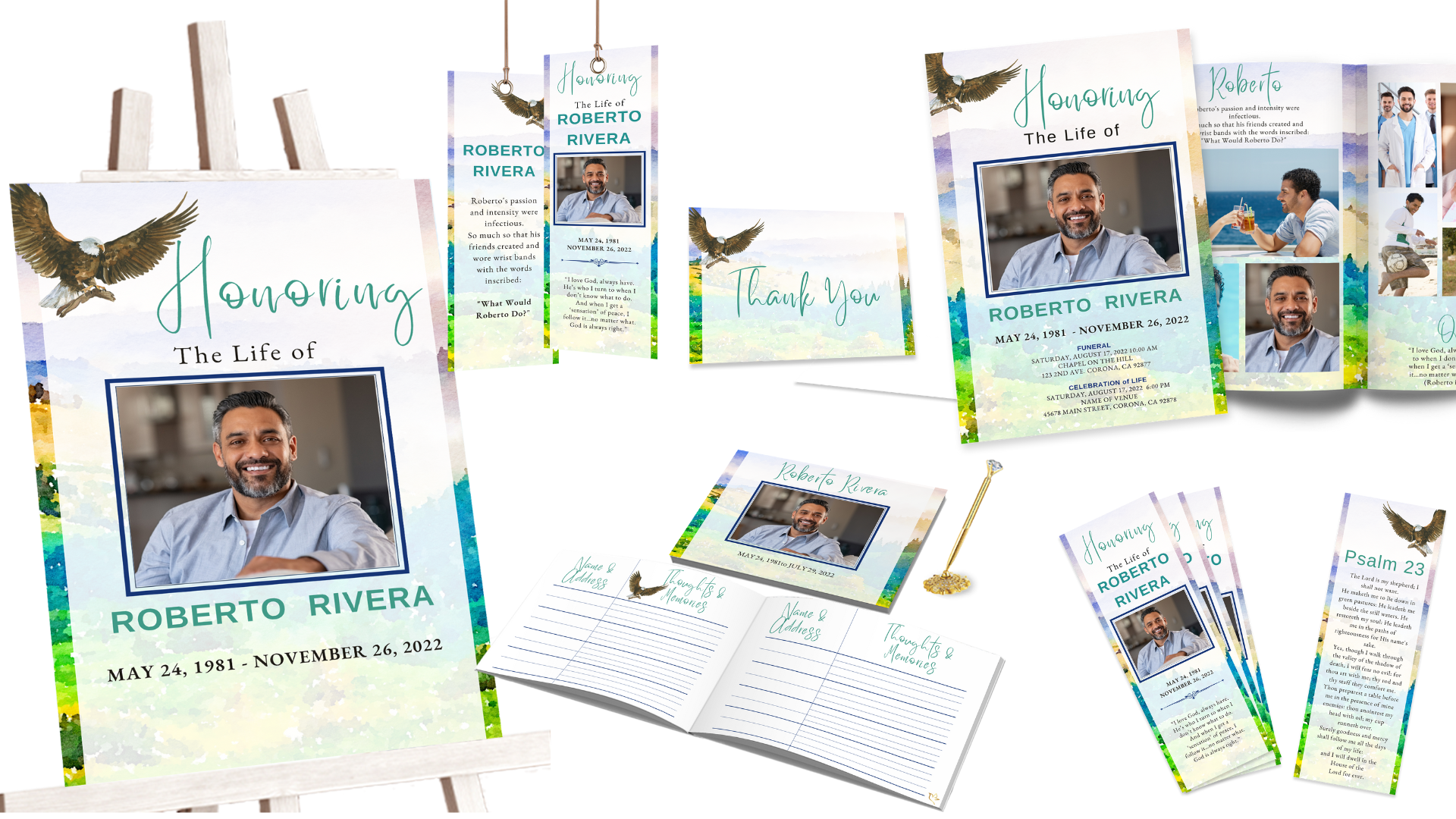
You’re welcome to explore our funeral program collections and find the design that feels right for your loved one—created to help you honor their memory with care and ease.
Each template is fully editable in Canva, allowing you to add photos, update text, adjust colors, and personalize every detail—no design experience needed.
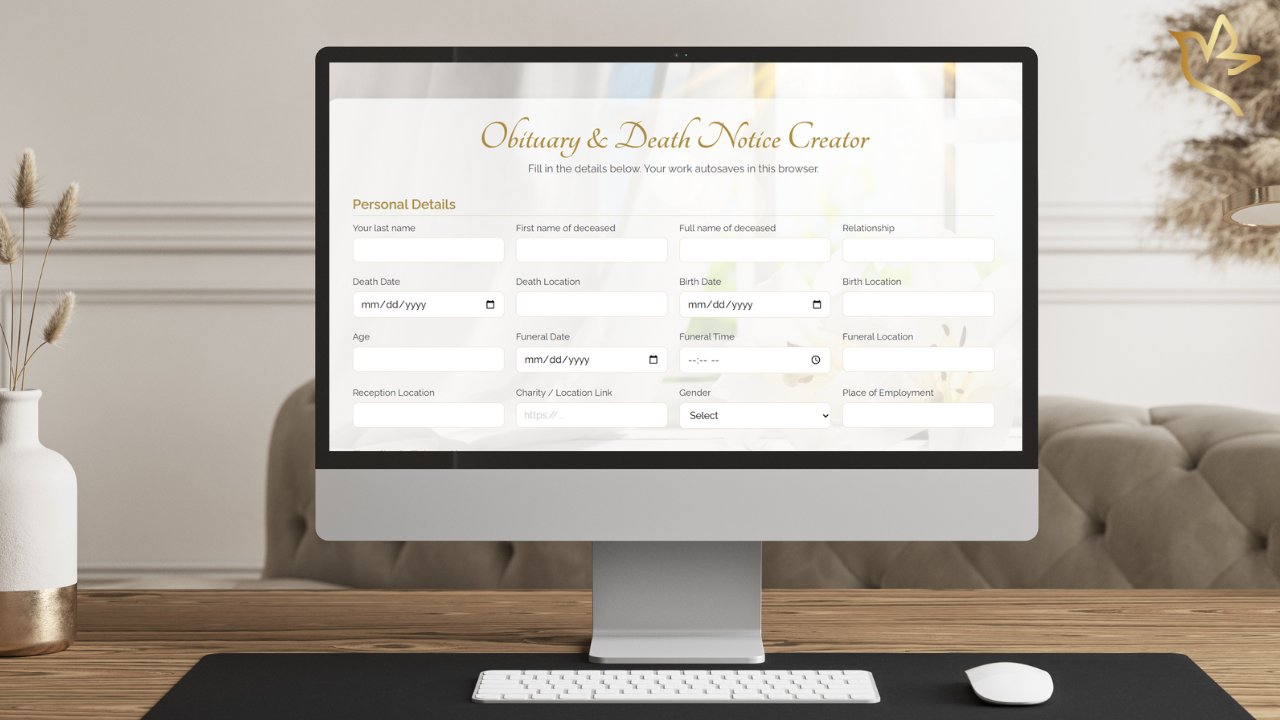
If you need additional support during this tender time, our compassionate team is here for you. Please fill out the form below, and let us guide you through creating a beautiful memorial for your loved one. We're with you every step of the way
Your privacy is incredibly important to us. Rest assured, we will always protect your information and never share it with anyone, for any reason. We're committed to keeping your trust