How to Write an Obituary
A simple step-by-step guide for honoring a life with care
Writing an obituary can feel overwhelming.
When someone you love passes away, you’re suddenly asked to summarize an entire life—memories, relationships, accomplishments, and the quiet moments that made them who they were.
Many families worry they won’t find the right words.
The truth is, an obituary doesn’t need to be perfect. It simply needs to be sincere. A thoughtful obituary helps others understand who your loved one was and allows friends and family to remember the life that touched so many hearts.
With a few simple steps, the process becomes much easier.
What Is an Obituary?
An obituary is a written tribute that announces a person’s passing and shares important details about their life.
It often includes:
• Basic life information
• Family relationships
• Meaningful accomplishments
• Personal qualities and memories
• Funeral or memorial service details
Obituaries may appear in newspapers, funeral home websites, memorial pages, or inside a funeral program given at the service.
For many families, the obituary becomes one of the most meaningful written records of their loved one’s life.
Step 1: Start With Basic Information
Most obituaries begin with simple facts that help readers understand who the person was.
This usually includes:
• Full name
• Birth date and place
• Date of passing
• Age at passing
• City or community they lived in
Example:
Amara Sinclair, beloved mother, daughter, and friend, passed away peacefully on August 11, 2025, at the age of 44.
This opening gently introduces the person while acknowledging their passing.
Step 2: Share the Story of Their Life
Next comes the heart of the obituary—the story of who they were.
You might include:
• Where they grew up
• Education or career
• Passions and hobbies
• Volunteer work or faith involvement
• The qualities people loved most about them
Instead of listing accomplishments alone, it can be meaningful to share what made them special.
Perhaps they were known for their kindness.
Perhaps they loved gardening, cooking for family gatherings, or cheering on their grandchildren.
These details help others remember the warmth of their life.
Step 3: Recognize Family Members
Most obituaries include close family members who were part of their life.
Common sections include:
Survived by:
• Spouse
• Children
• Grandchildren
• Parents
• Siblings
• Close relatives
Some families also mention those who passed before them.
Example:
She was preceded in death by her father, Michael Carter.
This helps paint a fuller picture of family connections.
Step 4: Include Funeral or Memorial Details
The obituary often concludes with information about the service.
This might include:
• Date and time of the funeral or memorial
• Location of the service
• Visitation information
• Special requests (flowers, donations, etc.)
For example:
A celebration of Amara’s life will be held Saturday at 11:00 a.m. at Grace Community Church.
These details allow friends and community members to gather in support of the family.
Step 5: End With a Personal Tribute
Many families choose to end the obituary with a short reflection or meaningful sentiment.
This might be:
• A favorite quote
• A brief message of love
• A sentence describing the legacy they leave behind
For example:
Her kindness, strength, and quiet faith will forever remain in the hearts of those who knew her.
A closing like this offers comfort and leaves readers with a sense of the person’s lasting impact.
Where Obituaries Are Often Shared
Today, obituaries appear in several places.
Families commonly publish them:
• On funeral home websites
• In local newspapers
• On memorial websites
• Inside printed funeral programs
Including the obituary in a funeral program allows everyone attending the service to reflect on the person’s life while honoring their memory together.
A Gentle Way to Preserve Their Story
Writing an obituary may feel difficult at first, but many families later say it became a meaningful part of honoring their loved one.
It gives you a chance to pause, remember, and share the story of a life that mattered.
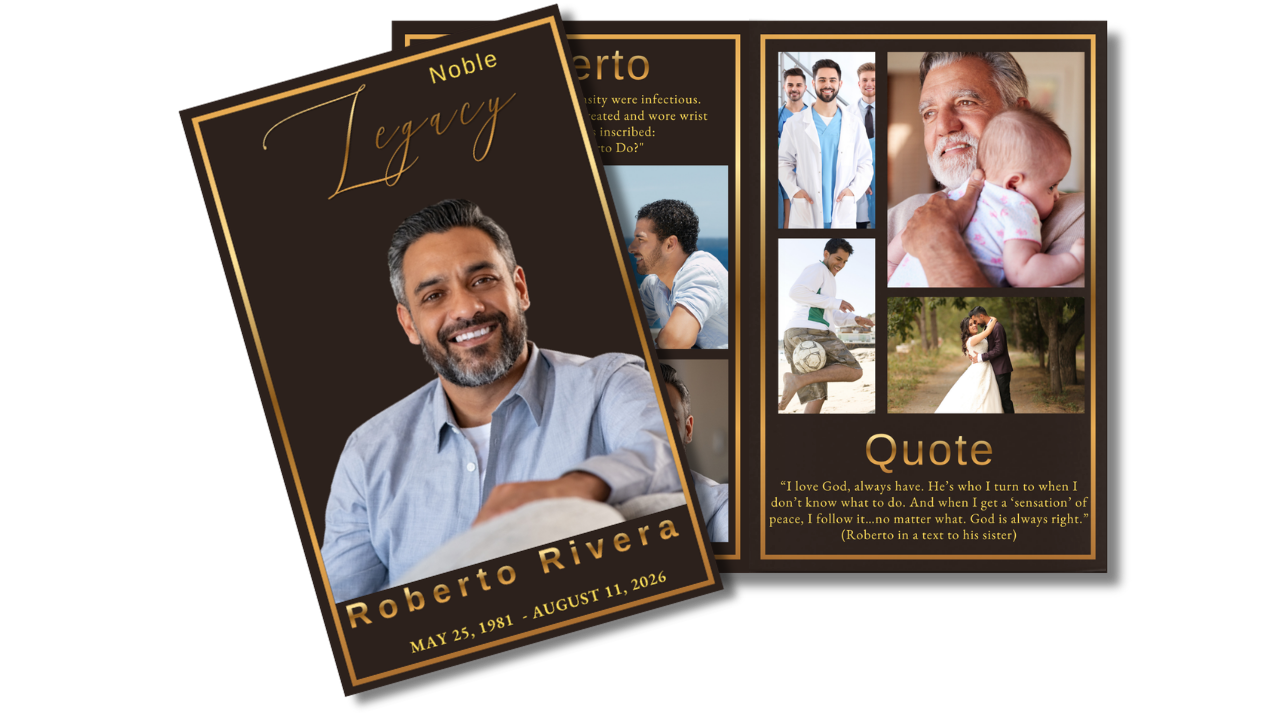
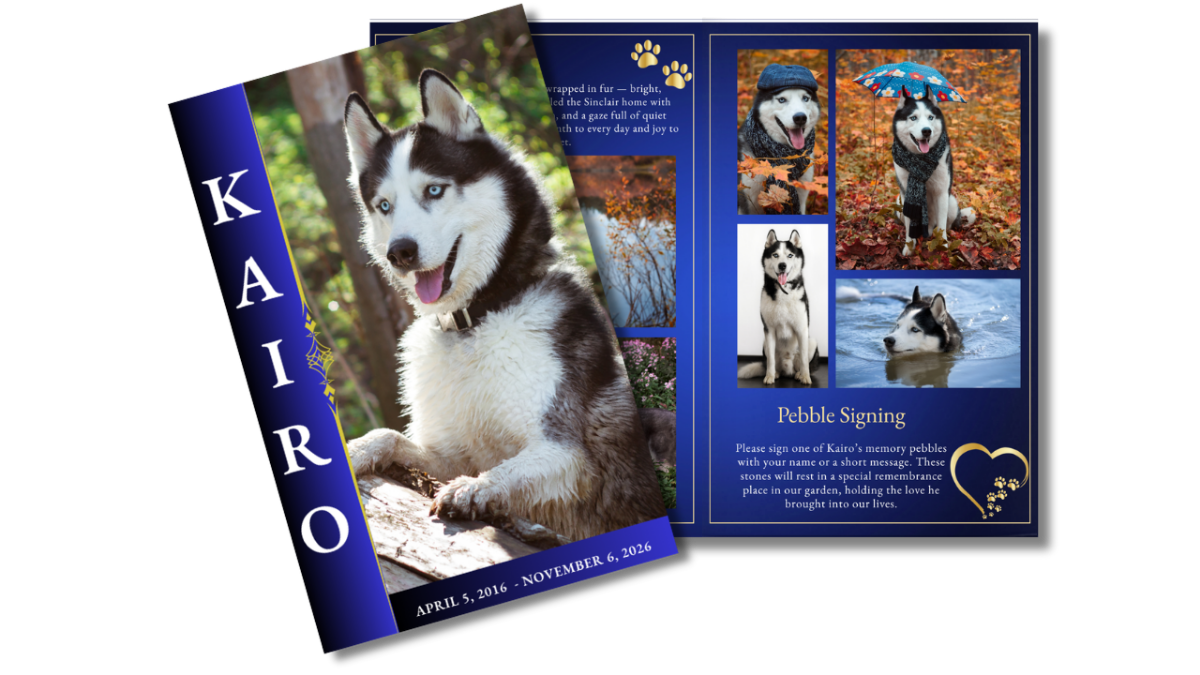
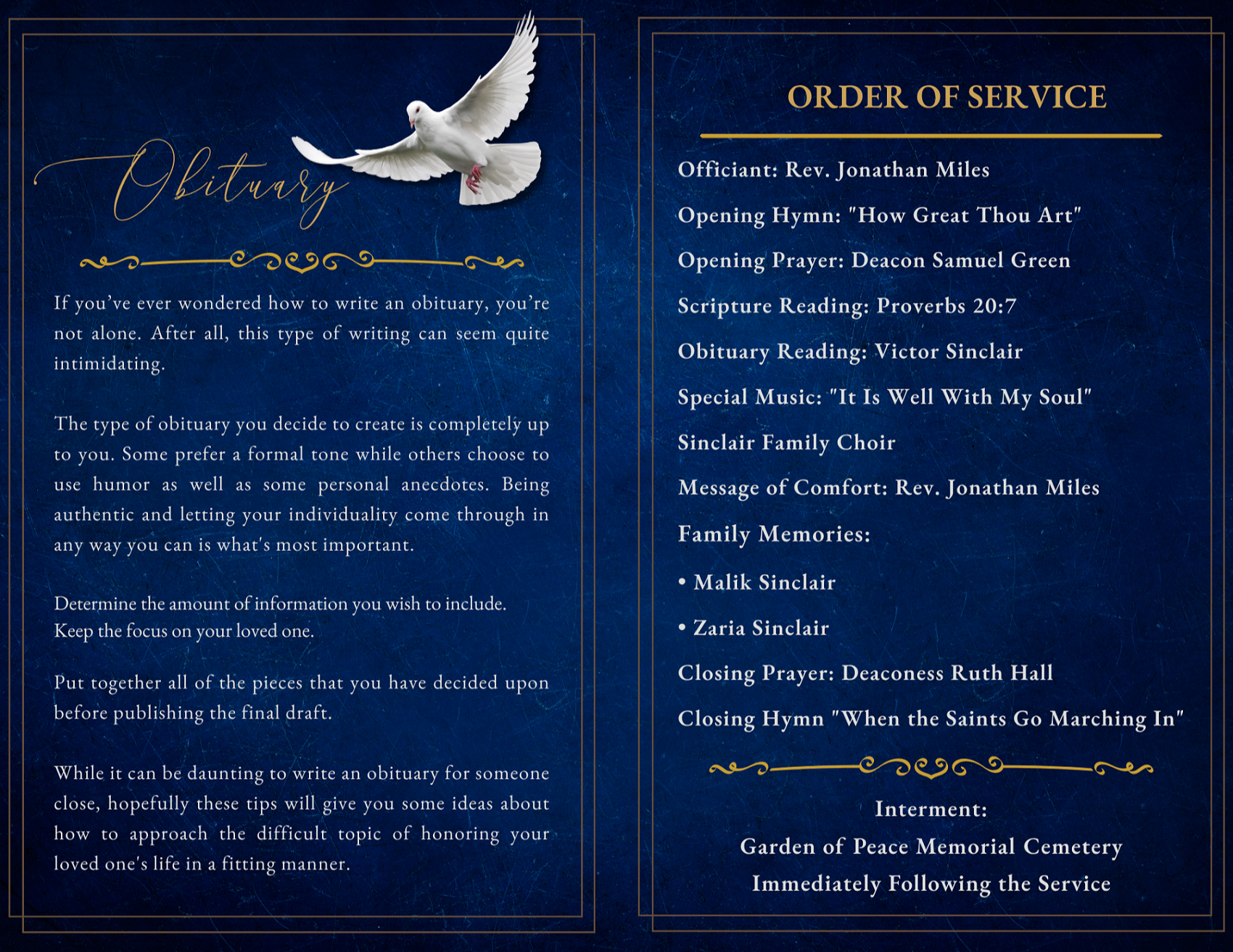
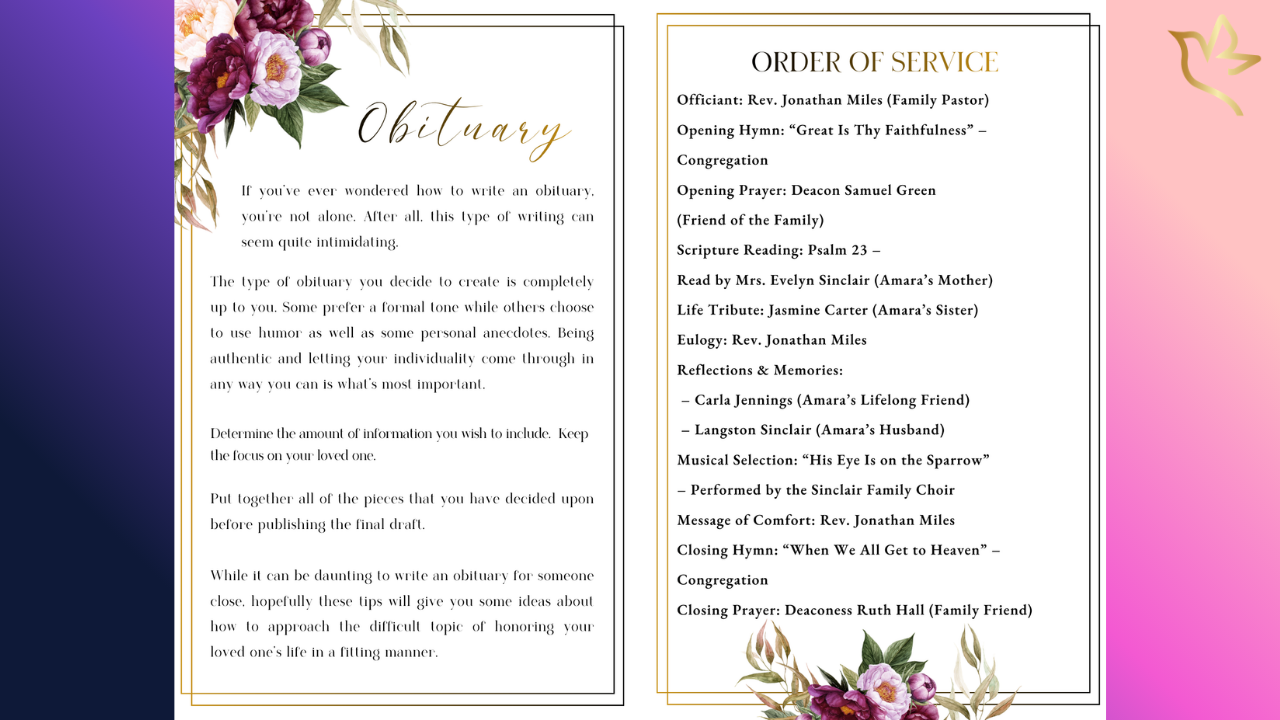
If you are creating a funeral program for the service, many families choose to include the obituary alongside photos, poems, and the order of service as a keepsake for friends and relatives.
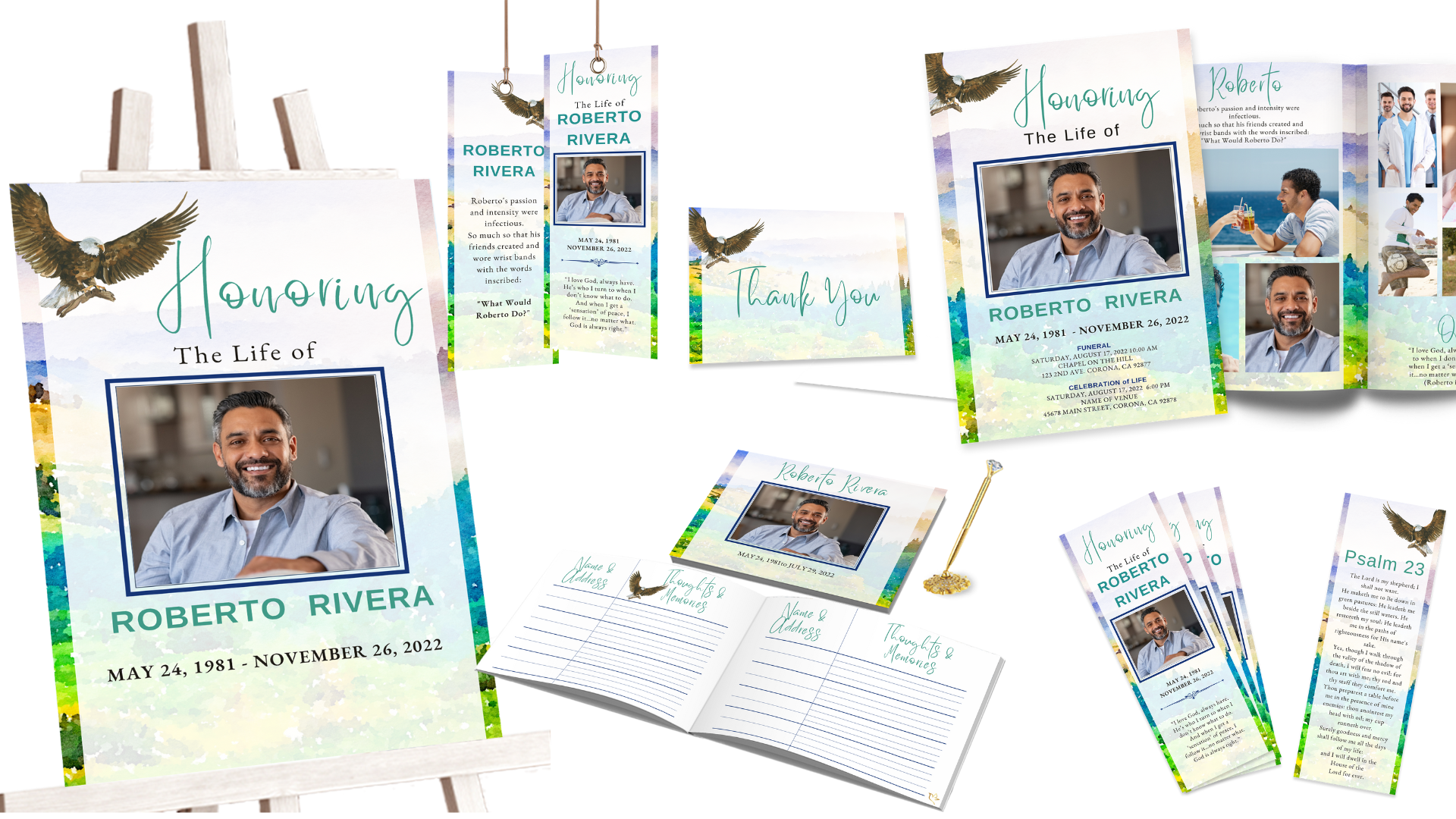
If you would like help creating a simple, beautiful program to hold these memories, you can explore the Funeral Program Templates collection, designed to help families honor a life with grace and care.
You’re welcome to explore our funeral program collections and find the design that feels right for your loved one—created to help you honor their memory with care and ease.
Each template is fully editable in Canva, allowing you to add photos, update text, adjust colors, and personalize every detail—no design experience needed.
If you need additional support during this tender time, our compassionate team is here for you. Please fill out the form below, and let us guide you through creating a beautiful memorial for your loved one. We're with you every step of the way
Your privacy is incredibly important to us. Rest assured, we will always protect your information and never share it with anyone, for any reason. We're committed to keeping your trust